Georgia: A Journey of Faces, Contrasts, and Surprises – EP. #8
This is the English version of the post Georgia: Un Viaggio di Volti, Contrasti e Sorprese - EP. #8, originally published in Italian in the ITALY community.
My family and I have just returned from a trip to Georgia, which led us to discover large cities, well‑known international destinations, and small towns not yet touched by mass tourism. We met wonderful people who will stay in our hearts forever, but also some who were decidedly more irritable and unpleasant. We experienced fun moments and others that were much less so. This is the unfiltered story of what happened, and I hope you enjoy it.
Previous chapters
Chapter 1 - Alcoholic Transfer
Chapter 2 - Heading toward the ‘most precious water in the world
Chapter 3 - There’s more than just water
Chapter 4 - The Disney Castle
Chapter 5 - A thousand years of history
Chapter 6 - On the Road to the Black Sea
Chapter 7 - Batumi Beyond the Beach
Capitolo 8 - Batumi, the Sea
Beyond nightlife, flashy skyscrapers, leisurely strolls, and the old town, anyone who comes to Batumi for vacation does so also because they want to enjoy a few days of swimming in the Black Sea. First of all, a curiosity: why is the Black Sea called black? Does it have anything to do with the color of its waters?
Well, let’s deflate this cheap suspense right away with the most predictable answer: of course not! The adjective black seems to date back to the Ottoman period, when each cardinal direction was assigned a color. The Mediterranean Sea, south of the Anatolian peninsula, was called the “White Sea,” and consequently the north — its opposite — was associated with the color black.
Since its only opening is through the Bosphorus, which connects it to the Sea of Marmara, today the Black Sea is mostly considered a kind of large saltwater lake, touching the coasts of Bulgaria, Romania, Ukraine, Russia, Georgia, and Turkey. One of its most important tributaries is the Danube, which rises in southern Germany and flows into the Black Sea after a journey of nearly 3,000 km across Europe.
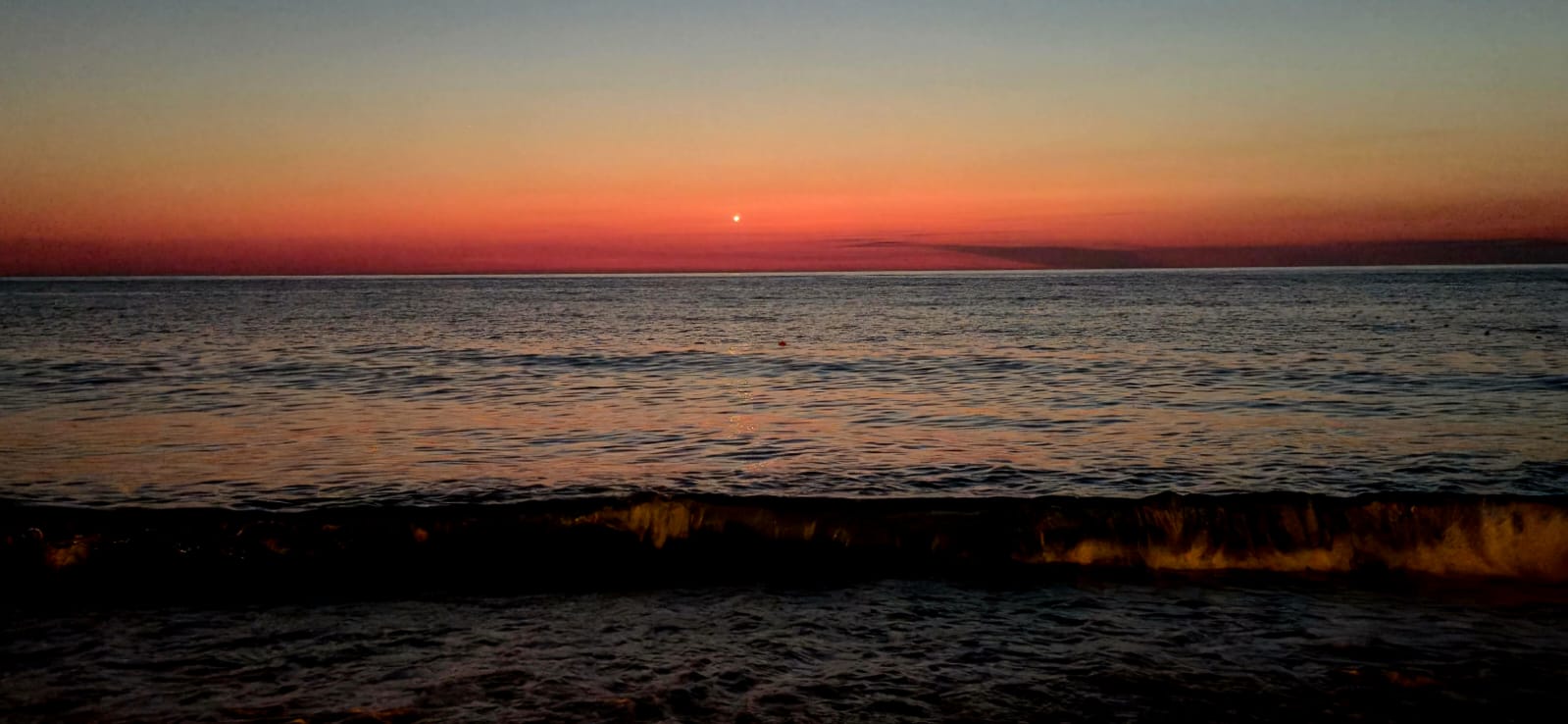
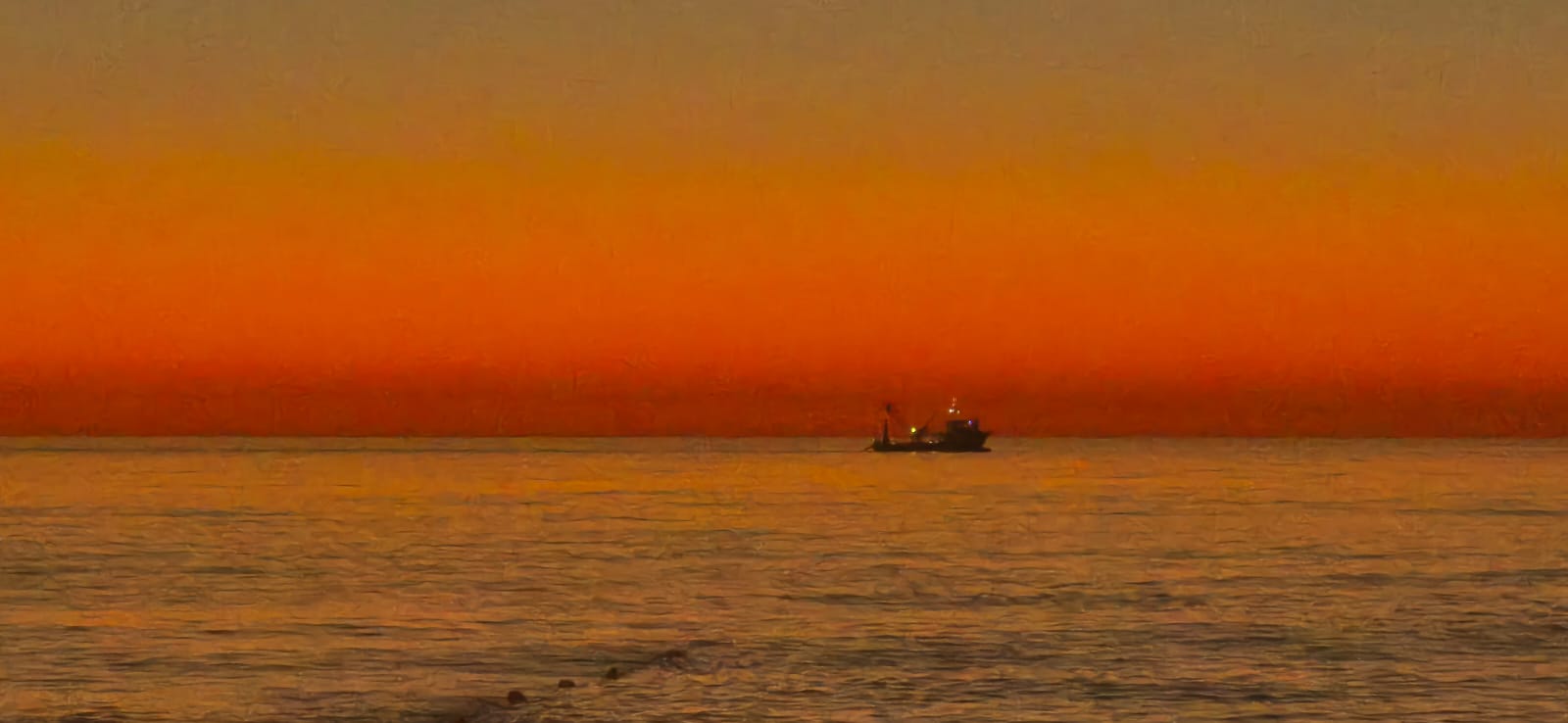
The Black Sea at sunset
The beaches of Batumi are all free, but for those who want it, there’s the option — in certain areas managed by private services — to rent deck chairs, loungers, or umbrellas. The cost for the whole day, at least in June, is pretty much the same everywhere: 20 GEL for two loungers/deck chairs plus an umbrella (1 € = 3 GEL).
However, don’t expect soft sand under your feet, because practically every centimeter of the eight‑kilometer beach (except for a few scattered micro‑patches) is covered in stones. If you want to lay your towel on the ground and sunbathe, you’re absolutely free to do so anywhere — but you’ll be lying on an endless collection of pebbles and rocks of all sizes.
Same story when it comes to getting into the water: stones, stones, and more stones. The ones making a killing are the beach vendors, who walk up and down the shore at regular intervals selling the classic rubber water shoes, designed specifically for tricky seabeds like these. You can find them in the city for 15 GEL, but be aware that on the beach they’ll start at 25.
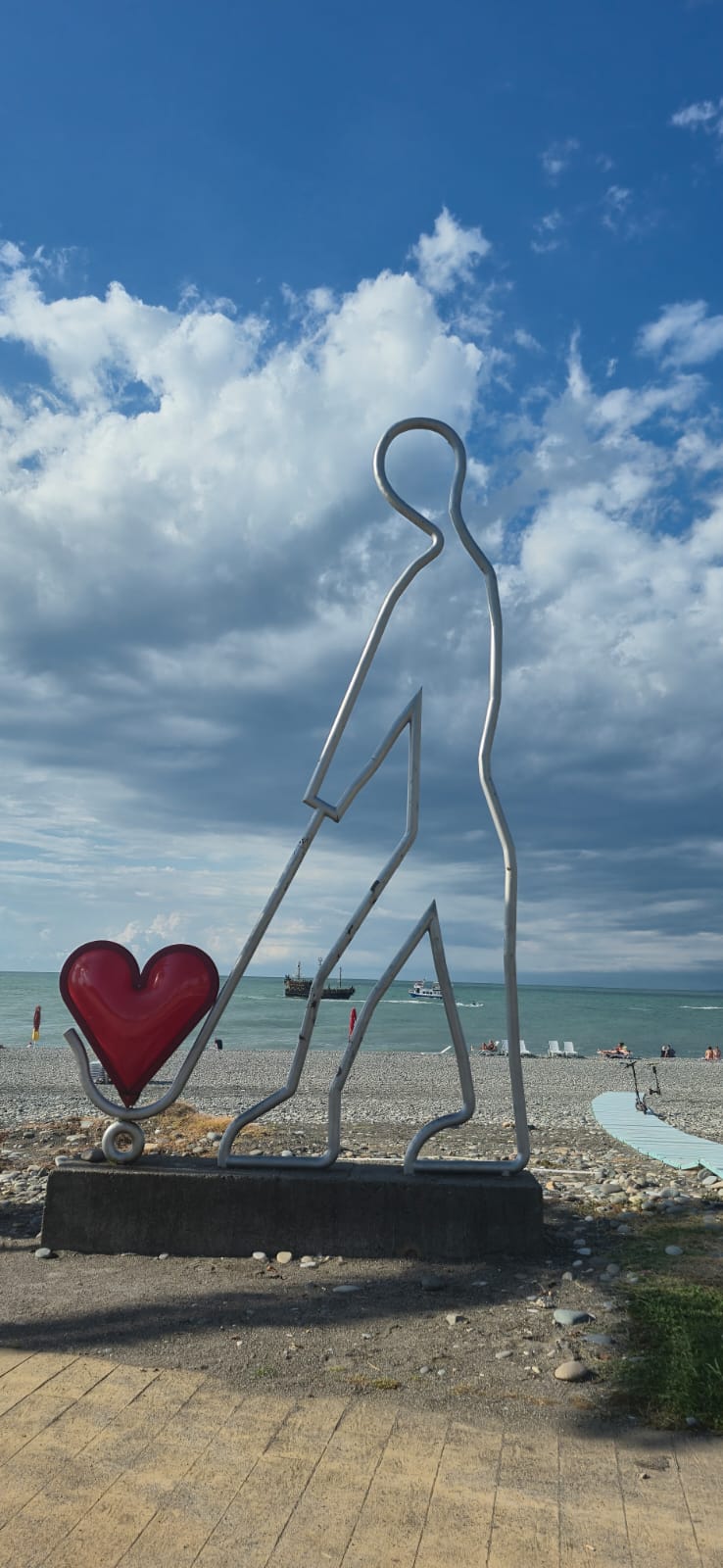
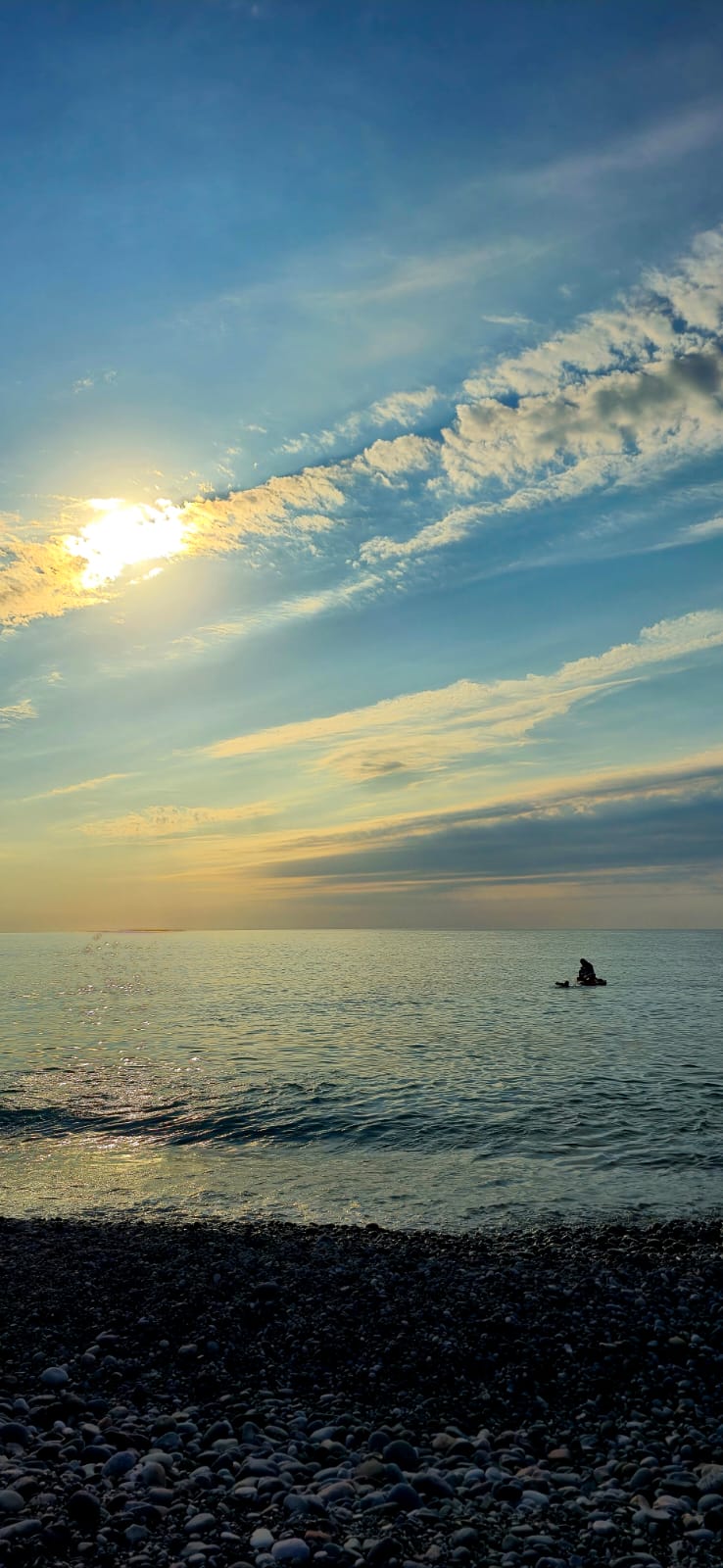
Crowds are usually not excessive, and contrary to what one might think, they drop drastically on weekends. On Saturdays and Sundays the beaches become semi‑deserted, and the reason is easy to explain: many locals prefer to head toward Kobuleti, a small town about twenty kilometers away that still hasn’t been overrun by large‑scale international tourism.
And yes, because as mentioned in the previous post, Batumi’s population doubles in summer, filling up with tourists from all over the world. Judging by the language we heard around us, Russians seem to be the majority, attracted by Georgia’s affordable prices.
On the beach, showers are available for free — unheated, but boiling hot in the evening after a day in the sun — as well as changing cabins. Services like pedal boat or boat rentals are rare, but in exchange, practically every 50 meters along the promenade you’ll find electric scooters, e‑bikes, or three‑ and five‑seat golf carts to zoom along the bike path that runs the entire length of the seafront.
One experience you shouldn’t miss, once you’re done swimming, is the walk all the way to the airport. Sitting right in front of the runway, on the rocks that jut out over the sea, you can watch planes arrive with a truly unique view.
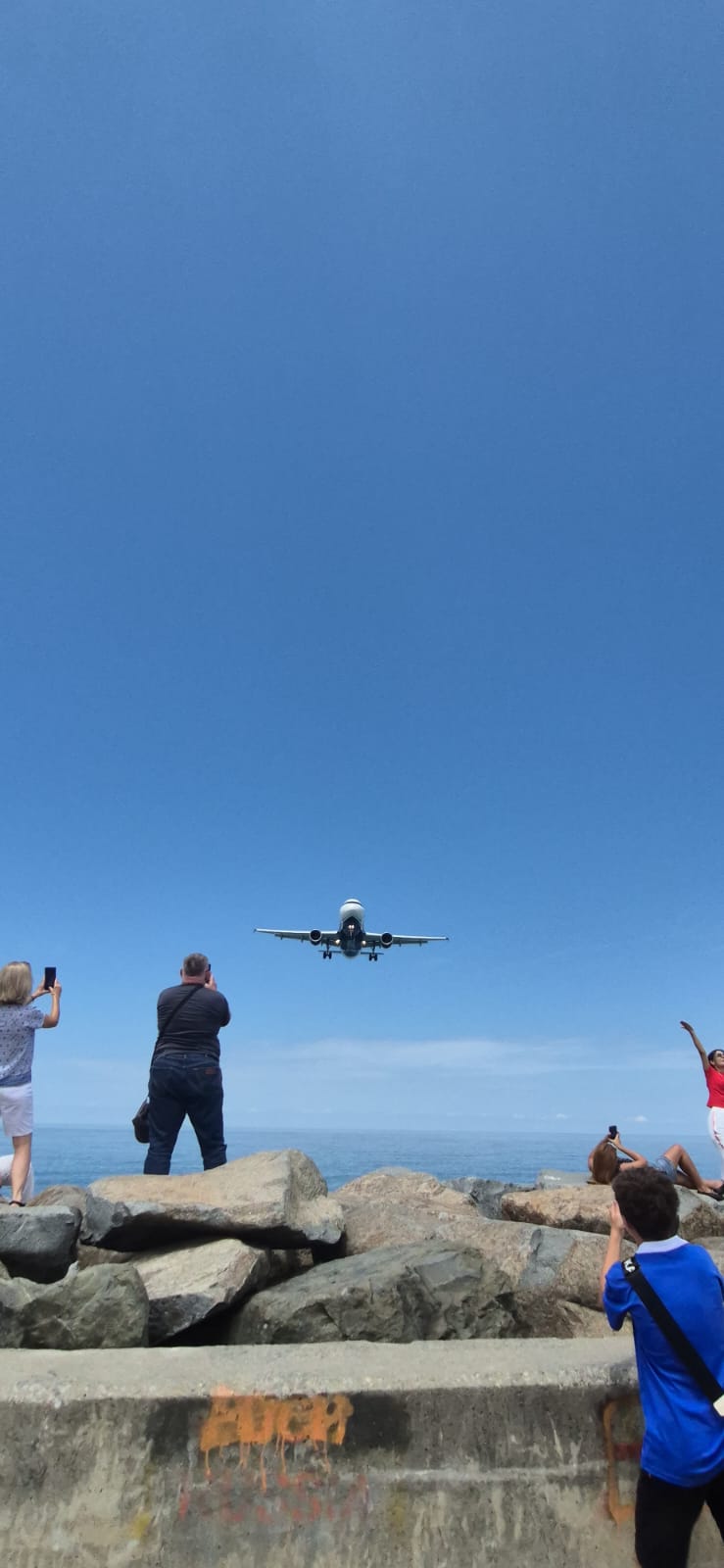
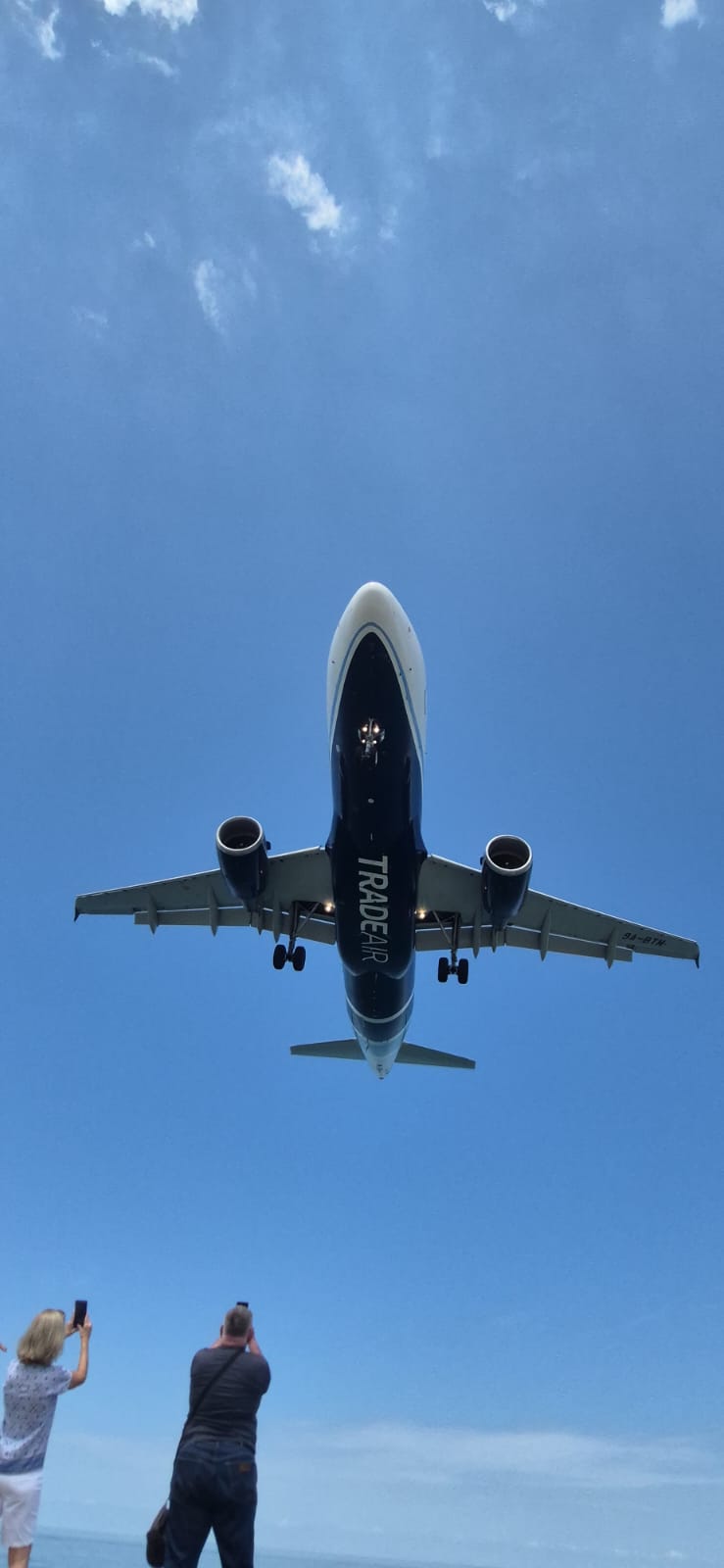
Our time in Batumi lasted twelve days, which went by surprisingly fast. I can’t say it was my favorite city in Georgia, but the evening atmosphere, the crowds of people from all over the world strolling along the promenade, and the sense of contentment the sea gave us will definitely be missed.
The final part of our Georgian trip will take place where everything began about twenty days earlier: Kutaisi, the ancient capital of the Kingdom of Colchis. A town that, in our family, we’ve nicknamed Wayward Pines for its unique ability to bring you back — no matter how far you walk — to the same exact spots.
In other words, a place no one would ever think of visiting twice… except for those who have already been there and, even without being able to explain why, can’t wait to return. But we’ll talk more about that next time.
I'm part of ITALYGAME Team
together with:
@girolamomarotta, @sardrt, @mikitaly, @mad-runner, @famigliacurione
 👉 VOTA PER NOI COME WITNESS👈
.jpg)
Upvoted! Thank you for supporting witness @jswit.
This post has been upvoted by @italygame witness curation trail
If you like our work and want to support us, please consider to approve our witness
Come and visit Italy Community