I Tried Opening a UAE Corporate Bank Account—Here's What I Wish I Knew
A first-hand account of opening a UAE corporate bank account—from KYC checks and paperwork to approval timelines and the lessons every new business owner should know.
Everyone told me that setting up a company in the UAE was the hard part. I soon discovered that opening the corporate bank account was where the real challenge began.
I wish someone had told me this before I started. It would have saved me weeks of confusion.
Like many first-time business owners, I spent months learning about company formation in the UAE. Every article and video talked about registering the business, getting the trade license, and choosing the right setup. It all made the process sound pretty straightforward.
But Opening a corporate bank account in UAE could be even more challenging than setting up the company. So when my trade license finally arrived, I thought I was almost done. I figured the bank account would be a quick formality before I could start operating.
I couldn't have been more wrong.
I wasn't expecting the number of KYC (Know Your Customer) questions the bank would ask. They wanted to understand exactly what my business did, where the money would come from, who my customers would be, and how I planned to operate. Then there were requests for extra documents, compliance reviews, and long waiting periods with very few updates.
At first, I thought the banks were making things unnecessarily difficult. Later, I realized that wasn't the case at all.
The goal wasn't to slow entrepreneurs down. Banks simply have to understand the businesses they work with and make sure every applicant meets the UAE's compliance and regulatory requirements. Once I understood that, the entire process made much more sense.
If you're planning to start a business in the UAE—or you're currently waiting for your corporate bank account to be approved—I hope my experience helps you avoid some of the surprises I faced. Knowing what to expect can save you a lot of time, stress, and unnecessary back-and-forth.
Why Having a UAE Trade License Doesn't Automatically Get You a Corporate Bank Account
The day I received my trade license, I remember smiling and thinking:
"Awesome! The hard part is over. Now I just need to open the bank account."
That turned out to be the biggest misconception of my entire business setup journey.
- Trade license
- Passport
- Emirates ID
- Memorandum of Association
- Company incorporation documents
I walked into the bank expecting everything to be simple.
I thought someone would check my documents, give me a corporate account application, and ask me to sign a few forms.
Instead, the bank manager smiled and asked me a question I wasn't ready for.
"Can you tell me about your business?"
He wasn't asking me to repeat what was written on my trade license. He wanted to know how the business actually worked—how it would make money, who my customers would be, where my suppliers were located, whether I'd receive local or international payments, and how much money I expected to move through the account every month.
That's when I realized something important.
This wasn't just about paperwork.
The bank wanted to understand the business itself.
Banks Want to Understand the Business Behind the Company
Like many new entrepreneurs, I assumed the bank's job was simply to verify my identity and company documents.
I soon learned that was only the starting point.
Banks in the UAE have to follow strict rules related to Anti-Money Laundering (AML), Counter-Terrorist Financing (CFT), sanctions screening, and customer due diligence. Because of that, they need to understand who they're banking with and whether the expected transactions match the business they're approving.
During the meeting, I realized they were trying to answer questions like:
Is this a genuine business?
Who owns the company?
What products or services will it offer?
Where will the money come from?
Where will payments be sent?
Do the planned transactions match the business activity?
The more clearly I answered those questions, the smoother the discussion became.
KYC Was Much More Detailed Than I Expected
I'd heard the term Know Your Customer (KYC) before, but I honestly thought it just meant showing my passport and Emirates ID.
I was wrong.
Every answer led to another question. The bank wanted to know about my work experience, why I chose the UAE for company formation, my expected revenue, the countries I'd be doing business with, whether I already had clients or contracts, who my suppliers would be, whether I'd deal with cash, and whether most of my payments would be local or international.
After that came requests for even more supporting documents.
That's when it finally hit me.
Getting my trade license was only the first milestone. Opening the corporate bank account was a completely different process.
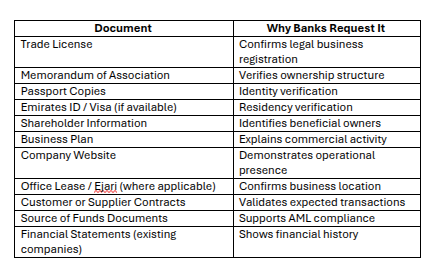
Documents You May Be Asked to Provide
Every bank has its own requirements, and they can vary depending on your business activity. Besides the standard company incorporation documents, you may also be asked to provide additional paperwork that helps the bank understand your business and complete its compliance checks before approving your application.
Some documents that might be needed are:
- Business plan
- Company website
- Client invoices
- Supplier contracts
- Existing contracts
- Office lease or Ejari (where applicable)
- Utility bills
- Source of funds documentation
- Profiles of shareholders
- Corporate structure chart
- Financial statements from previous years (for established companies)
Not all banks will require the same documentation.
Documents Commonly Requested During UAE Corporate Bank Account Applications
Why the Bank Review Took Much Longer Than I Expected
After submitting all the documents the bank had asked for, I honestly thought I was done.
I wasn't.
That's when I discovered that opening a corporate bank account is very different from registering a company. Company formation usually follows a clear process with defined approval stages. Bank applications, however, go through several internal reviews, and different teams may look at different parts of your application before making a final decision.
In my case, the first few days were completely quiet. Then I received an email asking for more details about my business. A few days later, another email arrived requesting additional supporting documents.
At first, I worried that something was wrong with my application. Later, I realized these requests were completely normal. They were simply part of the bank's due diligence process.
One thing I learned is that silence doesn't always mean nothing is happening. Banks often need time to verify company ownership, review business activities, complete compliance checks, and obtain internal approvals before they can move an application forward.
The best thing I did was reply quickly and keep my answers consistent. Every response matched the information I'd already submitted. Even small differences between your documents and your explanations can lead to more questions and longer delays.
Choosing the Right Bank Is Just as Important
After spending weeks answering KYC questions and waiting for updates, I realized something else.
Getting approved isn't only about having the right documents. It's also about choosing the bank that's the right fit for your business.
When I first started researching, I searched for "the best corporate bank in the UAE." Looking back, I should have been asking a different question:
Which bank is the best fit for my business?
Every bank has its own onboarding process, compliance requirements, and preferred customer profile. Understanding those differences can save you a lot of time and frustration.
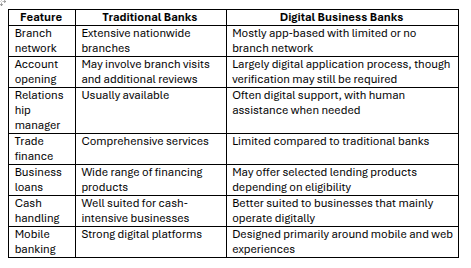
Traditional Banks or Digital Business Banking
One of the first choices you'll probably make is whether to apply with a traditional bank or a digital-first business banking platform.
Traditional banks such as Emirates NBD, FAB, ADCB, Mashreq, RAKBANK, and Dubai Islamic Bank offer a wide range of business services, including trade finance, business loans, treasury services, merchant solutions, and dedicated relationship managers. They're often a good choice for companies with larger operations or international transactions.
Digital-first options like Wio Business, Mashreq NEO BIZ, and Zand Bank focus on making everyday banking easier. Their strengths include digital onboarding for eligible businesses, user-friendly mobile apps, online payment tools, and streamlined account management. For many startups, freelancers, consultants, and small businesses, these platforms can be a practical and convenient option.
Traditional vs. Digital Business Banking
The best banking platform isn't always the one everyone recommends.
What really matters is finding a bank that fits your business today and can continue supporting you as your company grows. A startup, an online consultant, and an international trading business can all have very different banking needs, so choosing the right fit is more important than simply choosing the biggest name.
Free Zone vs. Mainland
One question I kept seeing was whether the free zone company setup in UAE has an easier time opening a corporate bank account than mainland businesses. After going through the process, I learned that both business structures can successfully open corporate bank accounts.
The main difference usually isn't whether the company is registered in a free zone or on the mainland. Instead, it comes down to the documents you provide and how familiar the bank is with the authority that issued your trade license.
More importantly, banks want to understand how your business operates, who owns it, what kind of transactions you'll be making, and whether everything matches the information you've submitted during the application.
If Your Business Has Foreign Shareholders
If your company has foreign investors or shareholders, don't be surprised if the bank asks a few extra questions.
You may be asked to explain your ownership structure in more detail, provide information about the source of funds, and identify the countries where your business will receive and send payments.
These additional checks are completely normal for businesses with international operations. They're part of the bank's risk assessment process and don't necessarily mean there's a problem with your application.
One thing I found helpful was having this information prepared in advance. It made responding to compliance questions much quicker and kept the application moving forward without unnecessary delays.
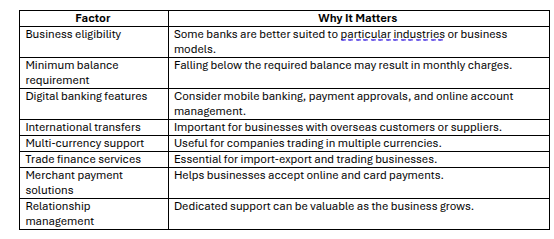
Factors to Compare Before Choosing a UAE Corporate Bank
One conversation with a relationship manager really stuck with me.
He said,
"Don't choose a bank for the next three weeks. Choose one for the next three years."
At the time, I nodded and moved on. Later, I realized that was probably the best advice I received during the entire process.
Opening the account is only the beginning. You'll rely on that bank every day—for paying suppliers, processing salaries, receiving customer payments, and even supporting your business as it grows. Choosing the right bank is a long-term decision, not just a quick task to complete after getting your trade license.
Common Reasons Corporate Bank Account Applications Are Delayed or Declined
Before applying, I assumed there were only two possible outcomes: approved or rejected.
I soon learned there's a lot more to it than that.
Banks can ask for extra documents, pause an application while they carry out more checks, or request additional explanations before making a decision. That doesn't automatically mean there's a problem with your business. Most of the time, it's simply part of their compliance and risk review process.
Some of the most common reasons applications are delayed include:
- Missing or inconsistent information.
- A business model that isn't clearly explained.
- Limited information about customers or suppliers.
- A newly established business with little operating history.
- A complex ownership structure involving multiple countries.
- Slow responses to compliance requests.
Sometimes a bank may decide that your business doesn't fit its onboarding policies or risk profile. That doesn't mean every other bank will make the same decision, because each institution has its own approval process.
One lesson became very clear to me: getting approved isn't just about submitting documents. It's about presenting a business that's transparent, organized, and easy for the bank to understand.
Your Business Presence Matters More Than I Expected
Almost every bank asked me a similar question:
"Where does your business operate?"
At first, I thought my trade license answered everything.
It didn't.
The banks wanted to understand how my business actually operated. Depending on the type of company, they asked about my office setup, employees, daily operations, and where I planned to meet clients.
I also learned that not every business needs a large office. In many cases, a flexi-desk is perfectly acceptable. What matters most is that your business setup matches the activities you're licensed to carry out.
There's No Standard Approval Timeline
The question I asked the most was probably:
"How long will this take?"
Every bank gave me a different answer.
That's because there isn't a fixed timeline for corporate bank account approvals. Several factors can influence how quickly an application progresses, including:
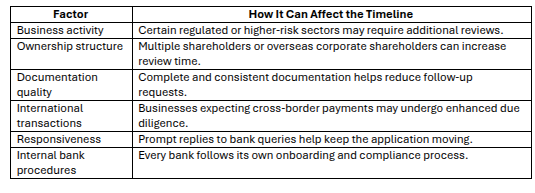
Instead of waiting for a certain number of days, it is more reasonable to get ready for the process itself. The properly prepared application is less likely to encounter any delays.
Costs You Should Budget for Before Opening a UAE Corporate Bank Account
One thing I misunderstood was the cost of opening a corporate bank account. Most UAE banks do not charge an account opening fee. Instead, the main costs are related to company formation and maintaining the account after it's opened.
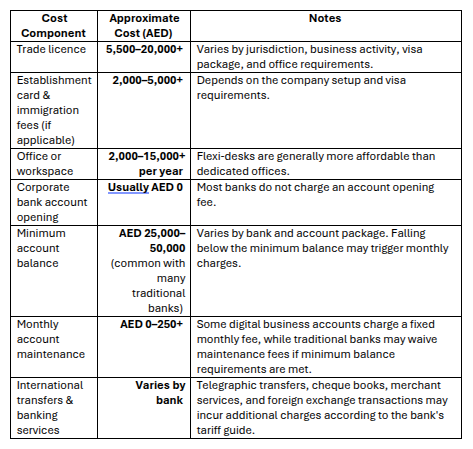
Among the costs that might be surprising for entrepreneurs is the minimum balance cost. Many traditional UAE banks ask businesses to maintain an average balance—often between AED 25,000 and AED 50,000—to avoid monthly account fees. Some digital business banking platforms have lower balance requirements or instead charge a subscription-style fee.
That taught me to always check the bank's latest tariff guide before applying. Every bank has different fees, requirements, and service charges, so it's worth understanding them in advance.
Mistakes I Wish I'd Avoided During the Banking Process
After finally getting my account approved, I realized that most delays weren't caused by complicated banking rules. They were usually the result of common mistakes that many first-time founders make.
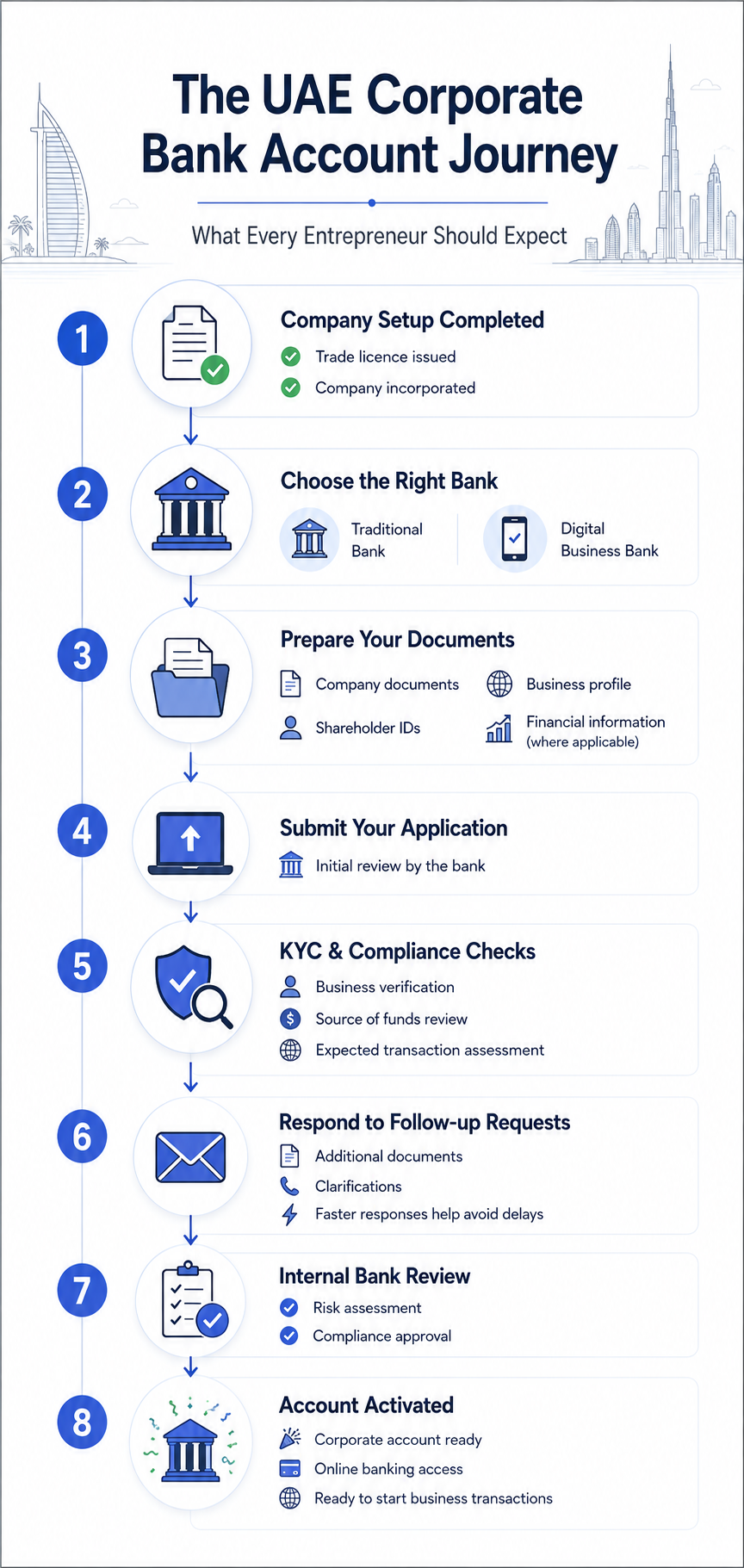
Here are the major mistakes to watch out for:
1. Thinking a Trade License Automatically Gets You a Bank Account
Getting your trade license is a huge achievement, but it doesn't guarantee that a bank will approve your application. Every bank has its own KYC and compliance process.
2. Applying Before the Business Is Ready
I learned that banks feel much more confident when they can clearly understand your business. Having a professional website, business profile, customer information, supplier details, or even draft contracts can strengthen your application.
3. Choosing the Wrong Bank
Not every bank serves every type of business equally well. Some are better suited to trading companies, while others work more closely with startups, consultants, or technology businesses based in RAK Innovation City, DSO, DIC, and similar hubs. Spending time researching the right fit can save a lot of frustration later.
4. Giving Inconsistent Information
Your trade license, website, business profile, and KYC answers should all tell the same story. Even small differences can trigger additional compliance questions.
5. Underestimating KYC
I originally thought KYC was just another form to complete. It's actually the bank's way of understanding how your business works, where your money comes from, and whether your planned transactions match your business activity.
6. Delaying Responses
It's completely normal for banks to ask for extra documents after your initial application. Responding quickly helps keep your application moving instead of sitting in a review queue.
7. Expecting Every Bank to Work at the Same Speed
There isn't a standard approval timeline. Processing depends on the bank, your business activity, ownership structure, and the complexity of the compliance review. A little patience goes a long way.
8. Thinking Only About Getting Approved
Approval is just the first step. You'll probably use this bank for years, so think about online banking, international transfers, customer support, financing options, and how well it can support your business as it grows.
What Happens After You Apply?
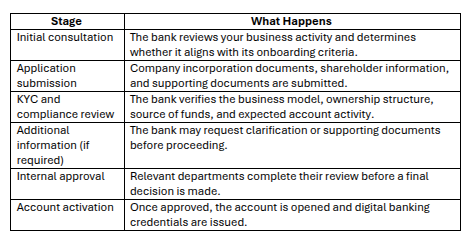
After a while, I stopped worrying about how many days the approval would take. Instead, I focused on the things I could actually control—replying quickly, keeping my documents organized, and being ready whenever the bank asked for more information.
Every bank has its own internal review process, but the overall journey is surprisingly similar. Once your application is complete, the most important thing you can do is stay responsive and let the bank complete its assessment.
Typical Corporate Bank Account Journey in the UAE
What I Learned From the Whole Experience
Looking back now, I don't think opening a UAE corporate bank account was as difficult as I first believed.
The real problem was that I misunderstood what the bank was trying to do.
I thought they were simply opening an account for my company.
In reality, they were trying to understand my business and decide whether it was the right fit for a long-term banking relationship built on trust, transparency, and compliance. If I had to give myself some advice or had approached an experienced corporate advisory team before incorporating my company, I would say it would be rather simple.
Once I stopped seeing every question as a hurdle and started treating it as a chance to explain my business, everything became much easier.
Make sure you can clearly explain:
What your business does.
Who your customers are.
Where your funding comes from.
How your business will operate.
And keep all your documents organized before you apply.
Above all, be patient.
The approval process may take time, but understanding what the bank is looking for makes the journey much less stressful. Once you're prepared, every conversation becomes easier—and you'll be one step closer to building a strong banking relationship for the years ahead.