Echoes of Eternity: Unraveling the Origin of the Universe
How did it all begin? For millennia, humanity has gazed at the night sky, driven by an insatiable curiosity to understand the genesis of our existence. While ancient mythologies once filled the void with narratives of deities and chaos, modern science has provided a framework built on observation, mathematics, and profound mystery.
The most widely accepted theory is the Big Bang. Contrary to common perception, it wasn’t an explosion in space, but an rapid expansion of space itself. Roughly 13.8 billion years ago, the entire universe was compressed into a singularity—a point of infinite density and heat.
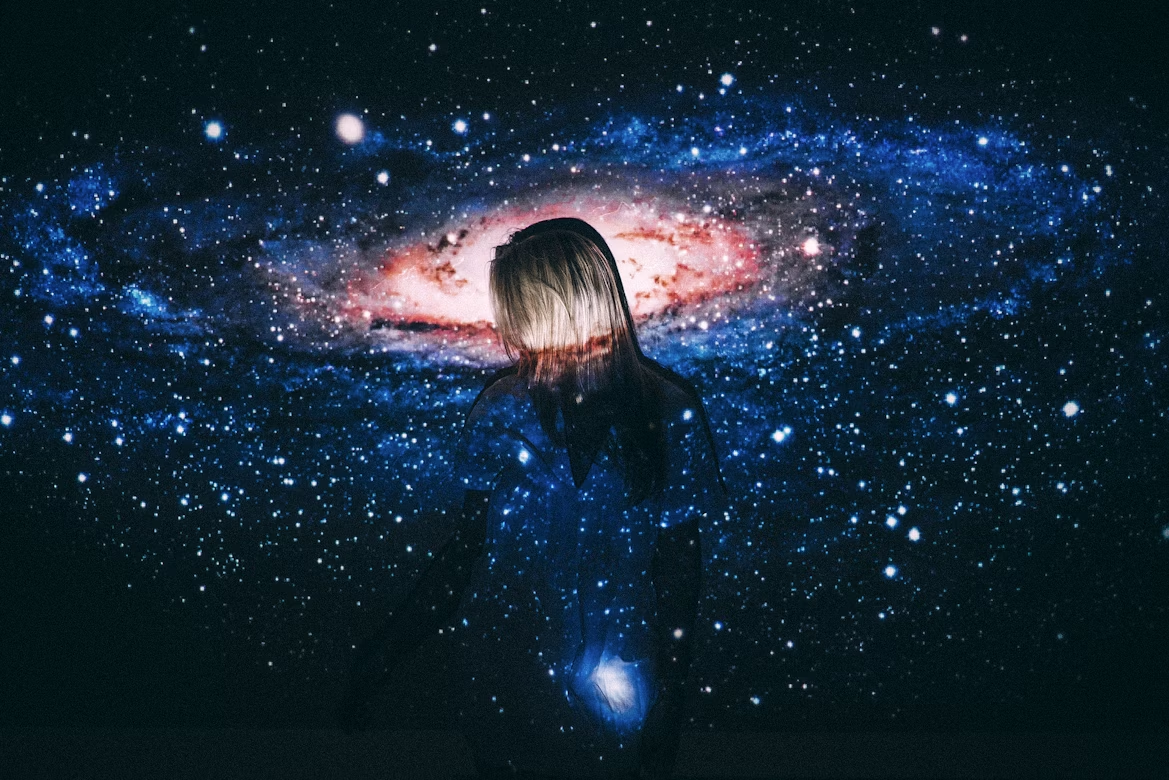
In a fraction of a second, it inflated, cooling as it grew, eventually allowing subatomic particles to form the atoms that constitute stars, planets, and us. The cosmic microwave background radiation—the "afterglow" of this event—remains the strongest evidence for this epochal beginning.
However, the Big Bang is not without its critics or limitations. It explains how the universe evolved, but it remains silent on what triggered the expansion or what existed "before" the singularity.
Enter the Cyclic or Oscillating Universe Theory. This hypothesis suggests our universe is part of an infinite loop of expansion and contraction.
In this view, the "Big Bang" was merely the "Big Bounce"—a rebirth following the collapse of a previous universe. It offers a solution to the problem of a definitive beginning, proposing instead a timeless, rhythmic cycle.
Perhaps more radical is the Multiverse Theory, which posits that our universe is just one of countless "bubbles" floating in a vast, inflating sea. In this scenario, the conditions for our existence are not inevitable, but a case of cosmic luck—we simply inhabit the bubble where the laws of physics allowed life to flourish.
As we peer deeper into the cosmos, one thing remains clear: our journey to understand the beginning is only just beginning.