Water and Power System Design Services for New Manufacturing Plants: Requirements and Guidelines
Water and power systems are the backbone of every manufacturing facility. Even the most advanced production machinery, automation systems, and industrial equipment cannot function properly without reliable utility infrastructure. Poor planning of water supply, electrical load, power backup, and distribution systems can lead to production downtime, equipment failure, high operating costs, utility shortages, and long-term expansion challenges.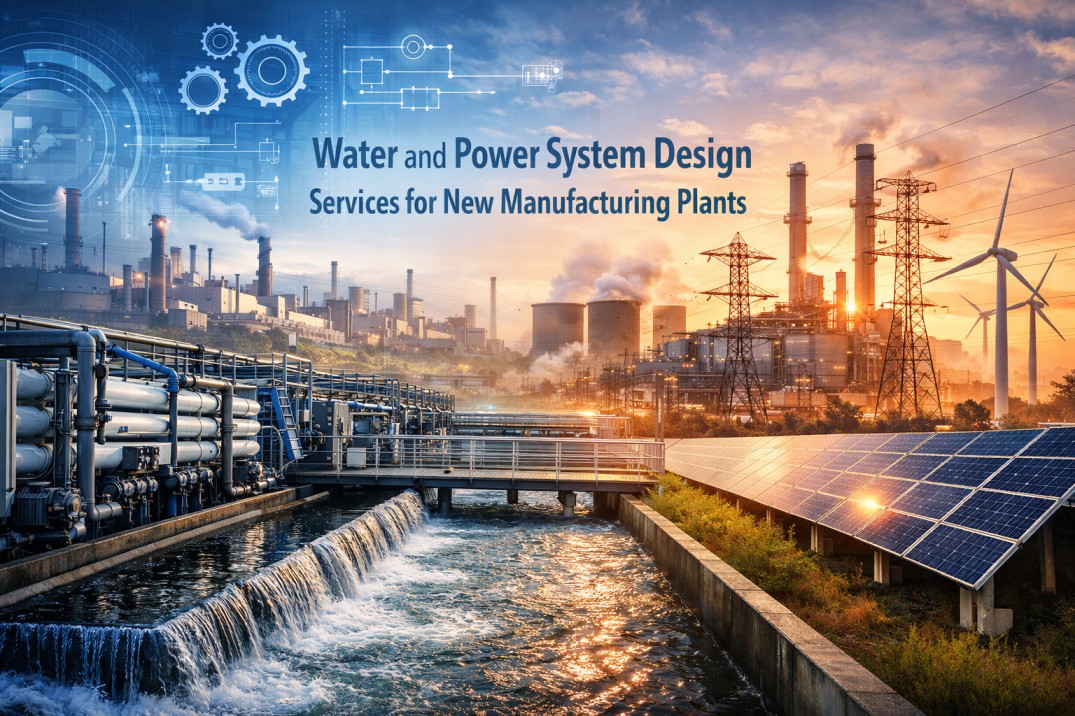 This companies increasingly seek professional utilities planning services during the early stages of project development.
Water and Power System Design Services help businesses plan utility requirements, optimize infrastructure investment, reduce operating cost, and ensure long-term production reliability. These services are especially important for pharmaceutical plants, chemical factories, food processing units, FMCG facilities, automotive plants, engineering workshops, and industrial warehouses.
A well-designed utility system ensures that manufacturing operations can run efficiently without interruptions, overloads, or resource shortages.
Why Water and Power Planning Is Important for Manufacturing Plants
Every manufacturing plant requires different levels of water and power depending on:
Production volume
Product type
Utility-intensive equipment
Automation level
HVAC requirements
Steam generation needs
Cooling systems
Shift patterns
Future expansion plans
For example:
Pharmaceutical plants require purified water systems, HVAC systems, cleanroom utilities, and backup power.
Food processing plants require process water, refrigeration systems, washdown utilities, and uninterrupted power supply.
Chemical plants require cooling water, process water, hazardous area electrical systems, and high-capacity utility infrastructure.
Engineering plants require machine power, compressed air systems, and cooling systems.
A Utility Infrastructure Consultant helps businesses estimate utility demand accurately and design systems that support long-term operations.
Without proper planning, companies may face:
Power outages
Water shortages
Utility bottlenecks
Equipment downtime
Poor product quality
Higher energy cost
Frequent maintenance issues
Limited expansion capability
Consult Our Engineering Experts: https://www.imarcengineering.com/services/utilities-planning-water-power-hvac-steam-services
What Are Water and Power System Design Services?
Water and Power System Design Services involve planning, sizing, designing, and integrating utility systems required for manufacturing operations.
Utilities Planning Services generally include:
Water source planning
Water treatment system design
Power load calculation
Transformer sizing
DG backup planning
Electrical distribution design
HVAC utility planning
Cooling water system design
Utility piping design
Pump sizing
UPS system planning
Utility monitoring systems
Energy optimization studies
A Utility Planning Consultant also ensures that all systems comply with local regulations, environmental requirements, utility availability, and future expansion needs.
Water System Design for Manufacturing Plants
Water is used in manufacturing plants for:
Process operations
Cooling systems
Boiler feed
HVAC systems
Cleaning and washing
Domestic use
Fire protection
Product formulation
Utility makeup water
The water quality required depends on the industry.
For example:
Pharmaceutical plants may require Purified Water (PW) and Water for Injection (WFI)
Food processing plants require potable water and washdown systems
Chemical plants require cooling water, process water, and treated utility water
Engineering plants may require water for cooling, cleaning, and dust suppression
Water system design generally includes:
Raw water source identification
Borewell or municipal water planning
Water storage tank sizing
Water treatment plant design
RO system planning
Softener design
Water distribution piping
Pump selection
Fire water storage
Effluent treatment planning
A Utility Planning Consultant helps ensure that water systems are designed for both current operations and future expansion.
Power System Design for Manufacturing Plants
Power system design is equally important because manufacturing plants rely on uninterrupted electricity for machinery, HVAC systems, utilities, lighting, automation, and safety systems.
Power system planning generally includes:
Connected load calculation
Maximum demand estimation
Transformer sizing
HT and LT panel selection
Cable sizing
Earthing system design
DG backup sizing
UPS planning
Lighting system design
Power factor correction
Energy metering systems
Power design is especially important for industries with high electrical load such as chemicals, heavy engineering, plastics, metal processing, and automated manufacturing.
A Utility Infrastructure Consultant generally reviews:
Production equipment load
Utility equipment load
HVAC load
Lighting load
Future expansion load
Emergency load
Power backup requirement
Accurate load calculation is important because undersized systems can cause frequent tripping, while oversized systems can increase capital cost.
DG Backup and UPS Planning
Many manufacturing plants in India require DG sets and UPS systems because power supply interruptions can stop production and damage sensitive equipment.
DG backup systems are commonly used for:
Production equipment
HVAC systems
Cold storage
Utility systems
Fire pumps
Emergency lighting
IT infrastructure
Security systems
UPS systems are usually required for:
PLC systems
SCADA systems
Automation panels
Server rooms
Laboratory equipment
Critical process systems
A Utility Planning Consultant helps determine the correct DG size and backup duration based on plant requirements.
Role of HVAC Design Consultant in Utility Planning
Although water and power are the main focus, HVAC planning is closely connected to utility design.
HVAC systems can represent a major portion of utility consumption in manufacturing plants.
An HVAC Design Consultant generally supports:
Cooling load calculation
Chilled water planning
Ventilation design
Air filtration systems
Humidity control
Cleanroom HVAC systems
Process cooling systems
Temperature control systems
HVAC planning is especially important for pharmaceutical plants, food processing units, cleanrooms, cold chain facilities, and electronics manufacturing plants.
Utility Planning for Different Industries
Pharmaceutical Plants
Pharma plants generally require:
Purified water systems
WFI systems
Cleanroom HVAC
Chilled water systems
DG backup
Utility monitoring systems
Chemical Plants
Chemical plants generally require:
Cooling water systems
Boiler feed water systems
Hazardous area power systems
High-capacity transformers
Emergency shutdown power
Food Processing Plants
Food facilities generally require:
Potable water systems
Cold storage utilities
Refrigeration systems
Washdown water systems
Steam and hot water systems
Engineering Plants
Engineering facilities generally require:
Machine power supply
Compressed air systems
Cooling water systems
Material handling power
Lighting and welding load
Common Challenges in Utility Planning
Manufacturing plants often face utility challenges such as:
Incorrect load estimation
Water shortages
Power outages
Utility bottlenecks
High energy cost
Poor distribution design
Lack of future expansion planning
Poor water quality
Undersized transformers
Inadequate DG backup
Utilities Planning Services help businesses avoid these issues through detailed analysis, proper design, and long-term infrastructure planning.
Benefits of Professional Water and Power System Design Services
Professional Water and Power System Design Services provide several long-term benefits.
These benefits include:
Better production reliability
Reduced utility downtime
Lower energy cost
Better water management
Better equipment performance
Improved safety
Better future expansion capability
Better regulatory compliance
Lower operating cost
Improved return on investment
For new manufacturing plants, utility planning is not only about providing water and power. It is a strategic process that helps businesses improve productivity, reduce operating risk, support future growth, and build a stronger foundation for long-term manufacturing success.
Contact
IMARC Engineering
Phone: +91-120-433-0800
Email: sales@imarcengineering.com
India: C-130, Sector 2, Noida, Uttar Pradesh 201301
LinkedIn: https://www.linkedin.com/showcase/imarc-engineering/