Using Vinyl Tarps to Create Durable Temporary Walls in Warehouses
Introduction
Warehouse environments demand flexibility. As inventory fluctuates, workflows evolve, and safety requirements change, static layouts can become inefficient or restrictive. Many operators need quick, cost-effective ways to divide space, control environmental conditions, or create designated work zones without committing to permanent construction. This is where vinyl tarps provide a practical solution.
Vinyl tarps are known for their strength, durability, and resistance to moisture and abrasion, making them ideal for industrial applications. When used as temporary walls, they can transform open warehouse space into organized, functional zones while maintaining operational efficiency. These tarps are widely available online, including on Amazon, offering various sizes and specifications to suit different warehouse needs.
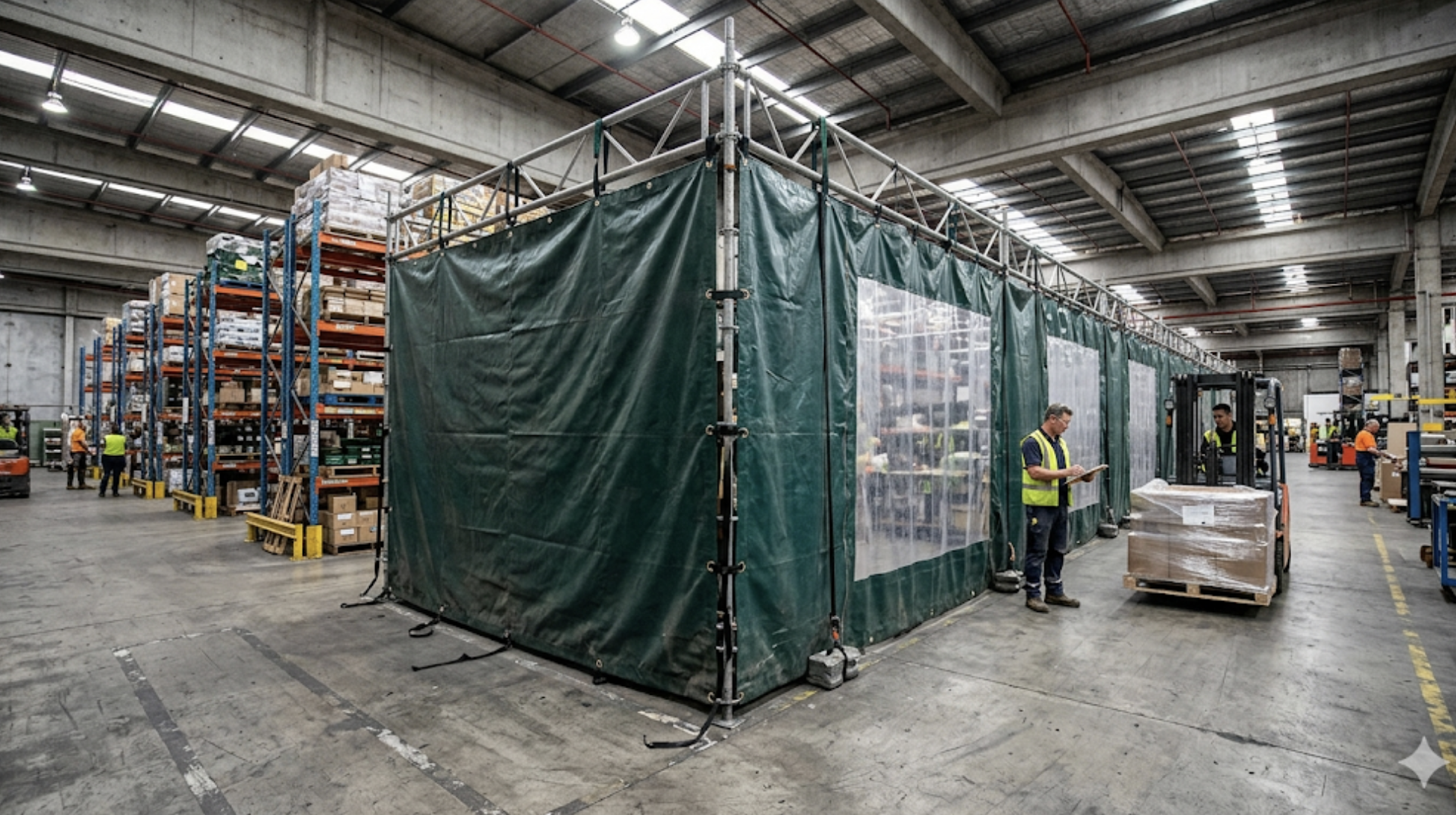
1. Creating Flexible Partitioned Workspaces
One of the primary uses of vinyl tarps in warehouses is space partitioning. Large, open areas can be divided into smaller, purpose-specific zones such as packing stations, storage sections, or assembly lines.
Unlike permanent walls, vinyl tarp partitions can be installed, adjusted, or removed as operational needs change. This flexibility is especially valuable in dynamic environments where inventory levels and workflows shift frequently.
By using tarps to define spaces, warehouse managers can improve organization, reduce congestion, and create more efficient workflows without the cost and downtime associated with structural modifications.
2. Enhancing Dust and Debris Control
Warehouses that handle manufacturing, packaging, or construction-related materials often generate dust and debris. Without proper containment, these particles can spread throughout the facility, affecting product quality and worker safety.
Vinyl tarps act as effective barriers that contain dust within designated areas. Their non-porous surface prevents particles from passing through, making them ideal for isolating high-dust operations such as cutting, sanding, or bulk material handling.
This containment not only protects sensitive inventory but also helps maintain cleaner working conditions, reducing the need for extensive cleanup and improving overall operational efficiency.
3. Improving Temperature and Climate Control
Maintaining consistent temperature zones in a warehouse can be challenging, especially in large, open spaces. Heating or cooling the entire facility is often inefficient and costly.
Vinyl tarp walls help create controlled environments by sectioning off specific areas. For example, temperature-sensitive goods can be stored in enclosed zones where climate conditions are easier to regulate. Similarly, refrigerated sections can be isolated to minimize energy loss.
Because vinyl tarps are resistant to air and moisture penetration, they provide an effective barrier that supports better climate management. This leads to energy savings and improved protection for temperature-sensitive products.
4. Increasing Safety and Workflow Efficiency
Safety is a critical concern in warehouse operations, particularly in facilities with heavy machinery, forklifts, and high foot traffic. Clearly defined zones can reduce accidents and improve navigation within the space.
Vinyl tarp walls can be used to separate hazardous areas, restrict access to certain zones, or create designated pathways for workers and equipment. Brightly colored or labeled tarps can further enhance visibility and communication.
In addition to safety, these partitions streamline workflow by organizing tasks into dedicated areas. Workers can focus on specific operations without interference, leading to increased productivity and reduced errors.
5. Easy Installation and Cost-Effective Scalability
One of the biggest advantages of using vinyl tarps as temporary walls is their ease of installation. They can be mounted using hooks, tracks, or simple frame systems, requiring minimal tools and labor.
This simplicity allows businesses to implement changes quickly, whether for seasonal demand, new projects, or temporary expansions. Unlike permanent construction, tarp walls can be scaled up or down with minimal investment.
Maintenance is also straightforward. Vinyl tarps are easy to clean and resistant to wear, ensuring long-term usability even in demanding environments. When replacements or upgrades are needed, a wide range of options is available on Amazon, making it easy to find suitable solutions for different warehouse configurations.
Conclusion
Vinyl tarps offer a durable, flexible, and cost-effective solution for creating temporary walls in warehouse environments. Their ability to partition space, control dust, regulate temperature, and enhance safety makes them an invaluable tool for modern operations.
As warehouses continue to adapt to changing demands, the need for scalable and efficient solutions becomes increasingly important. Vinyl tarp walls provide the versatility required to meet these challenges without the expense and rigidity of permanent structures.
With convenient access to a variety of vinyl tarp options through platforms like Amazon, businesses can quickly implement practical solutions that improve organization, efficiency, and overall performance within their facilities.