What makes the best water carts for civil, construction and mining projects
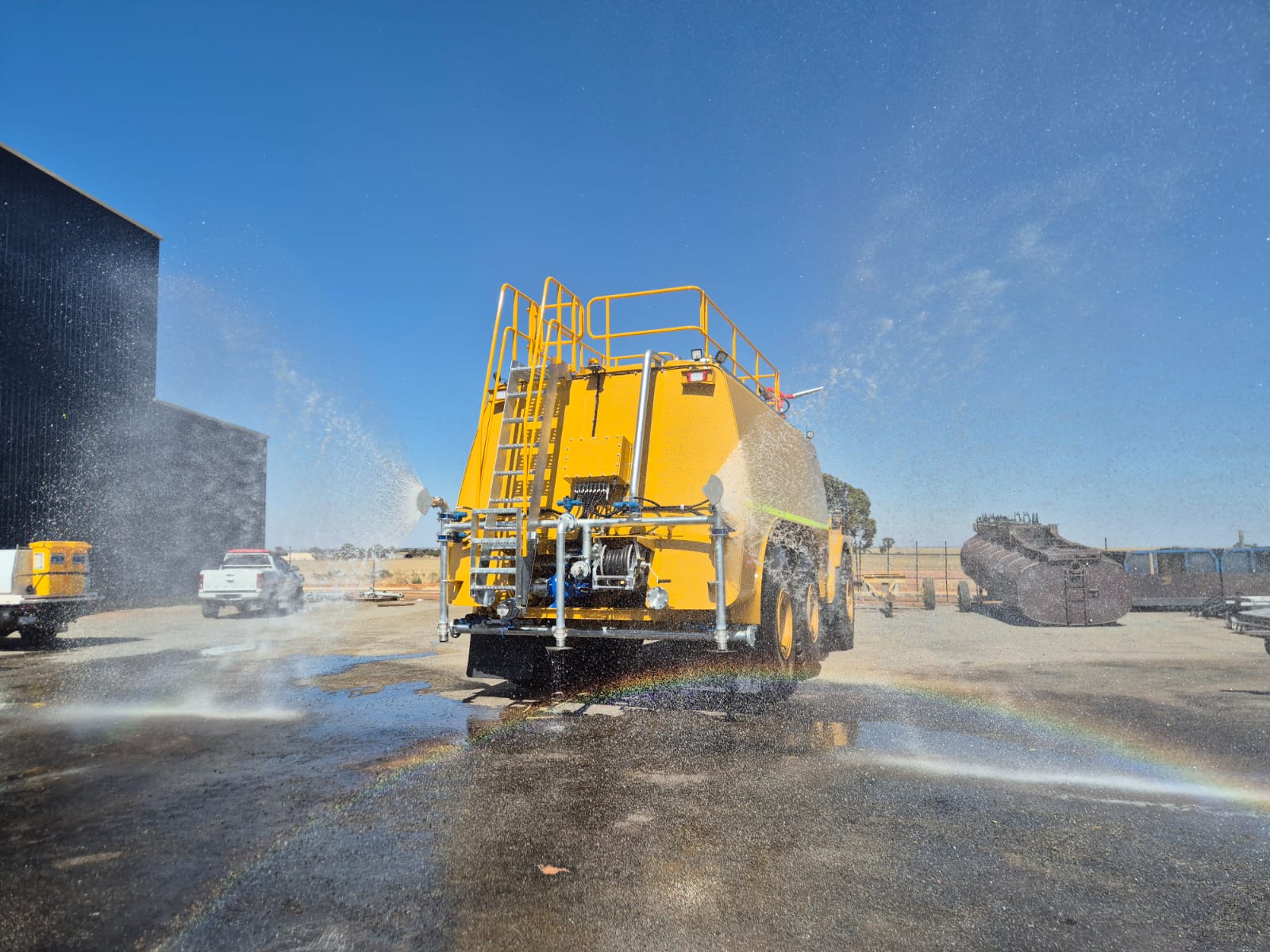
The best water carts aren't the cheapest on the lot. They're the ones that settle dust reliably, stay stable under full load, resist corrosion, and keep running with minimal downtime. What separates a good cart from a costly one comes down to five things: dust-suppression control, tank stability, build quality, mine-spec compliance, and the support behind it. Get those right and you buy an asset that earns its keep for years. Get them wrong and you buy a workshop regular.
Buy the wrong water cart and you'll know within a month. Dust drifts across haul roads it should be settling. Refills eat into shifts. A flat-walled tank starts cracking where it was never properly braced. On a mine site or a civil job, that isn't a minor annoyance. It's lost production, failed compliance checks, and a genuine safety risk to everyone working the road.
So the question worth asking before you spend the money isn't which cart is cheapest. It's what actually separates the best water carts from the ones that cost you later. The answer sits in a handful of details that are easy to skim past on a spec sheet and expensive to get wrong.
Dust suppression that holds the road
The whole job of a water cart is to keep dust down, and how well it does that decides everything else. Poor suppression means reduced visibility on haul roads, higher collision risk, respiratory exposure for crews, and pressure from environmental compliance. Good suppression is the opposite: safer roads, healthier workers, and a site that passes its checks.
What makes the difference is control. The best water carts let the operator manage coverage from inside the cab rather than climbing down to adjust anything. Shermac carts run configurable spray kits, batter sprays left and right, a central fan spray, and dribble bars, alongside a hydraulic water cannon, all controlled from an ergonomic in-cab panel. Operators adjust spray direction and flow on the move, matching output to the dust conditions in front of them instead of soaking one stretch and starving the next. That control is what turns water into even coverage rather than waste.
Stability starts with the tank
A full tank of water is a moving load, and a moving load is a safety problem if it isn't managed. Without proper internal bracing, water surges under braking and shifts weight on descents, exactly the conditions a haul road throws at a truck all day.
This is where tank design earns its place. Shermac's curved tank sits low in the chassis to lower the centre of gravity, which supports stable handling on uneven ground and reduces strain on the truck's suspension and braking. Inside, transverse and longitudinal baffling controls surge so braking stays predictable and downhill runs stay steady. The curved shape does something else, too: it removes the flat-walled stress points where cracks tend to start, so the tank holds up under constant vibration instead of failing early.
Built to last the asset lifecycle
Reliability is the difference between an asset and a liability. A cheap cart that corrodes, cracks, and lives in the workshop costs far more over its life than its price tag ever suggested.
The best water carts are built to outlast the sites they work on. Shermac tanks use heavy-gauge steel, with 10mm floor plates and 8mm wall and baffle plates on the rigid range, and corrosion-protected pipework to resist rust in abrasive, wet conditions. Just as important is how easy the cart is to keep running. Pumps, spray systems, and access points are arranged for safe, simple operation and fast daily servicing at ground level, which shortens service intervals and keeps the cart on the road rather than in the shed.
Compliance and support that de-risk the purchase
For anyone signing off the spend, the build is only half the decision. The other half is whether the cart clears site requirements and whether someone stands behind it after delivery.
Shermac carts are mine-spec compliant as standard, with isolation points, compliant lighting, safety signage, emergency stops, and compliant access systems built in, and ROPS and FOPS available where the site calls for them. Every build comes out of an ISO9001:2015 certified process at the Western Australian facility, backed by a three-year warranty on Shermac-manufactured components and a WA-based aftercare team for the life of the equipment. That combination is why carts from this range run across major operations including BHP, Rio Tinto, FMG, and Mineral Resources. Proven performance and documented compliance take the risk out of a large purchase.
Matching the cart to the site
There's no single "best" build across every job, and that's the point. The best water carts for civil and construction work aren't the same as a high-production mine cart, and treating them as interchangeable is how fleets end up with the wrong tool.
Civil and construction sites tend to want manoeuvrability and mid-range capacity for earthworks dust control, compaction prep, roadworks, and wash-down. Large mining operations want high volume and sustained haul-road coverage, which pushes toward rigid and articulated platforms and much larger tanks. Shermac's mine-spec water cart range spans both, from compact 6x4 and 6x6 builds up to high-capacity rigid carts, so the tank capacity, chassis, and spray layout are matched to the actual application rather than forced to fit.
Frequently asked questions
What size water cart do I need?
It depends on the job. Civil and roadworks applications are often well served by mid-range capacities that keep the truck manoeuvrable, while large mining operations running continuous haul-road suppression need much higher volumes to cut refill frequency. Match capacity to your site's water demand and haul distances rather than buying the biggest tank available.
What makes a water cart mine-spec compliant?
Mine-spec compliance covers the safety systems a site requires as standard: isolation points, compliant lighting and signage, emergency stops, and safe access. Depending on the operation, ROPS and FOPS may also be required. A compliant cart has these integrated into the build rather than added as afterthoughts
How long should a good water cart last?
A well-built cart is an asset you keep for years, not seasons. Heavy-gauge steel construction, corrosion-protected pipework, and proper baffling all extend service life, while ground-level service access keeps maintenance quick. Shermac backs its manufactured components with a three-year warranty and ongoing aftercare, which reflects the kind of lifespan a quality cart should deliver.
The bottom line on choosing well
The best water carts aren't the ones with the lowest sticker price. They're the ones still working safely and reliably long after the cheaper option has become a maintenance headache. Dust control, stability, build quality, compliance, and support are what separate the two, and they're worth weighing carefully before you commit.
To match a build to your site, terrain, and water demand, talk to Shermac's water cartage specialists.