🔥 Oil Prices Rise After Trump Says Iranian Ship Seized: Strait of Hormuz Crisis Deepens
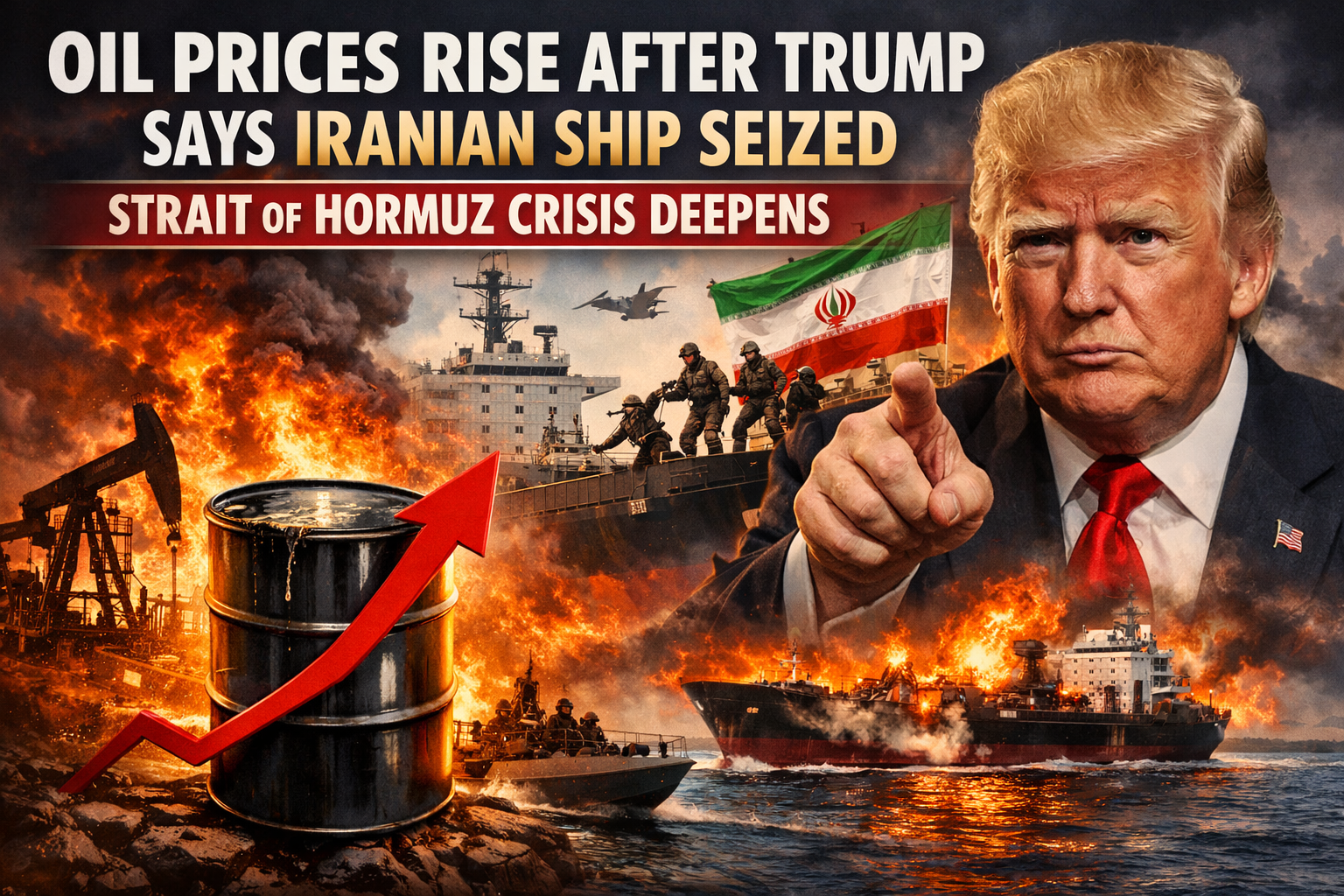
Global oil markets are once again on edge as tensions between the United States and Iran escalate into a high-stakes geopolitical standoff. A dramatic surge in oil prices during Monday’s Asian trading session reflects growing fears that one of the world’s most critical energy arteries—the Strait of Hormuz—could become a flashpoint for wider conflict.
The immediate trigger came after Donald Trump announced that the United States had intercepted and seized an Iran-flagged cargo ship. This move followed Iran’s warning that it would once again shut down the strait to commercial vessels, threatening to target any ship entering the passage. Such actions have rattled global energy markets, as nearly 20% of the world’s oil and liquefied natural gas flows through this narrow corridor.
The financial impact was swift and significant. Brent crude prices jumped nearly 5% to $94.66 per barrel, while West Texas Intermediate surged over 5.5% to $88.55. These sharp increases underscore how sensitive energy markets remain to geopolitical instability, particularly in regions vital to global supply chains.
This latest escalation builds on an already volatile situation following joint US and Israeli strikes on Iran earlier this year. Tehran’s retaliatory rhetoric and threats against shipping routes have only deepened uncertainty, fueling erratic price movements. Analysts warn that market reactions are being driven less by actual supply disruptions and more by rapid-fire political messaging and strategic signaling.
Adding another layer of complexity, Washington has indicated that negotiations may take place in Pakistan, with Vice President JD Vance reportedly leading the delegation. However, Iran’s state media has downplayed the likelihood of participation, stating there are currently “no plans” to join the talks. This ambiguity highlights the fragile and uncertain nature of diplomatic efforts.
Energy analyst Saul Kavonic aptly described the situation as negotiations “playing out in real time” on the Strait of Hormuz. His observation captures the essence of the crisis: a complex blend of military maneuvering, political messaging, and economic consequences unfolding simultaneously on the global stage.
As the world watches closely, one thing is clear—until tensions ease and clear diplomatic progress is made, oil markets will remain volatile, and the risk of broader disruption will continue to loom large.