Backyard Wildlife Photos in Southeastern Pennsylvania: A few more small birds during June
As you may recall from last week's post, I thought that today's post would be wrapping up the photos of small birds during June. That turns out to have been overly ambitious, though. By the time I got through the first two birds, Northern Cardinal and American Robin, I realized that I was going to need two posts. The challenge is that there were photos of two sexes of Cardinals and multiple lifecycle activities for the Robins. As a result, those two birds already had too many photos.
So, I cut the list of animals in half, moving the Northern Cardinal to a later post. I also adopted a new workflow for this post. Up until now, I've been writing & posting photos at the same time and hand-editing the photo tables. In today's post, I picked the photos first and now I'm doing the writing. The 2-column tables with the photos were all formatted by Claude using a new "wildlife table skill" in my skill.md file. As a result of this new workflow, I was already over 1000 words before I started writing. ;-)
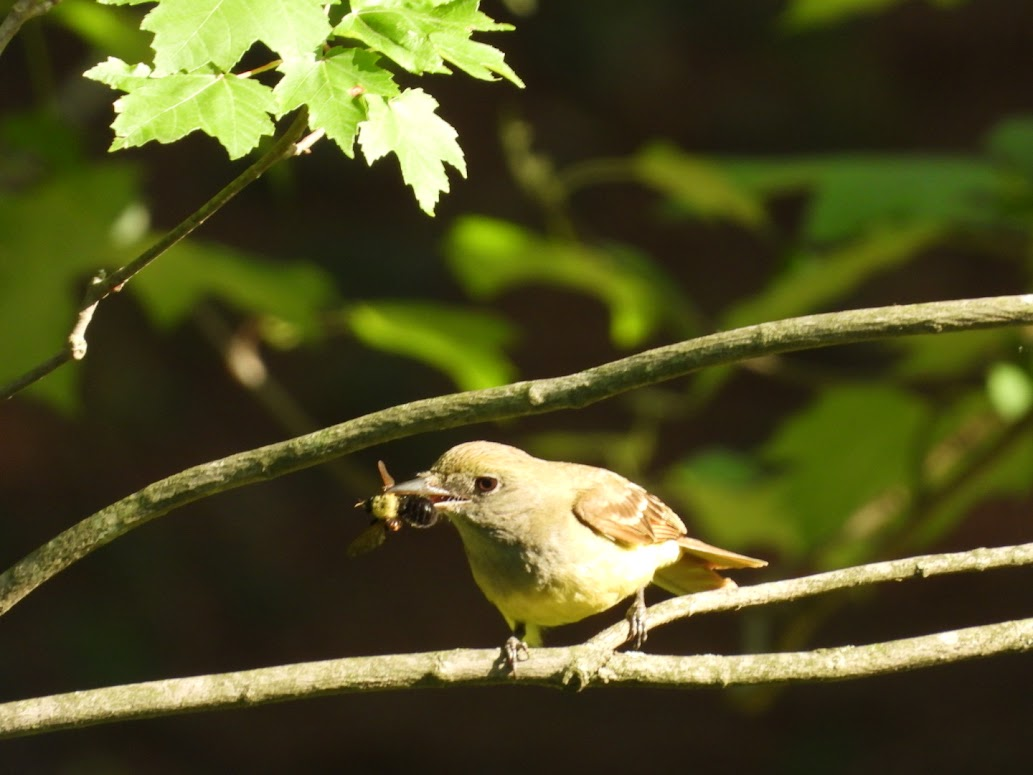
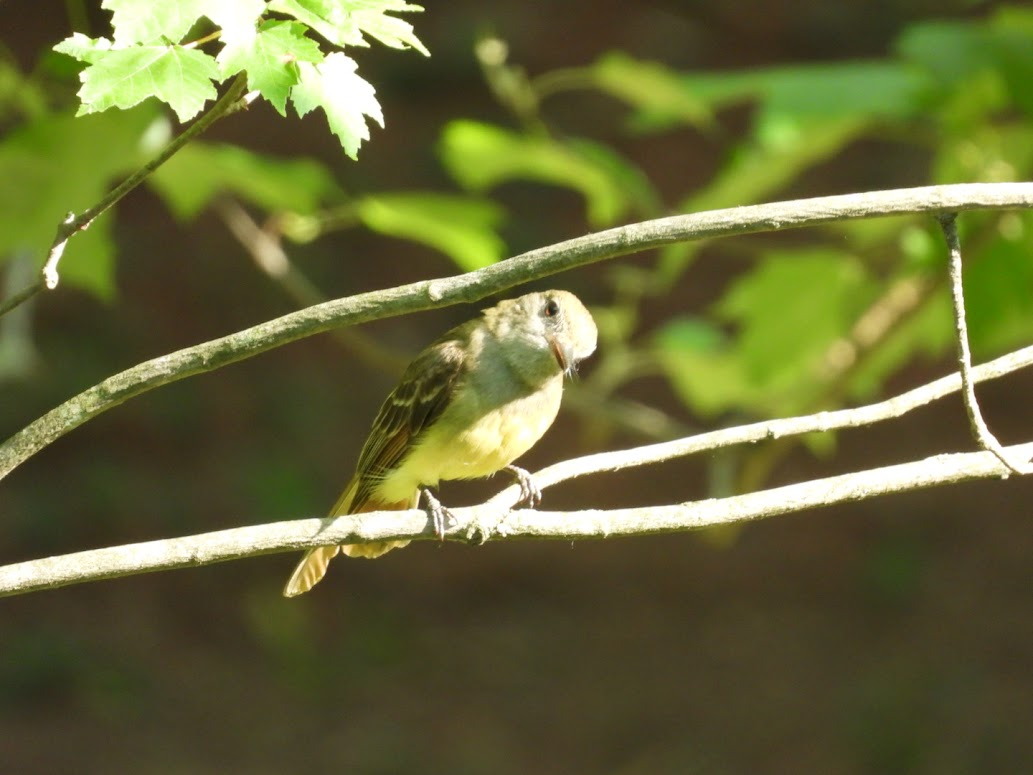
This post covers the American Robin, Downy Woodpecker, Gray Catbird and my one and only sighting of the Great Crested Flycatcher (seen to the right).
First, here's a summary table of my iNaturalist observations of these animals. After that, you'll find the photos. As with last week's posts, I didn't submit every animal to iNaturalist, so the photos below may or may not have matching observations on the iNaturalist platform.
| Common Name | First Observation Date | Observation Count | June Observation Count | Observations |
|---|---|---|---|---|
| American Robin | 2026-04-10 | 10 | 5 | 2026-06-09, 2026-06-19, 2026-06-20, 2026-06-12, 2026-06-28 |
| Downy Woodpecker | 2026-04-03 | 3 | 2 | 2026-06-06, 2026-06-24 |
| Gray Catbird | 2026-05-01 | 10 | 2 | 2026-06-14, 2026-06-23 |
| Great Crested Flycatcher | 2026-06-09 | 1 | 1 | 2026-06-09 |
American Robin
I'm not sure what I can write about the American Robin - as a species - that I haven't already mentioned. They range across most of the United States all year, migrate to Canada during the summer and to Mexico during the winter, and they typically nest and lay eggs two or three times per season with three to seven eggs each time. They're sort of a tragic animal, in that a large percentage of young Robins don't survive their first year, so the species' survival strategy is based on numbers - not longevity. In my area, they are so common that I only want to include "special occasions", but even so there are still a good number of photos here.
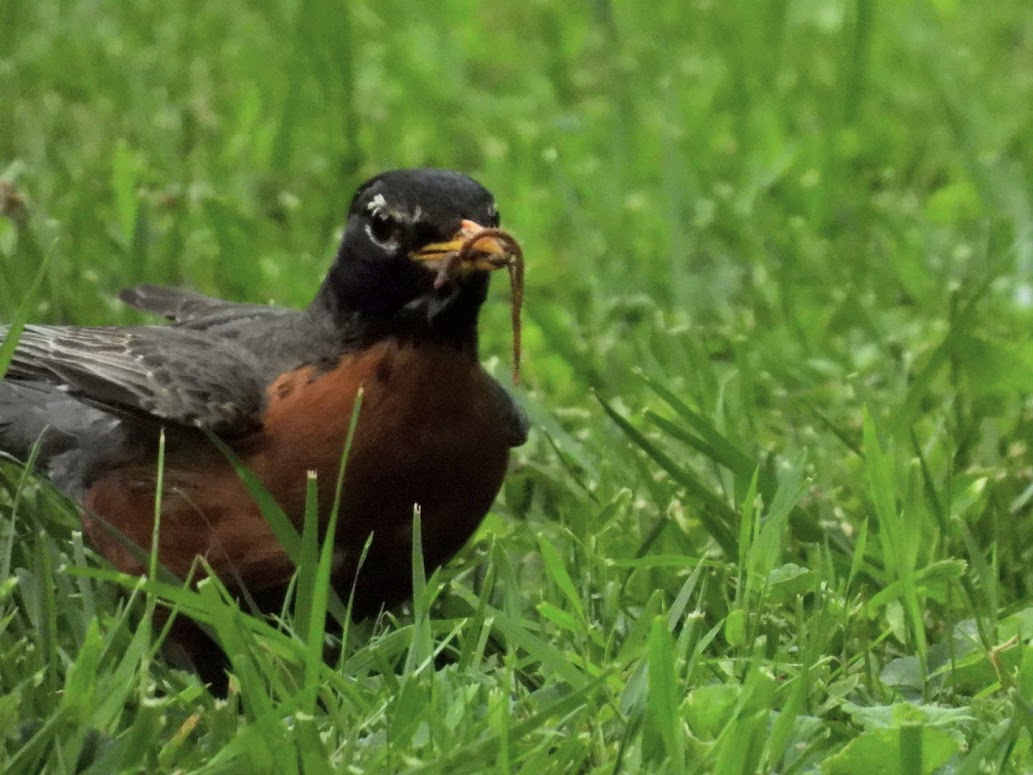
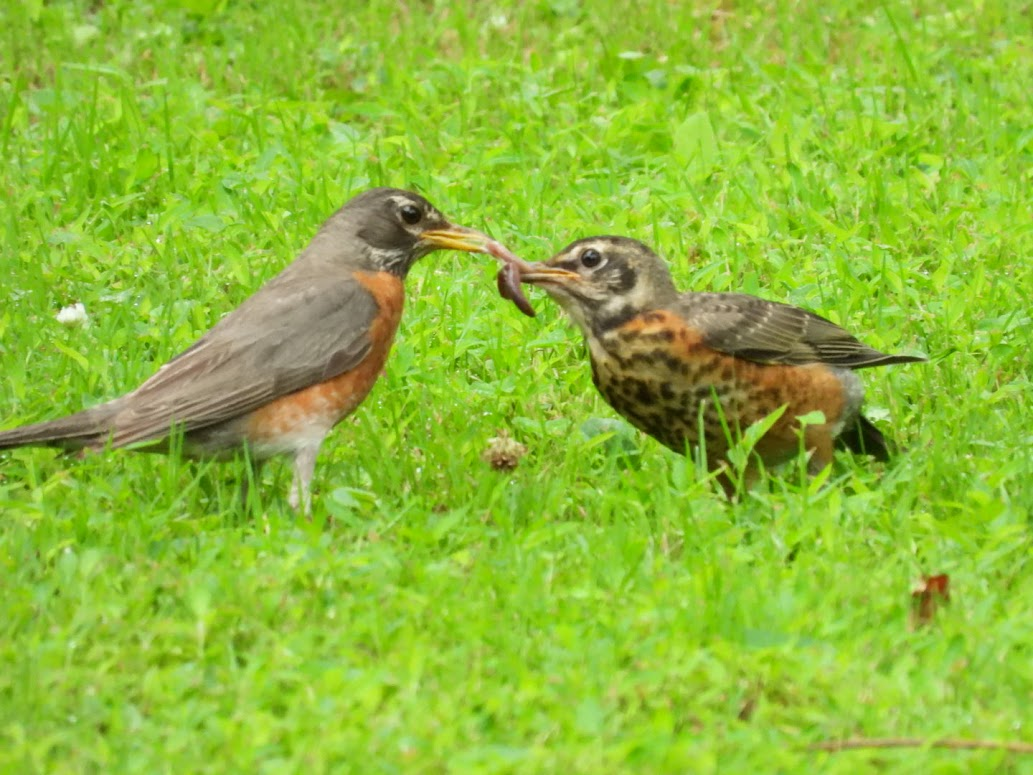
As with May, I caught several events on camera during June where an adult was feeding a fledgling. These can be seen here on June 19 and June 28. There were others that I left out of the post.
New in June, I managed to get photographs of a pair of nestlings before they left the nest. These can be seen from June 20 through June 25. Funnily, on one of those occasions, I was tightly zoomed in on the nest to see if the nestlings were still there when one suddenly popped its head above the nest's wall. I was looking so carefully, and the appearance was so sudden, that the little head 50 feet away actually startled me into taking a step back.
On June 28, I got another fledgling feeding event where I assume - but don't know - that the fledgling was one of the pair from the nest between the 20th and 25th.
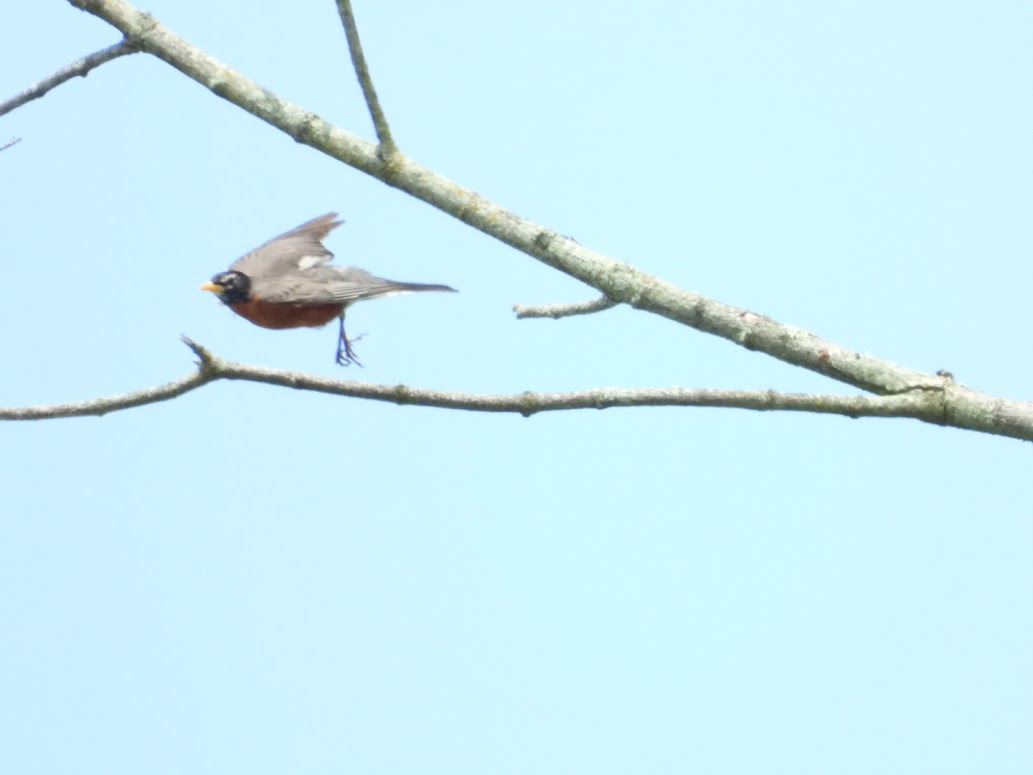
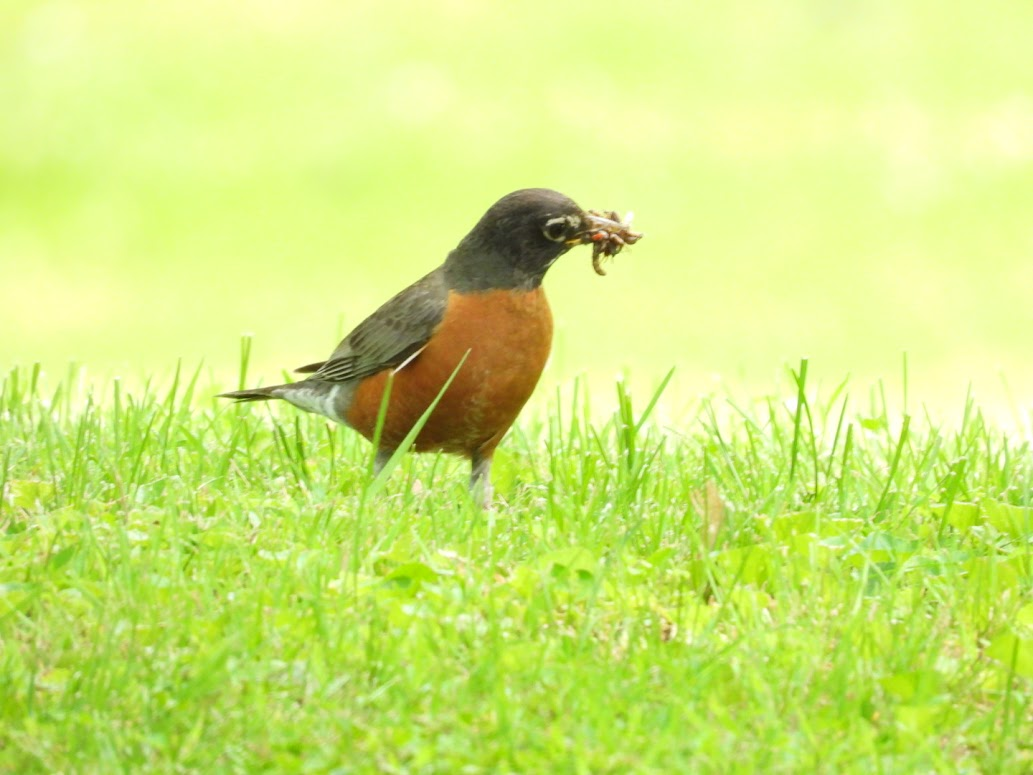
Other shots show a Robin gathering nesting material or food to take back to the nest on June 7, June 12, and possibly June 18 along with a Robin launching itself into flight on June 7. This is about as close to a "bird in flight" shot as I'm currently able to get for small birds with my Nikon P1000, and even shots like this are difficult and rare (largely because you never know when they're about to launch).
Update: I forgot to mention that the June 22 photo shows a Robin gathering food or nesting material during a somewhat heavy rain storm.
| June 7 | June 7 |
 |  |
| ƒ/8, 1/1250, ISO1600, 539mm (3000mm equiv, 125X) | ƒ/8, 1/1250, ISO1600, 539mm (3000mm equiv, 125X) |
| June 12 | June 18 |
 | 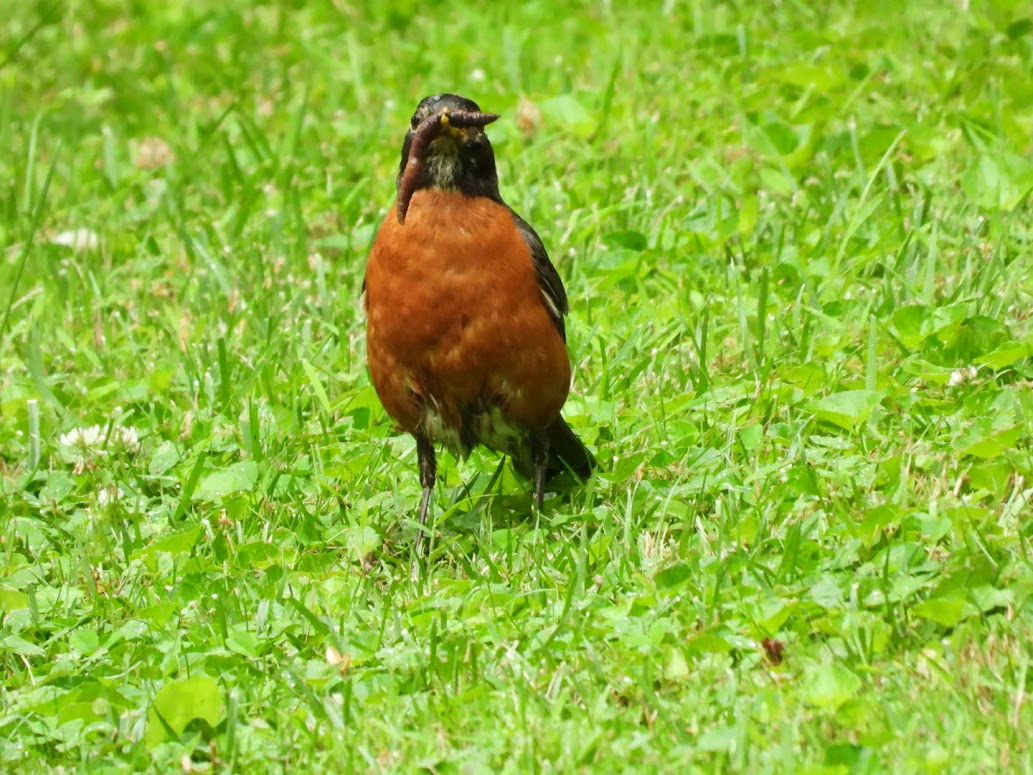 |
| ƒ/7.1, 1/100, ISO800, 395mm (2199mm equiv, 91.6X) | ƒ/7.1, 1/320, ISO1600, 467mm (2599mm equiv, 108.3X) |
| June 19 | June 19 |
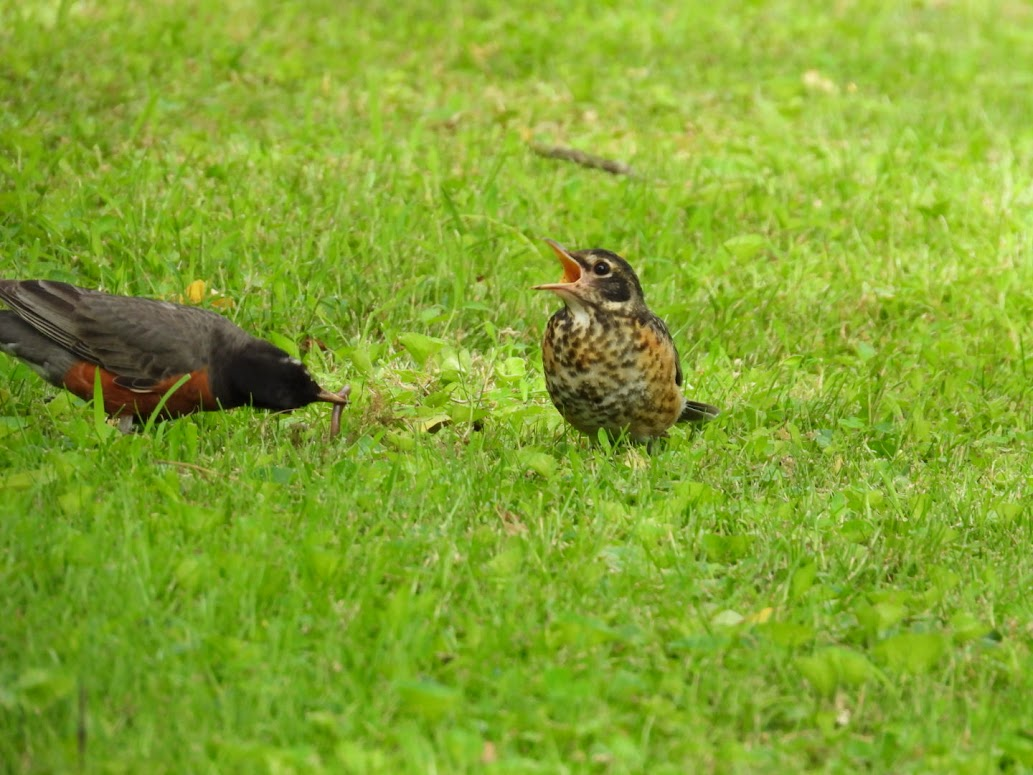 | 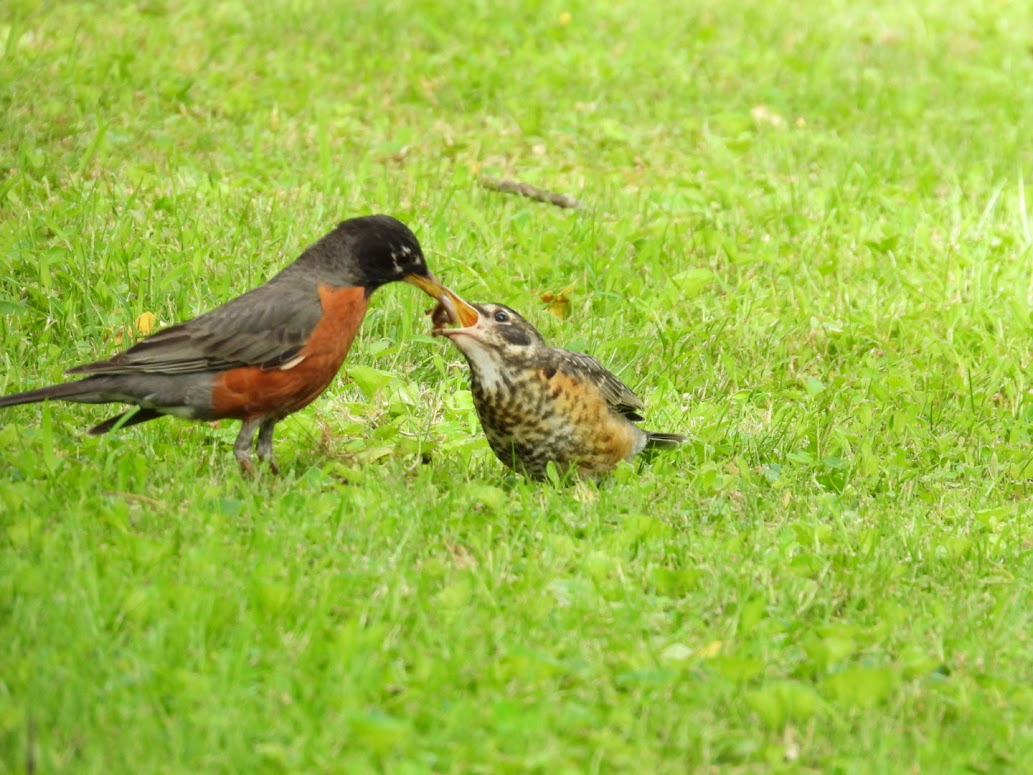 |
| ƒ/5.6, 1/250, ISO400, 216mm (1202mm equiv, 50.1X) | ƒ/5.6, 1/200, ISO400, 216mm (1202mm equiv, 50.1X) |
| June 19 | June 19 |
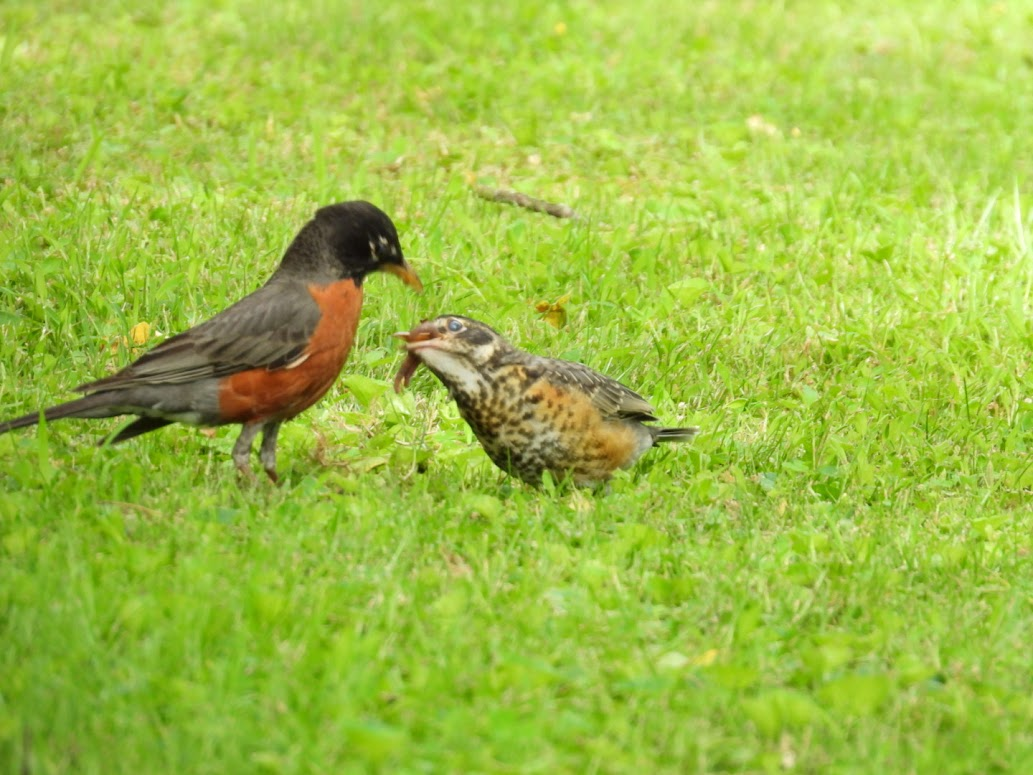 | 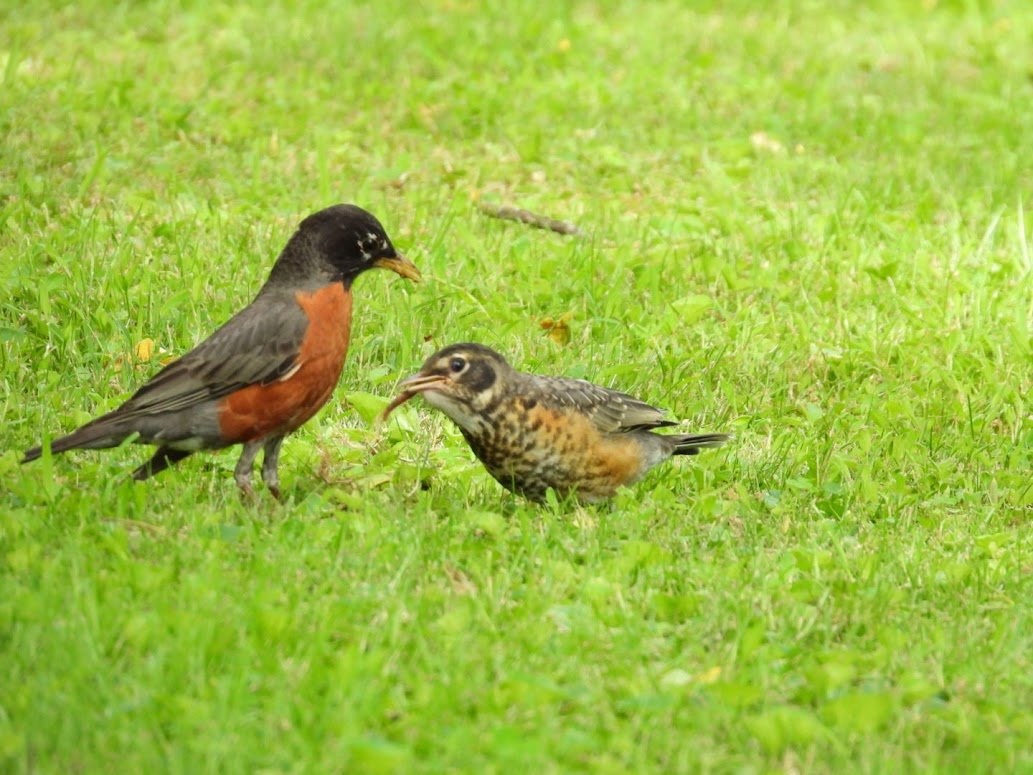 |
| ƒ/5.6, 1/200, ISO400, 216mm (1202mm equiv, 50.1X) | ƒ/5.6, 1/200, ISO400, 216mm (1202mm equiv, 50.1X) |
| June 19 | June 20 |
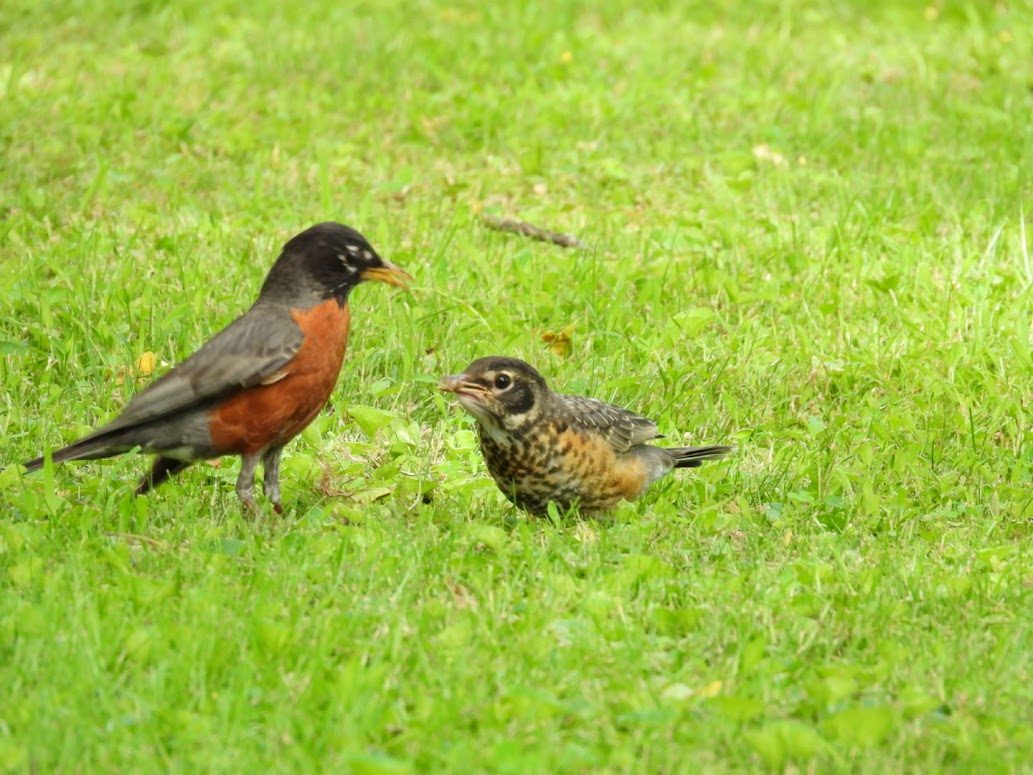 | 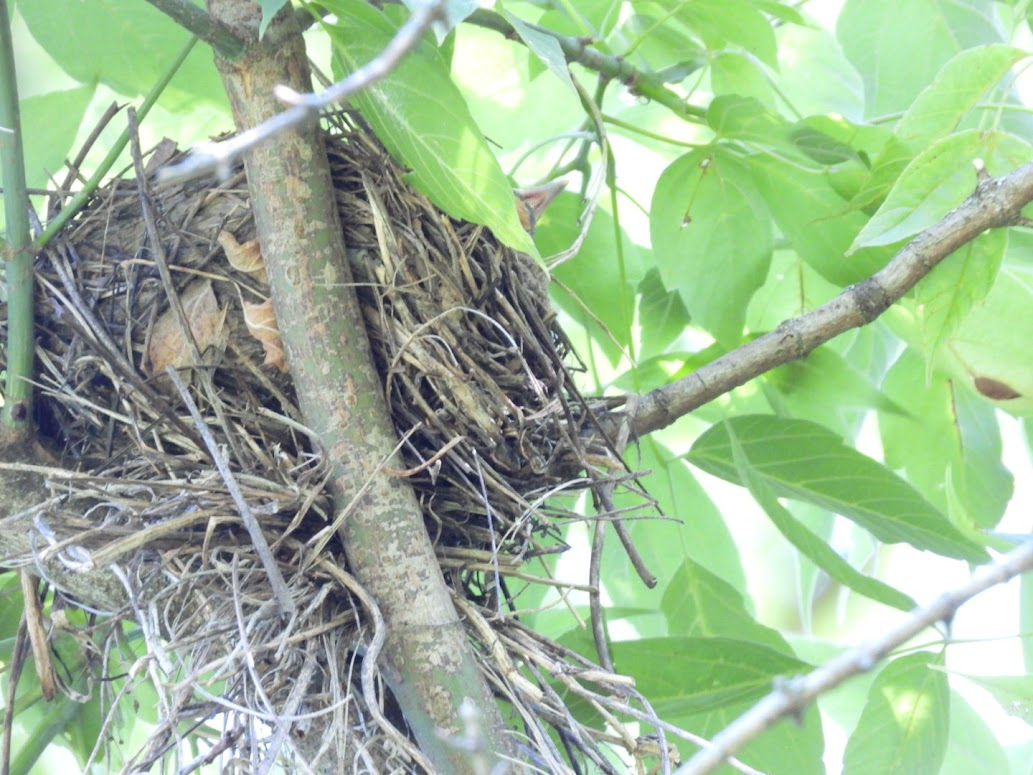 |
| ƒ/5.6, 1/200, ISO400, 216mm (1202mm equiv, 50.1X) | ƒ/6.3, 1/30, ISO800, 288mm (1603mm equiv, 66.8X) |
| June 20 | June 21 |
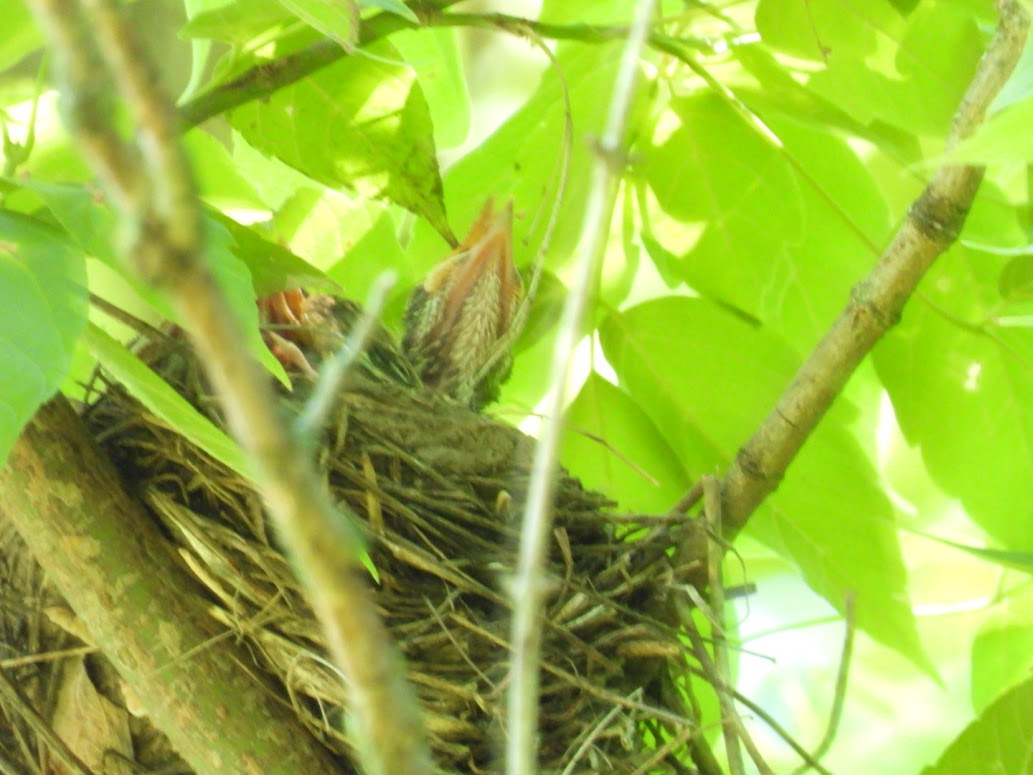 | 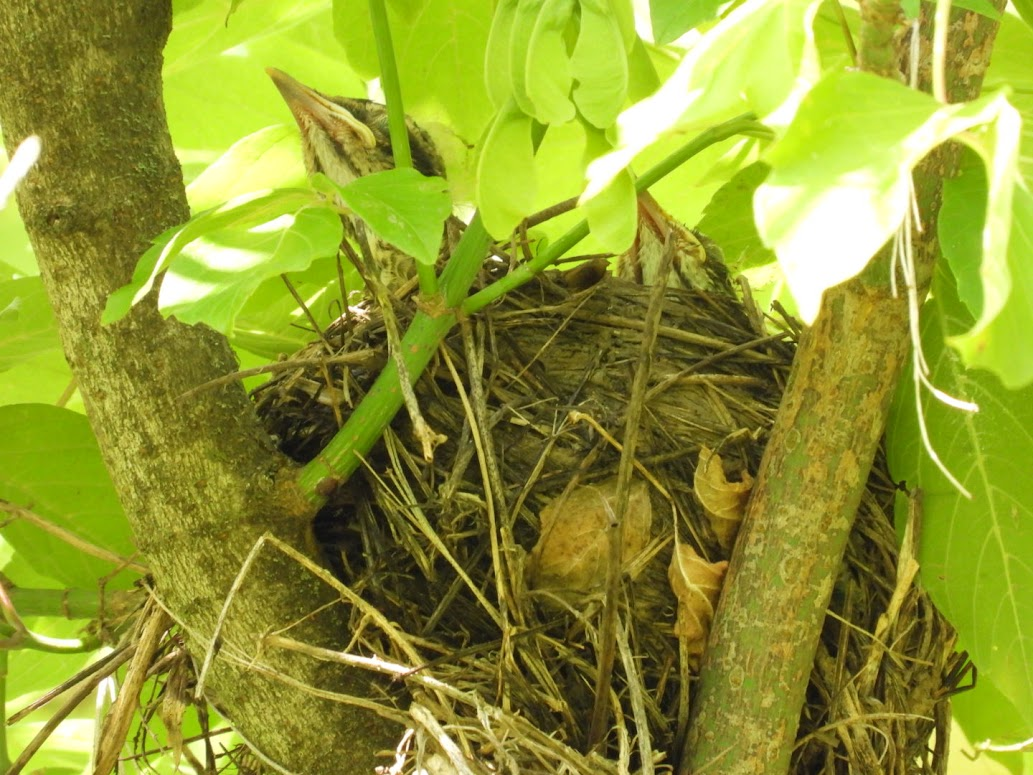 |
| ƒ/6.3, 1/30, ISO800, 288mm (1603mm equiv, 66.8X) | ƒ/7.1, 1/100, ISO800, 467mm (2599mm equiv, 108.3X) |
| June 22 | June 24 |
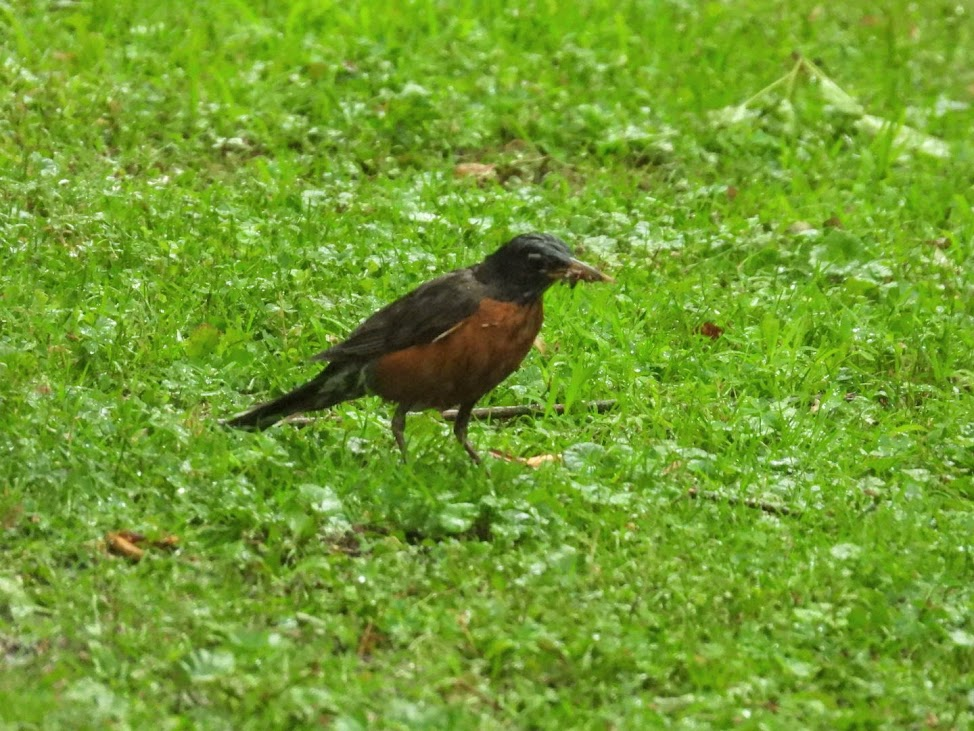 | 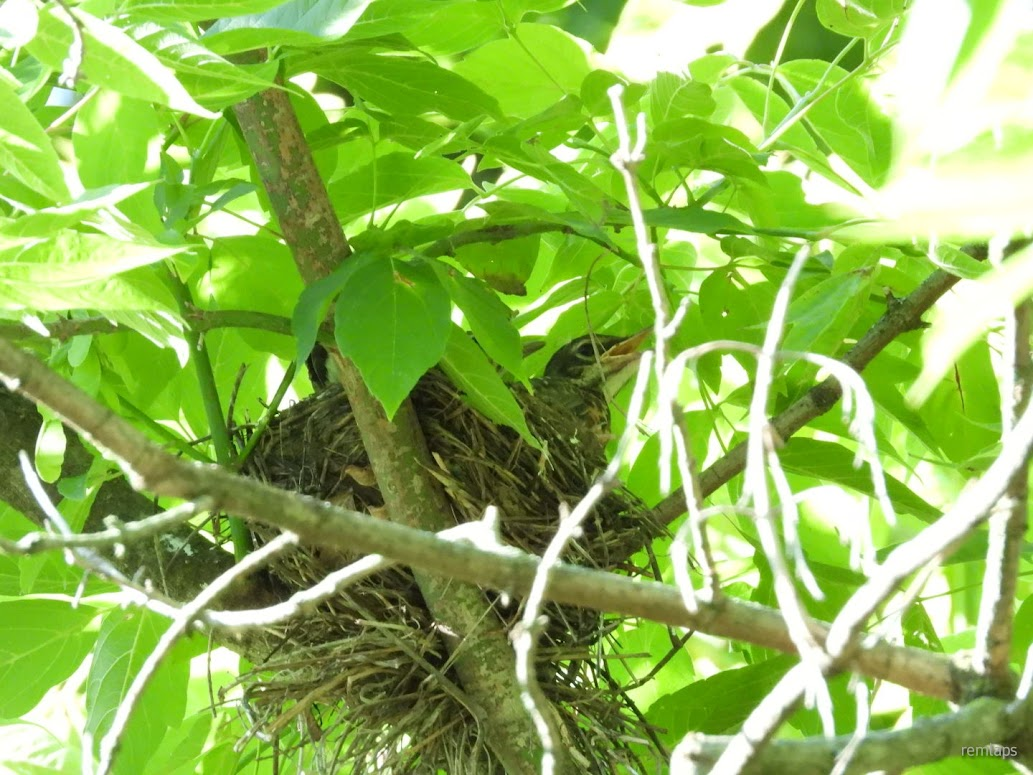 |
| ƒ/5.6, 1/200, ISO1600, 270mm (1503mm equiv, 62.6X). Lighting adjustments in Google Photos | ƒ/5.6, 1/320, ISO1600, 234mm (1302mm equiv, 54.3X) |
| June 24 | June 25 |
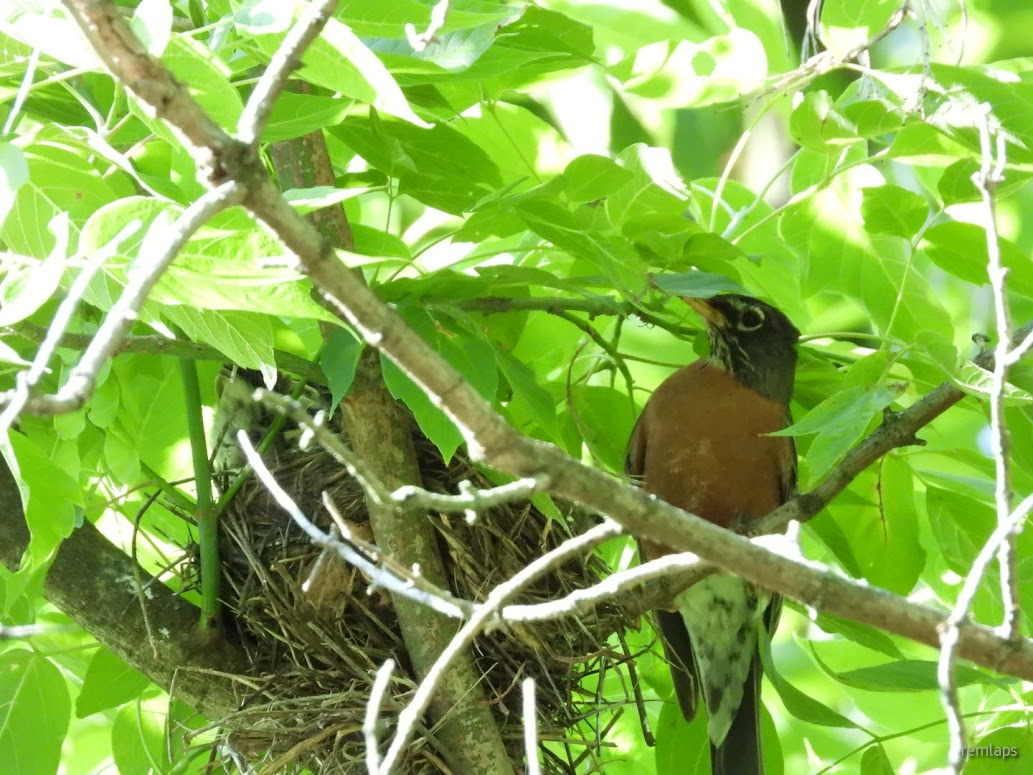 | 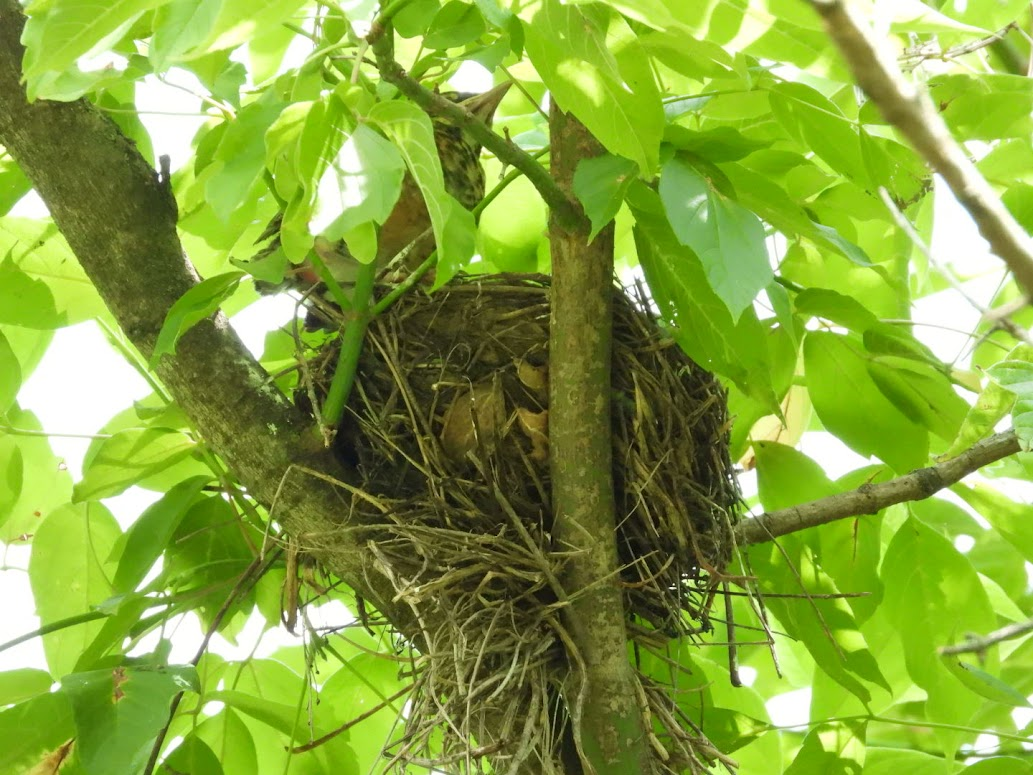 |
| ƒ/5.6, 1/320, ISO1600, 234mm (1302mm equiv, 54.3X) | ƒ/5.6, 1/500, ISO1600, 234mm (1302mm equiv, 54.3X) |
| June 27 | |
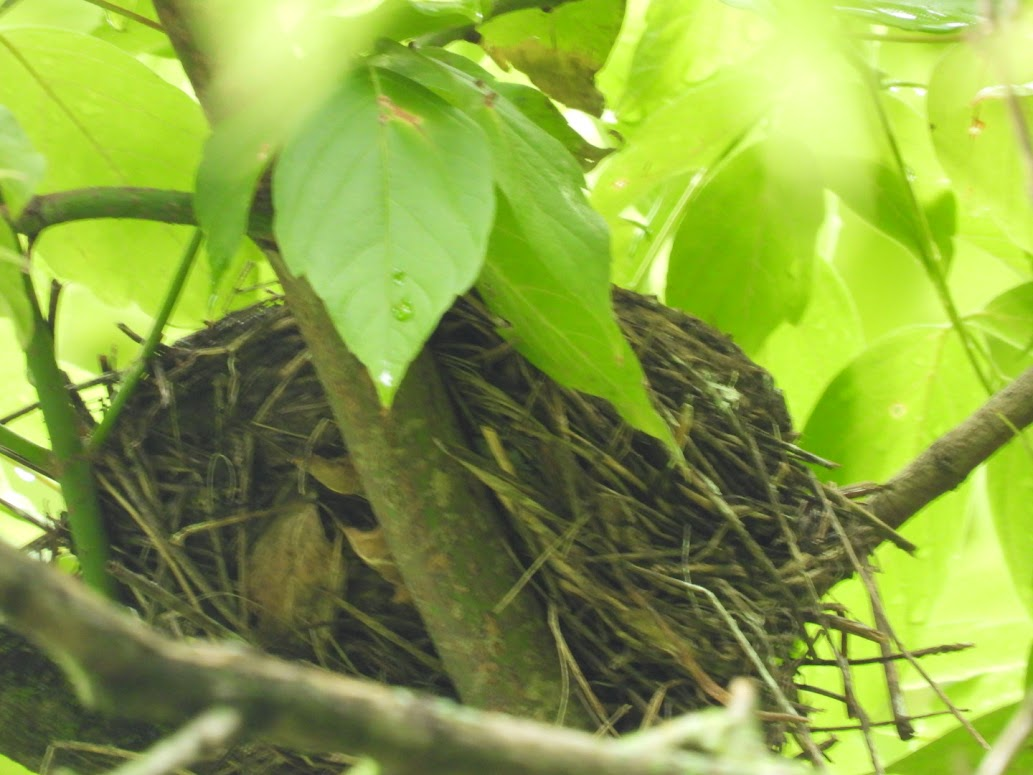 | |
| ƒ/7.1, 1/50, ISO800, 467mm (2599mm equiv, 108.3X) |
Aand... I thought I was done with the empty nest on June 27, but nope. Here's an adult feeding a fledgling on the ground a day later. Presumably it's one of the pair of fledglings from the nest, although it wasn't particularly close to the nest, so I wasn't sure about that.
| June 28 | June 28 |
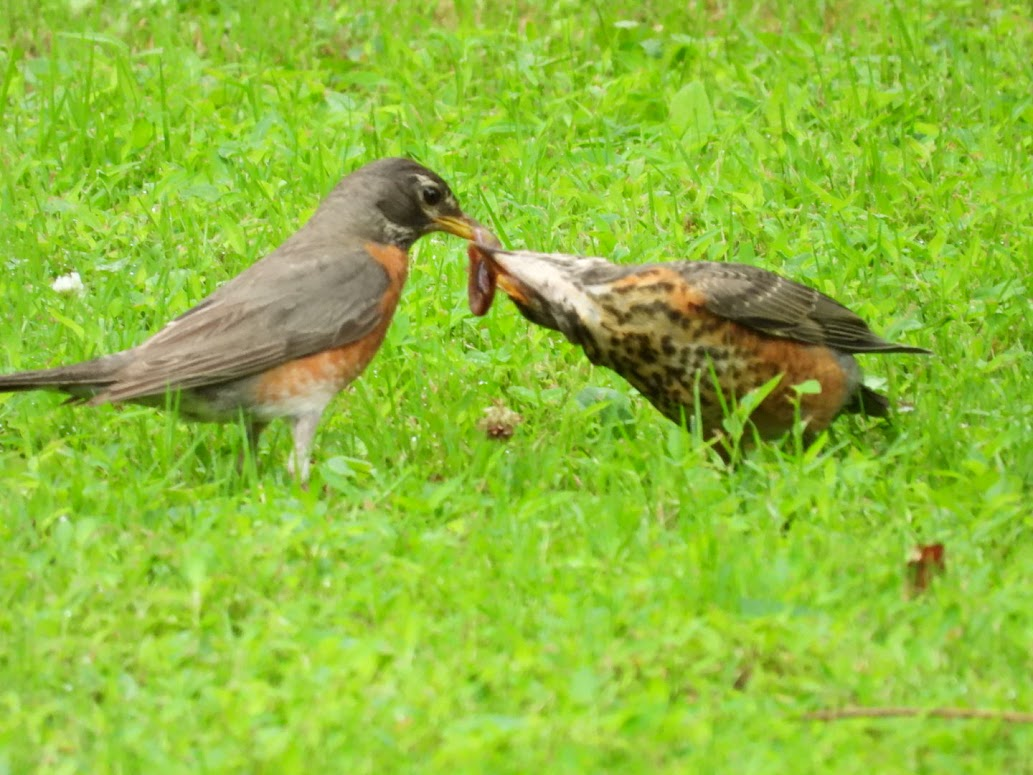 | 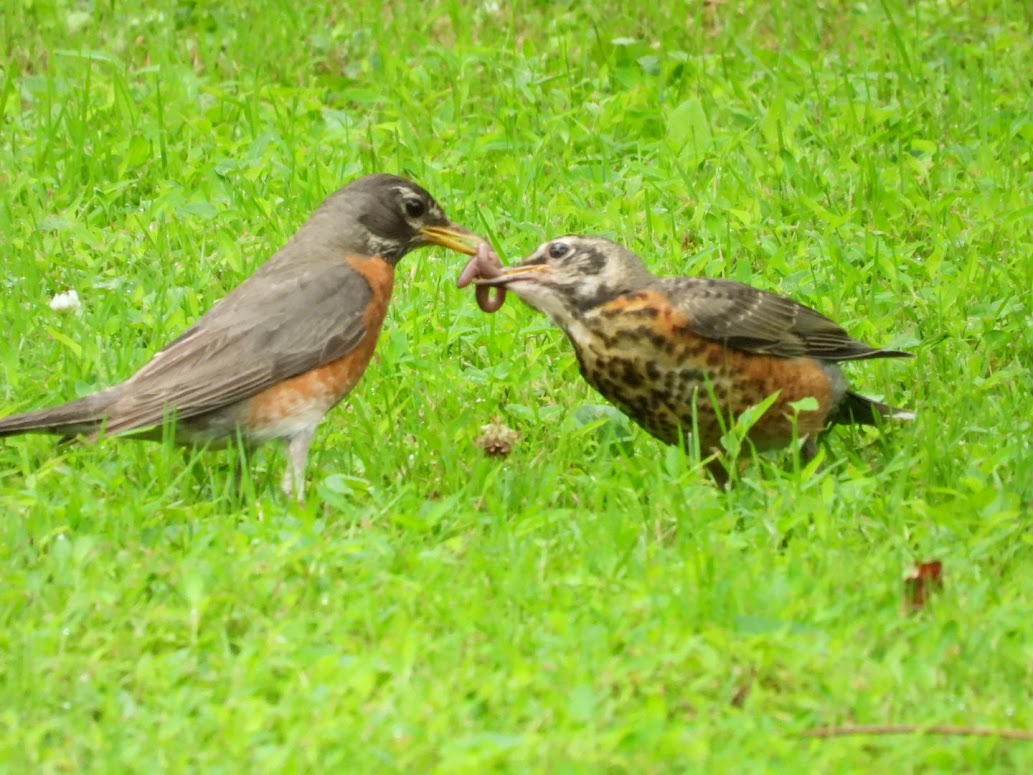 |
| ƒ/8, 1/500, ISO1600, 539mm (3000mm equiv, 125X) | ƒ/8, 1/500, ISO1600, 539mm (3000mm equiv, 125X) |
| June 28 | June 28 |
 | 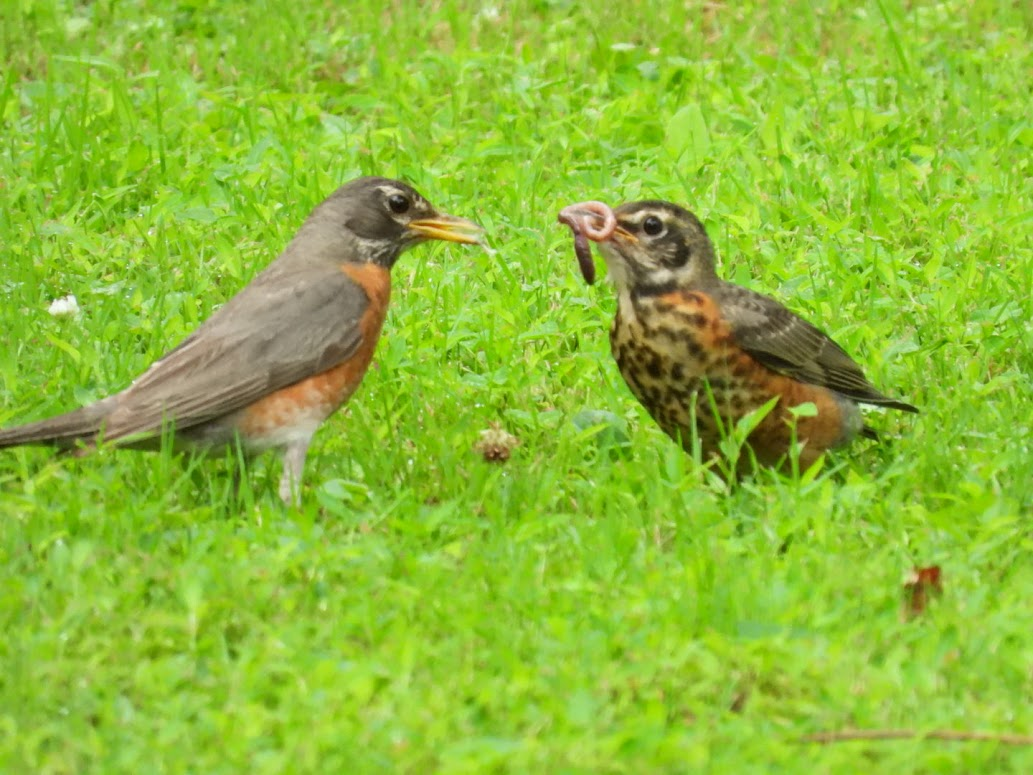 |
| ƒ/8, 1/500, ISO1600, 539mm (3000mm equiv, 125X) | ƒ/8, 1/500, ISO1600, 539mm (3000mm equiv, 125X) |
| June 28 | June 28 |
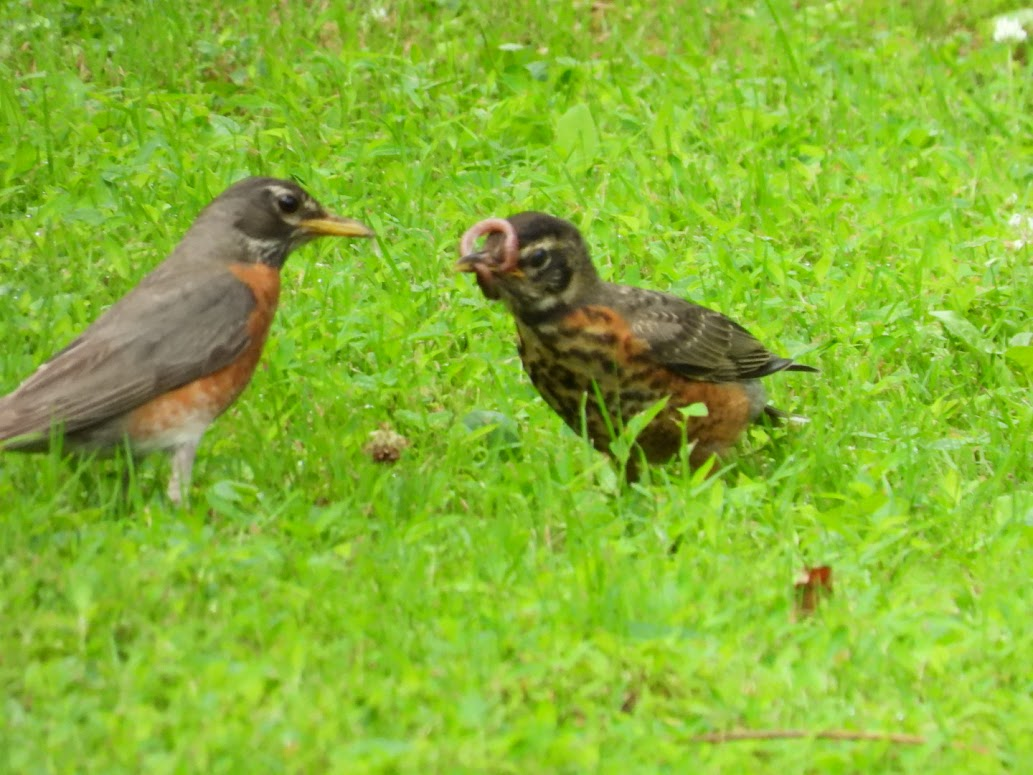 | 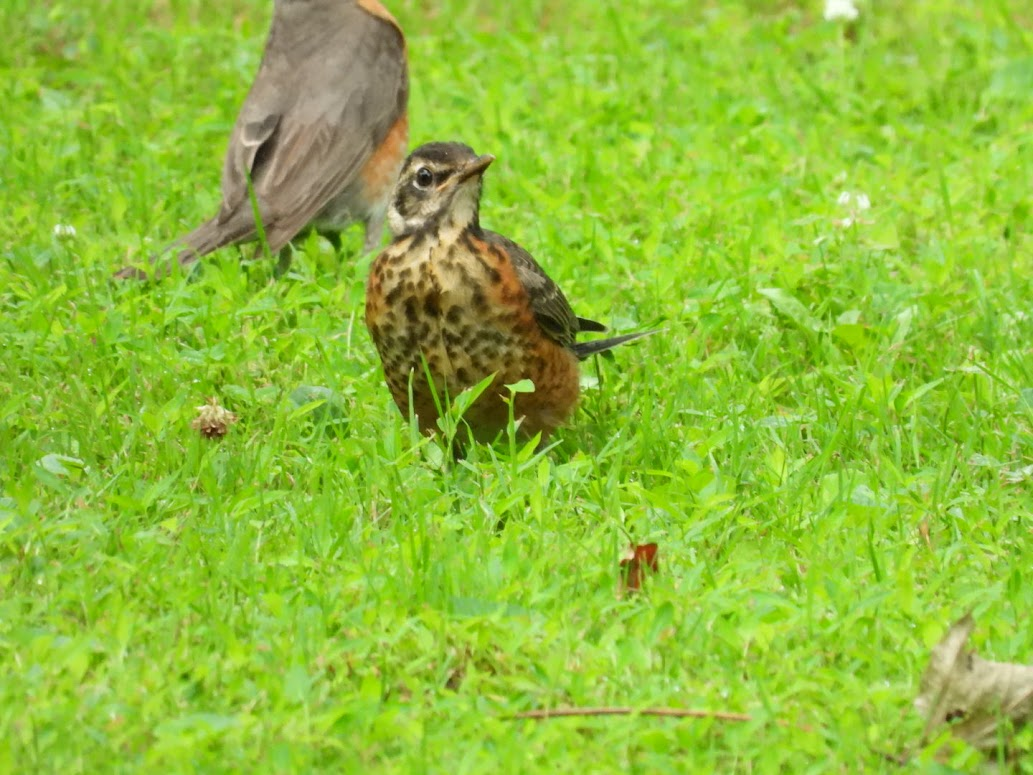 |
| ƒ/8, 1/500, ISO1600, 539mm (3000mm equiv, 125X) | ƒ/8, 1/500, ISO1600, 539mm (3000mm equiv, 125X) |
Downy Woodpecker
The Downy Woodpecker ranges throughout the United States and large areas of Canada throughout the year, and it is listed as "low concern" for conservation status. A surprising fact about these and other woodpeckers is that they can dig into wood quietly when they're looking for food. The drumming serves a purpose that's akin to chirping or singing among other varieties of birds.
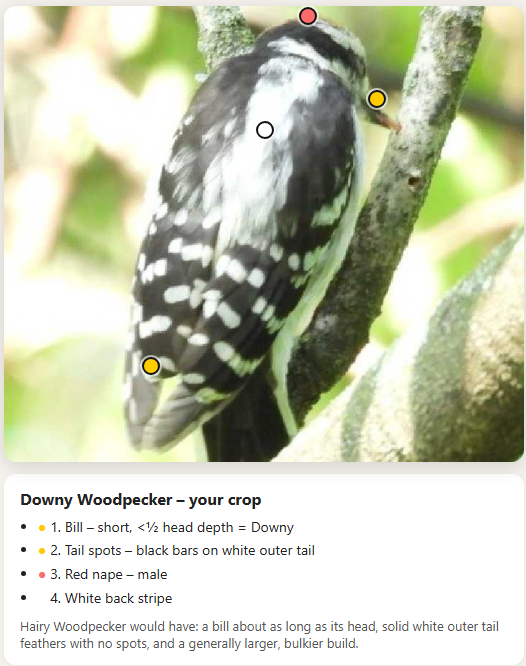
I have only seen them 3 times throughout the spring and summer. This included one sighting during April and two during June. The last sighting (June 24) still hasn't been verified by identifiers on iNaturalist. I suppose this is because it's difficult to distinguish between a Downy Woodpecker and a Hairy Woodpecker.
So, maybe that June 24 bird is actually a Hairy Woodpecker and not a Downy Woodpecker. The AI consensus was that it was a Downy Woodpecker, though. The image to the right summarizes the argument by Meta.AI as to why it's a Downy Woodpecker and not a Hairy Woodpecker.
| June 6 | June 6 |
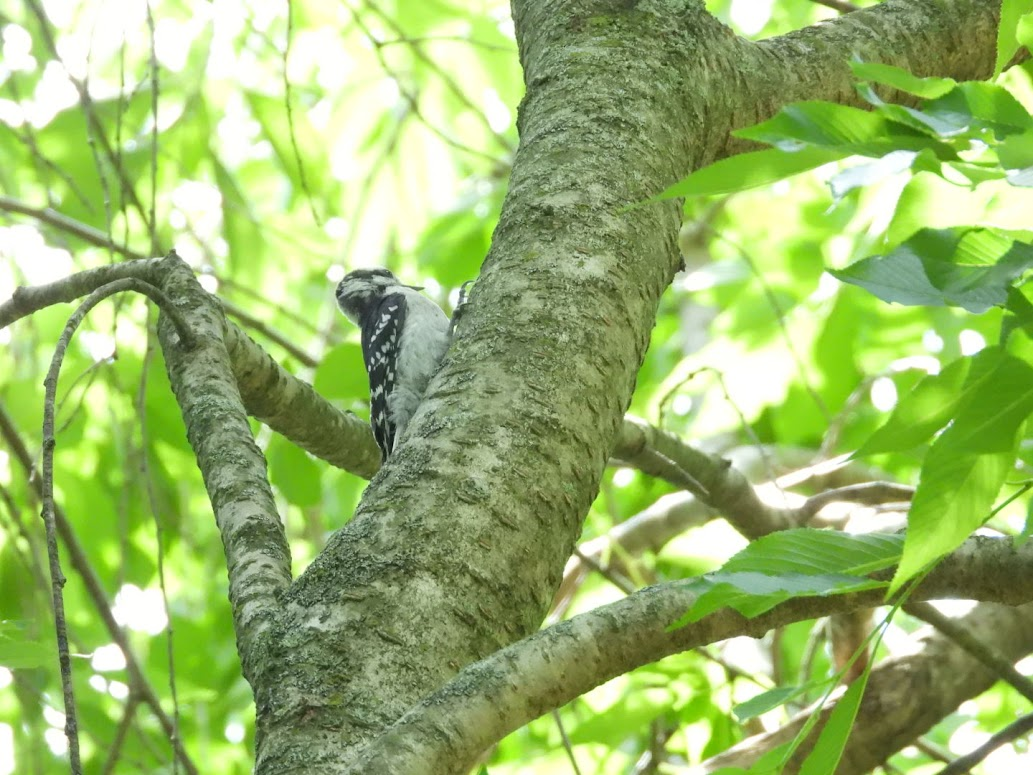 | 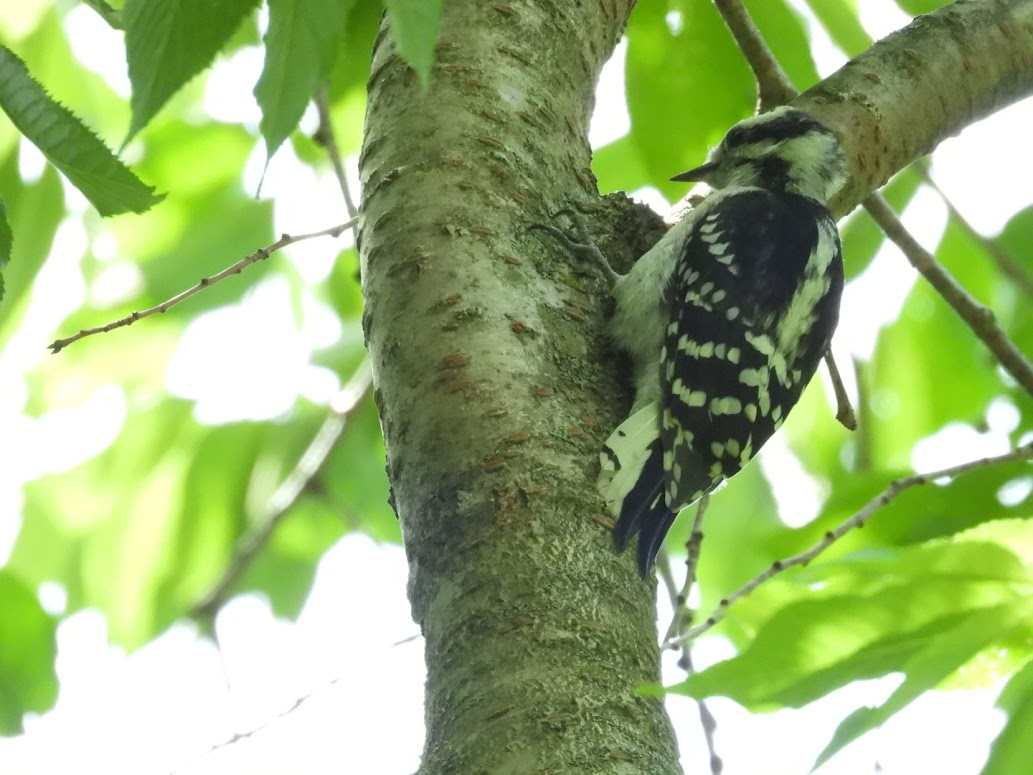 |
| ƒ/5.6, 1/500, ISO1600, 135mm (751mm equiv, 31.3X) | ƒ/5.6, 1/500, ISO1600, 270mm (1503mm equiv, 62.6X) |
| June 24 | |
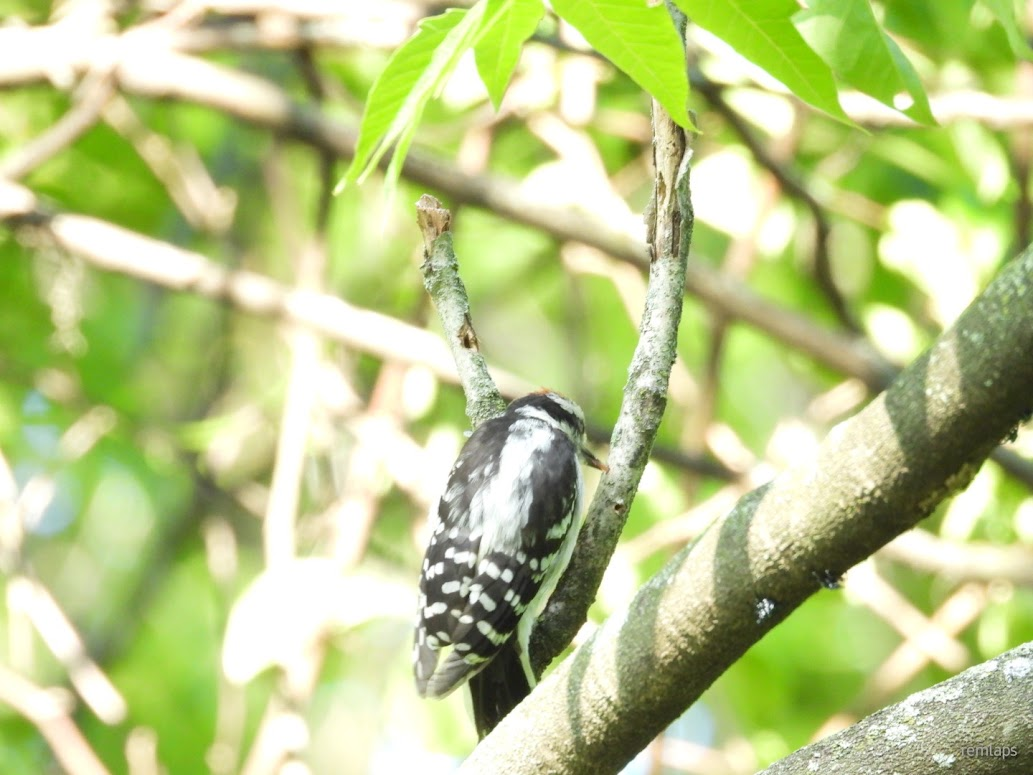 | |
| ƒ/5.6, 1/80, ISO800, 216mm (1202mm equiv, 50.1X) |
Gray Catbird
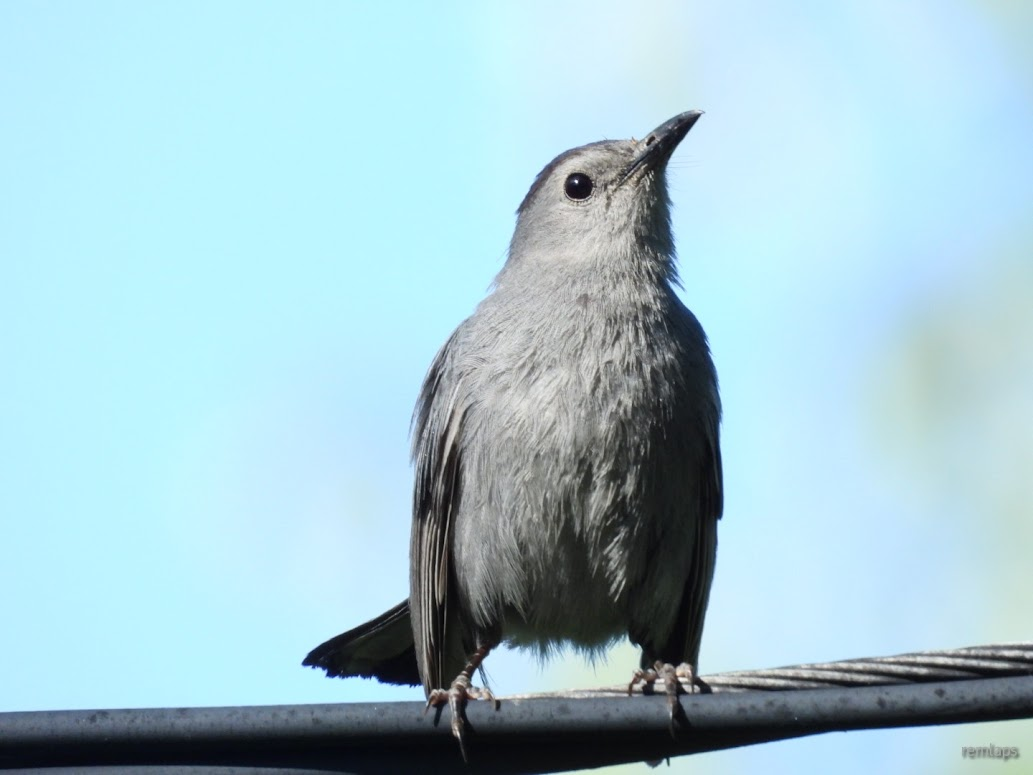
Like the American Robin, I see the Gray Catbird almost every time I walk out the door. It's hard for me to understand, now, how I didn't even know that these birds exist before a couple months ago. Unlike the Robin, however, they can be tricky to photograph. They don't sit still very long, and they often tend to hang out in dense thickets of tangled branches. As a result, I haven't managed to capture any nests, fledglings or other "special occasions" on camera, except the feeding activity shown here on June 12. I think June 24 is probably the only time I've seen one sitting on an overhead wire.
On average, these birds live to be about 21/2 years old in the wild. They get the name because one of the males' calls sounds like the meowing of a cat. The males are also able to impersonate the calls of other species.
| June 9 | June 12 |
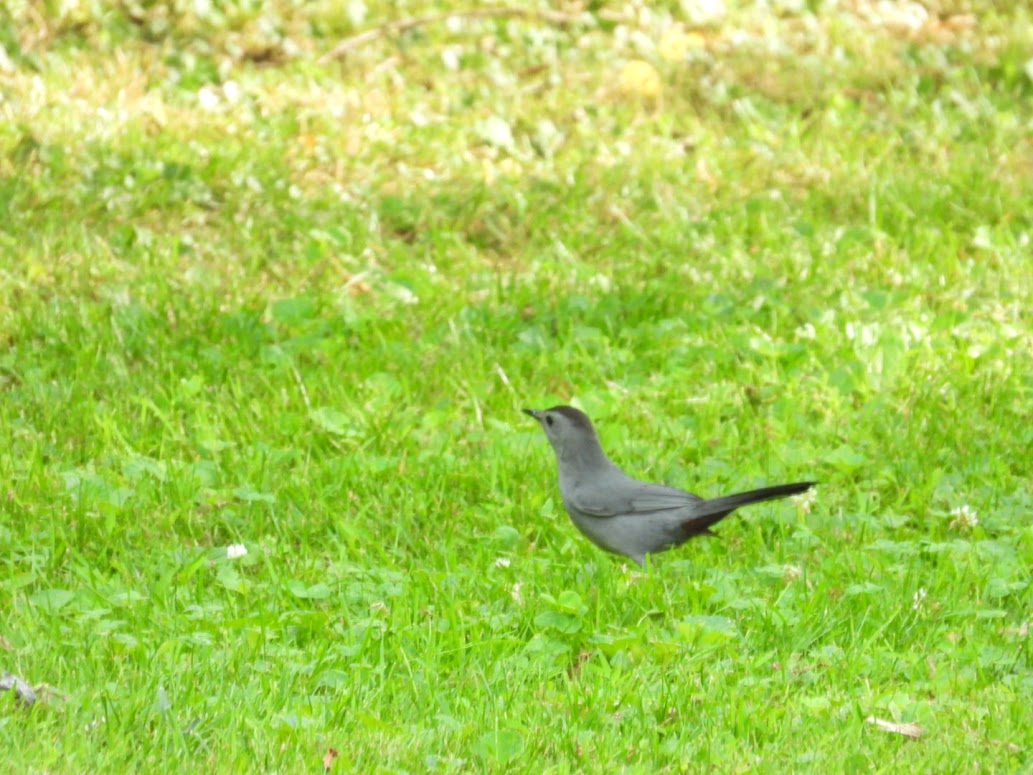 | 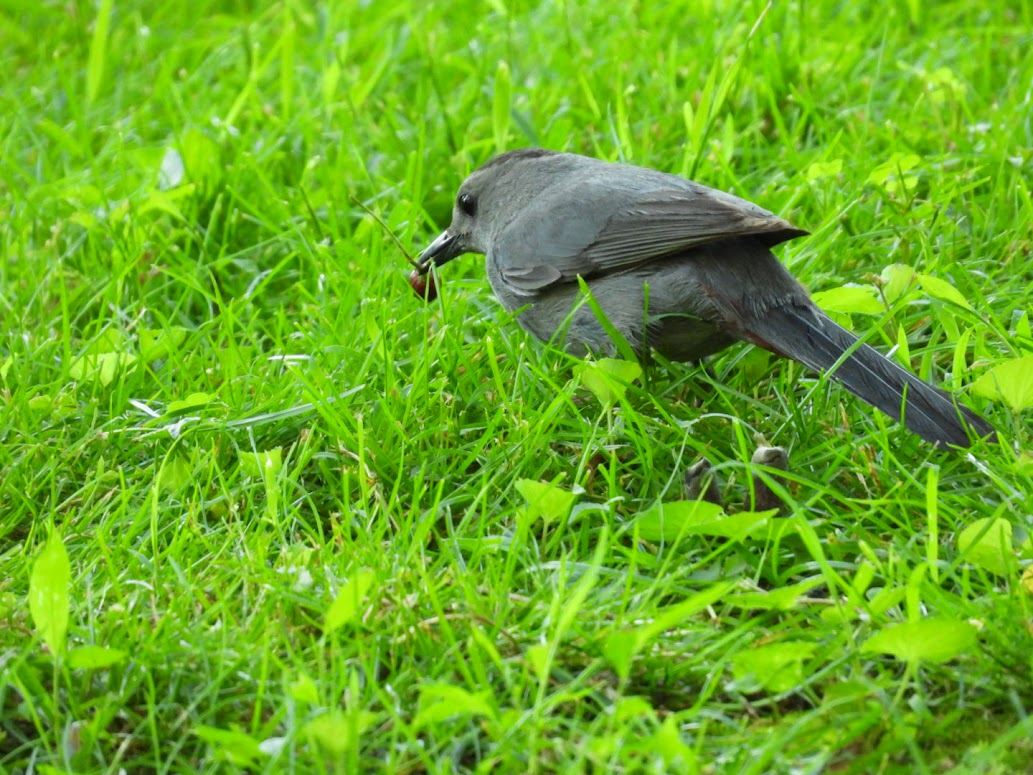 |
| ƒ/6.3, 1/100, ISO800, 288mm (1603mm equiv, 66.8X) | ƒ/6.3, 1/80, ISO800, 324mm (1803mm equiv, 75.1X) |
| June 14 | June 21 |
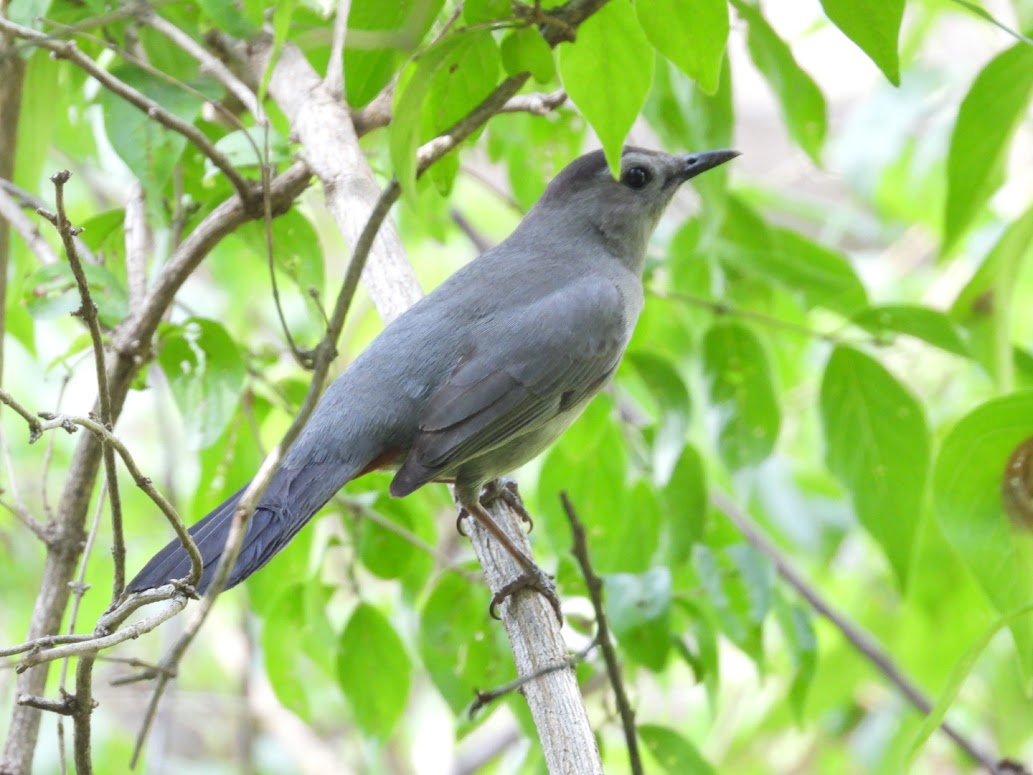 | 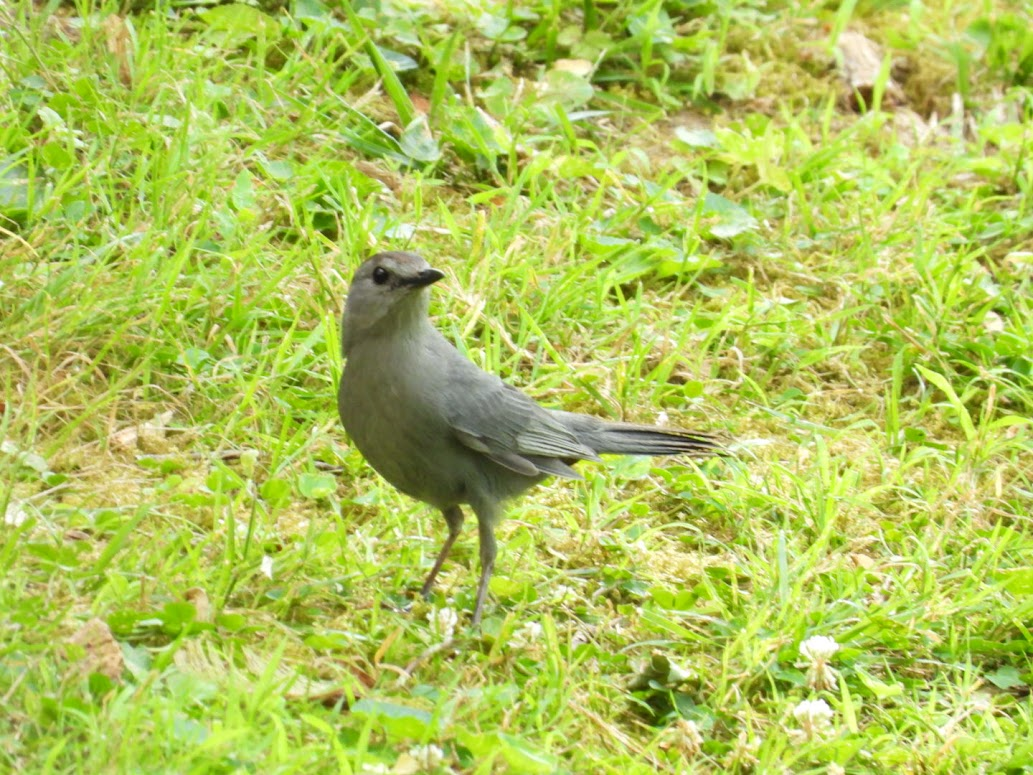 |
| ƒ/5.6, 1/125, ISO720, 252mm (1403mm equiv, 58.5X) | ƒ/8, 1/80, ISO800, 503mm (2800mm equiv, 116.7X) |
| June 24 | |
 | |
| ƒ/7.1, 1/320, ISO400, 432mm (2404mm equiv, 100.2X) |
Great Crested Flycatcher

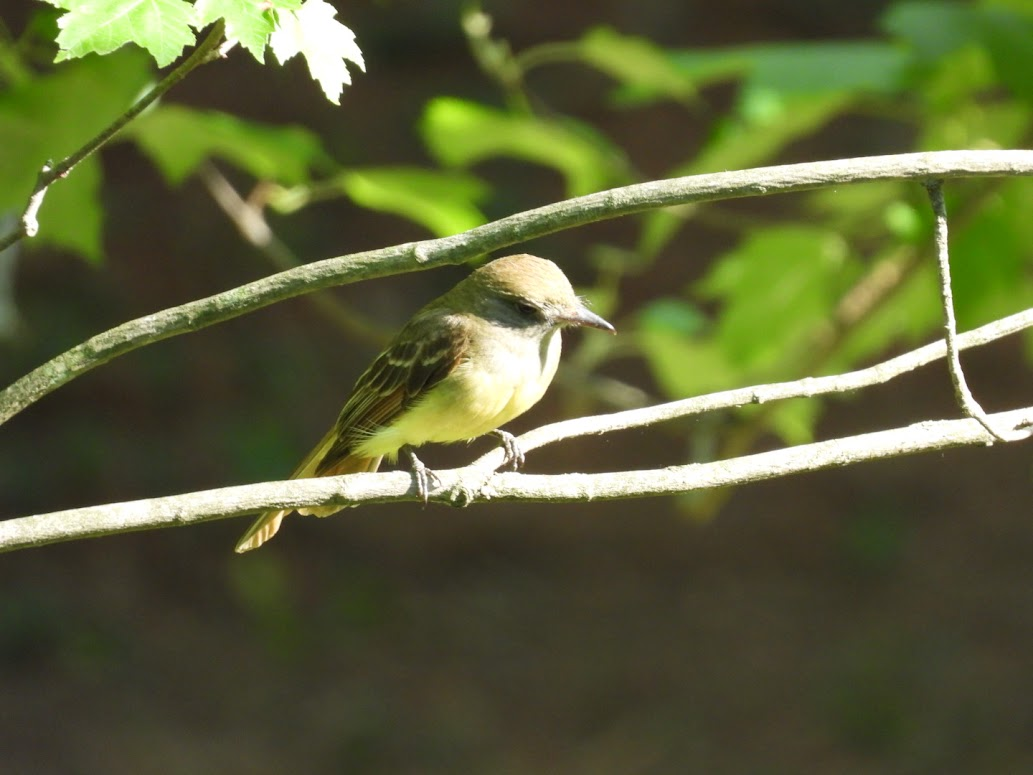
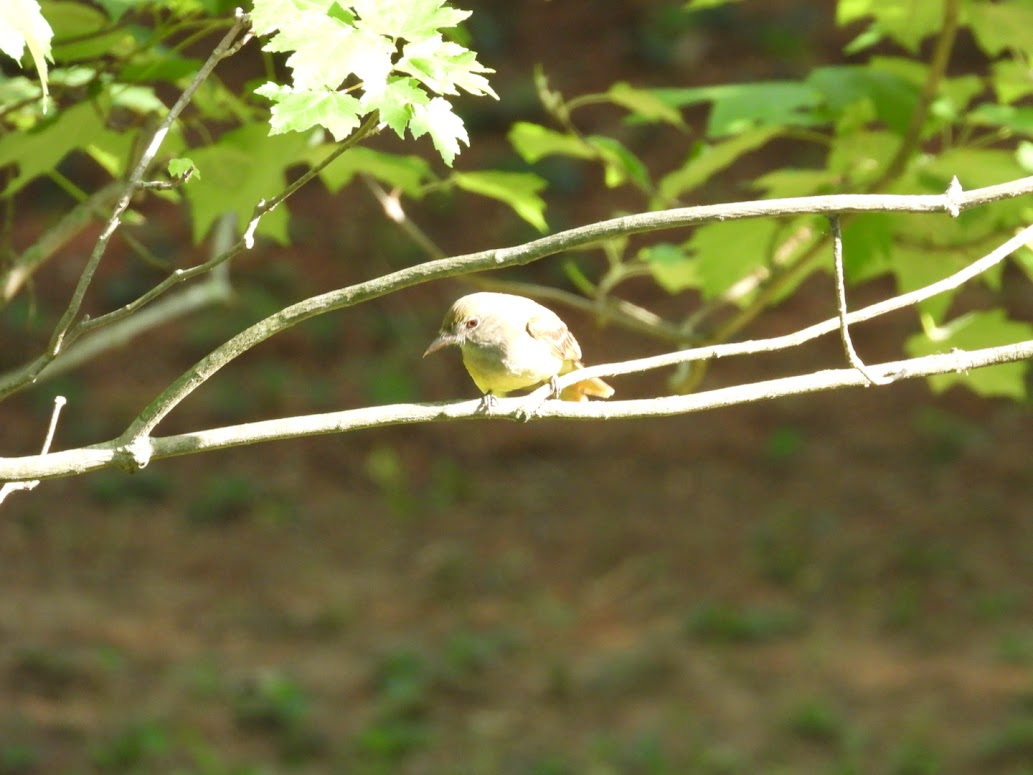
Finally, we get to my one and only observation of a Great Crested Flycatcher. Fortunately, I lucked into a shot where the flycatcher was holding a bee in its beak. I suppose this single image sort of explains where the last part of the bird's name comes from.
Like all of the other birds in this post, these are of low concern for their conservation status. They range from southern Canada, throughout the eastern and central United States, and down to Northern South America (including Venezuela and Colombia).
The screen grab from ebird to the right shows the weeks where they're most likely to be found in Pennsylvania. The small bar in January surrounded by gaps in December and February is puzzling to me. Maybe something to do with the school or holiday calendar?
| June 9 | June 9 |
|  |
| ƒ/7.1, 1/160, ISO400, 432mm (2404mm equiv, 100.2X) | ƒ/6.3, 1/125, ISO560, 359mm (1998mm equiv, 83.3X) |
| June 9 | June 9 |
 |  |
| ƒ/6.3, 1/125, ISO500, 359mm (1998mm equiv, 83.3X) | ƒ/5.6, 1/125, ISO640, 234mm (1302mm equiv, 54.3X) |
Wrapping up
Four more down and four to go for small birds during the month of June. In the next post, I'll be covering the Northern Cardinal, the House Finch, the Blue Jay, and the Eastern Kingbird. After that, the final post of June photos will be the Raptors. In June, those included Red-tailed hawks, Turkey Vultures, Black Vulture, and a Cooper's Hawk. Unfortunately, as-of today (July 25), I haven't seen any Bald Eagles since May.
Appendix
Here are my previous wildlife photography posts:
June photographs
- Backyard Wildlife Photos in Southeastern Pennsylvania: A few more small birds during June
- Backyard Wildlife Photos in Southeastern Pennsylvania: Mammals and Small Birds during June
- Photography meets citizen science: June's wildlife in south-eastern Pennsylvania
May's photographs
- Hawks and a Bald Eagle: May raptor photography practice in southeastern Pennsylvania - part 2
- Vultures and Kites: May raptor photography practice in southeastern Pennsylvania - part 1
- Wildlife photographs in southeastern Pennsylvania: Small animals with multi-month sightings in May - part 2
- Wildlife photographs in southeastern Pennsylvania: Small animals with multi-month sightings in May - part 1
- Backyard wildlife photography in southeastern Pennsylvania: First encounters during May - post 2
- Backyard wildlife photography in southeastern Pennsylvania: Something Old - Something New
- Photography meets citizen science: May's wildlife in south-eastern Pennsylvania
April's photographs
- [Citizen Science] April's Raptors in South-Eastern Pennsylvania
- Photography meets citizen science: April's wildlife in south-eastern Pennsylvania
- Learning photography with wildlife in south-eastern Pennsylvania: First encounters in the month of April
- Learning photography with wildlife in south-eastern Pennsylvania: First encounters in the month of April - part 2
- April wildlife observations in south-eastern Pennsylvania: repeated encounters with small animals
March's photographs
- Backyard Photography in Chester County, Pennsylvania during March 2026: Warm-up Shots
- [Citizen Science] Observations of Small Birds and Animals in South-eastern Pennsylvania from March of 2026
- [Citizen Science] The Raptors of March in South-Eastern Pennsylvania
Thank you for your attention!
Unless otherwise specified in the text, all photos above were taken by me with a Nikon P1000 camera. I'm sharing them under the CC BY 4.0 license (share & adapt freely with attribution to the original source).
Thank you, @jimiaera02.
0.00 SBD,
0.24 STEEM,
0.24 SP
#qualitypost
Have you tried the Merlin Bird Call App from Cornell Lab...
Yep, in fact I started saving screenshots of its results sarting in July, and I might incorporate some of those into next month's posts.
I'm sure it's not 100% right, but it "hears" many more varieties of birds than the ones that I see out in the open.
0.00 SBD,
36.88 STEEM,
36.88 SP
Wonder if there is a Merlin Bird Call Spotter Community anywhere on the web?
Maybe Steem could host one if not...
People can post their Merlin recordings on iNaturalist, and I think Cornell hosts something on eBird, too, though I haven't signed up for that one. But, I definitely think a Steem community can and should piggy-back on these services.
That's why I've been doing the wildlife blogging so heavily since March (and tagging the inaturalist and steemit twitter accounts with these posts on twitter). IMO, it's a natural fit, especially for partnering with free market environmentalists. With the right support, I think it has the potential to be a "killer app" for Steem.
What Steem gets:
What the environmental community gets:
IMO, the main challenge is this: Existing wildlife identification sites are high velocity. Steem is not (or at least, it probably shouldn't be). With the current rewards model, Steem really only makes sense as long-form blogging. So, I think the way to integrate Steem into the ecosystem is not to operate at the ID level, but rather as an aggregator for a person's activity on those other sites.
Unfortunately, running a successful Steem community requires time, multiple moderators, and financial backing from curators. I have plenty of ideas, and I think there's huge potential there, but my personal blog is about as far as I can take it on my own right now.
0.00 SBD,
46.26 STEEM,
46.26 SP
Happy to back it with sc01/02 votes if you manage to find time to get something up and running.
Thank you! I know @primevaldad already expressed interest in working towards something of the sort. Perhaps we can find some others and figure out a workable strategy. I'll give it some thought.
Maybe you could socialize the concept within Tron, too? By rewarding people for verified wildlife observations, Steem might make wildlife protection more pofitable than poaching in some parts of the developing world. Then, Steem as a first of it's kind environmental protection tool could generate really good press for the Tron ecosystem.
Maybe Tron has some partners who would be interested in helping to build such a thing?
0.00 SBD,
42.01 STEEM,
42.01 SP
Beautiful wildlife photos! These small birds are lovely, and it’s wonderful to see the variety of birds visiting your backyard. Thank you for sharing these peaceful moments from southeastern Pennsylvania. I especially enjoyed seeing these little birds during the June season. Great photography!