Backyard wildlife photography in southeastern Pennsylvania: First encounters during May - post 2
In the previous post, we started looking through the photos of animals that I photographed for my personal first time during the month of May. All of the included photos were taken during walks in my own backyard.
In the current post, we'll look at the rest of the "first appearance" animals that were listed there. The previous post included Gray Catbirds, Black Vultures, Carolina Chickadees, Common Grackles, Cedar Waxwings, and European Starlings. This post will cover Swainson's Thrush, the Eastern Kingbird, the Baltimore Oriole, the Song Sparrow, the Mississippi Kite, the Eastern Cottontail (rabbit), the Red-shouldered Hawk, and the White-tailed Deer.
Here's the full table with all observations listed (through June 6).
First seen during May
And here are the animals that were seen for the first time during the month of May. No special location adjustments were needed, but the possibility remains that I may have seen some of these animals but not logged a sighting. This filtering is based on just my iNaturalist observations.
Common Name Count First Sighting Last Sighting Observations Gray Catbird 7 2026-05-01 2026-05-28 2026-05-01, 2026-05-03, 2026-05-05, 2026-05-07, 2026-05-08, 2026-05-22, 2026-05-28 Black Vulture 5 2026-05-03 2026-06-05 2026-05-03, 2026-05-11, 2026-05-25, 2026-05-27, 2026-06-05 Carolina Chickadee 1 2026-05-03 2026-05-03 2026-05-03 Common Grackle 1 2026-05-09 2026-05-09 2026-05-09 Cedar Waxwing 1 2026-05-12 2026-05-12 2026-05-12 European Starling 1 2026-05-12 2026-05-12 2026-05-12 Swainson's Thrush 1 2026-05-12 2026-05-12 2026-05-12 Eastern Kingbird 1 2026-05-15 2026-05-15 2026-05-15 Baltimore Oriole 2 2026-05-17 2026-05-18 2026-05-17, 2026-05-18 Song Sparrow 4 2026-05-22 2026-06-02 2026-05-22, 2026-05-26, 2026-05-28, 2026-06-02 Mississippi Kite 1 2026-05-25 2026-05-25 2026-05-25 Eastern Cottontail 2 2026-05-26 2026-05-29 2026-05-26, 2026-05-29 Red-shouldered Hawk 1 2026-05-30 2026-05-30 2026-05-30 White-tailed Deer 2 2026-05-29 2026-06-06 2026-05-29, 2026-06-06 Total 30 14 species and 30 observations.
The previous post covered 6 species and 16 observations. Today's animals cover 8 species and 14 observations. Let's get to it.
The photos
Small birds
While writing about this post, I learned about leapfrog migration — where the premigration northernmost members of the species migrate further to the south than the premigration southernmost. Three of these small birds practice leapfrog migration: Swainson's Thrush, the Baltimore Oriole (exhibits limited examples of leapfrog migration), and the Song Sparrow.
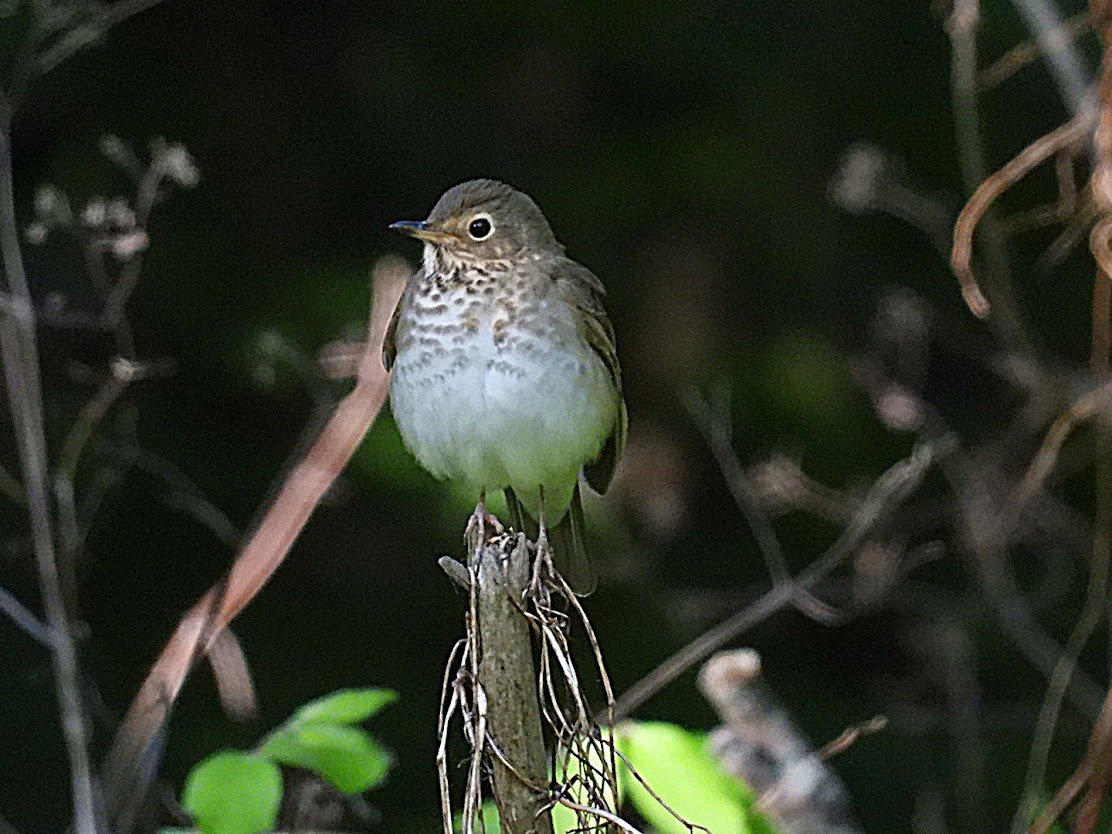
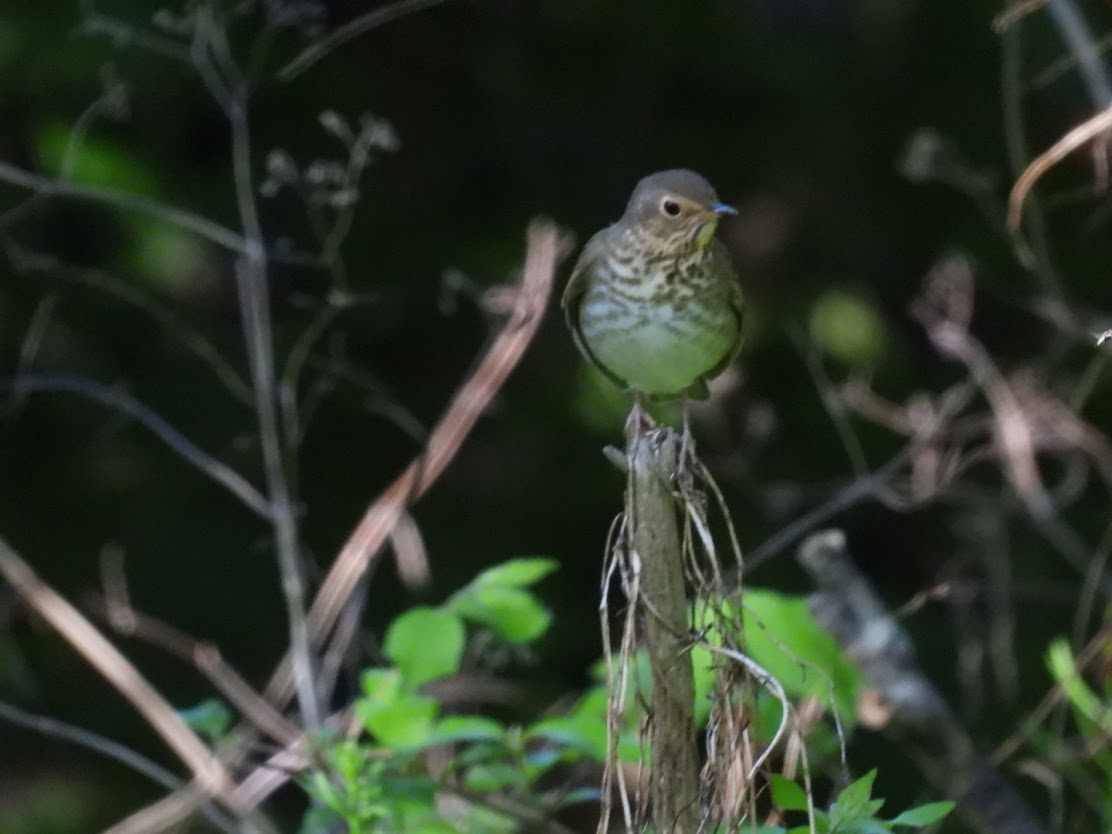
Swainson's Thrush
Apparently, the Swainson's Thrush spends the breeding season in Canada and the northern United States, and it spends the non-breeding season in South America. In spring and fall, it migrates through the rest of North and Central America (including my region of Pennsylvania), so it's unlikely that I'll see another one of these before the fall.
| Swainson's Thrush | May 12 |
|---|---|
| ƒ/8; 1/250; 539mm; 125x zoom; 3000mm (35mm equiv); ISO1600 | ƒ/7.1; 1/320; 432mm; 100x zoom; 2400mm (35mm equiv); ISO1600 |
 |  |
Eastern Kingbird
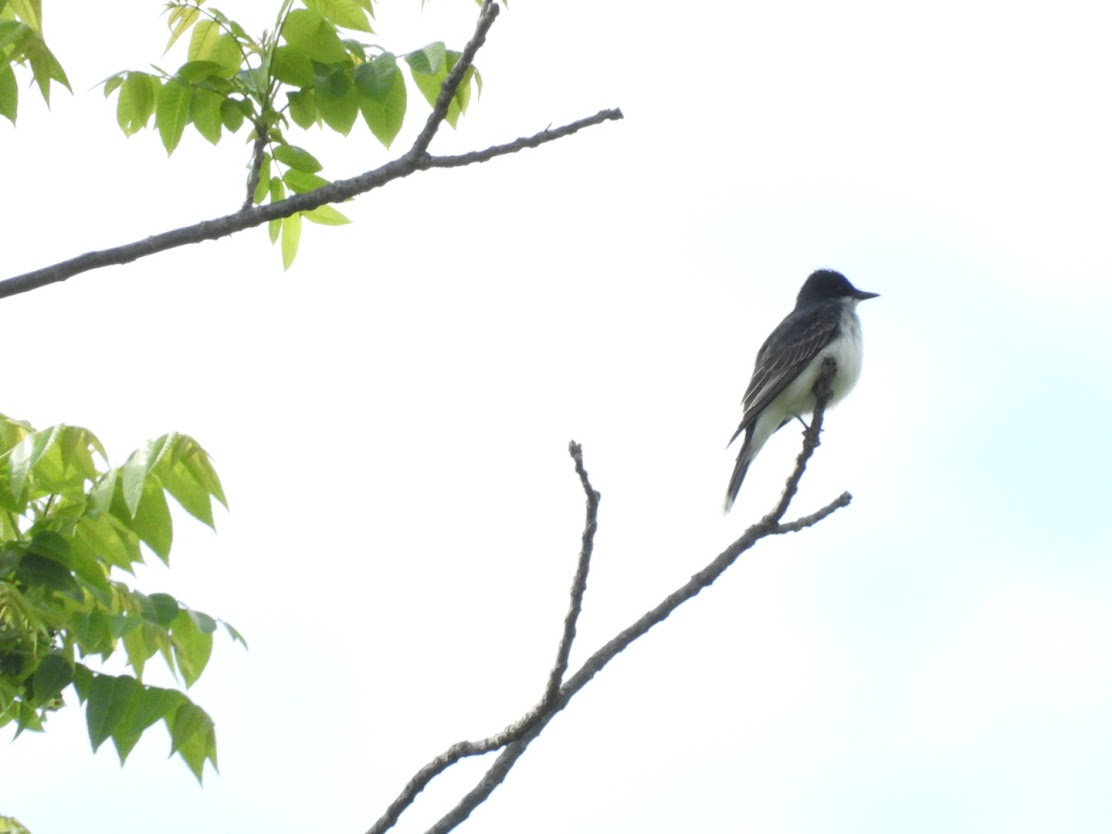
The Eastern Kingbird spends the summer/breeding season in US regions that are east of the Rocky Mountains, or else in a large swath of Canada. It migrates through Central America in spring and fall, and it winters in the Amazon River basin and other tropical locations in South America. Notably, it nests from mid-May through July, and is known for being very territorial during those months (as we'll see when we get around to the June photos).
These photos were taken when the Sun was low on the horizon, so unfortunately, the glare makes it hard to see the faces clearly.
| Eastern Kingbird | May 15 |
|---|---|
| ƒ/8; 1/500; 503mm; 116x zoom; 2800mm (35mm equiv); ISO720 | ƒ/7.1; 1/250; 432mm; 100x zoom; 2400mm (35mm equiv); ISO160 |
 | 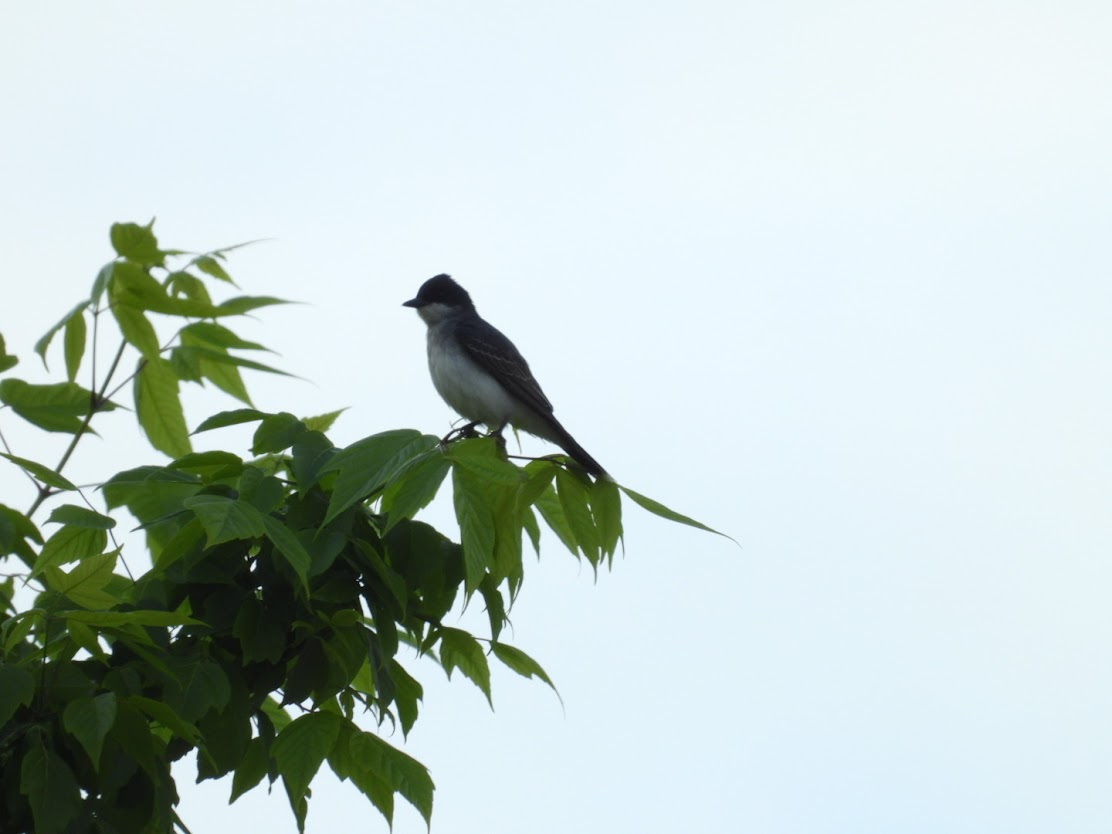 |
Baltimore Oriole
The Baltimore Oriole is another one that summers in the Eastern and Central US and parts of Canada, migrates through Mexico, and winters in South America (and Florida). Orioles in the Americas were named after orioles in Europe, but apparently they're from different bird families. The American oriole variants are in the same family as blackbirds and meadowlarks.
The name "Baltimore Oriole" comes from England's Baltimore Family, who had an orange and black family crest, and the oldest known Baltimore Oriole was in Minnesota, where it was caught and killed by a raptor when it was over the age of 12.
| Baltimore Oriole | |
|---|---|
| May 17 | May 18 |
| ƒ/7.1; 1/800; 395mm; 91x zoom; 2200mm (35mm equiv); ISO560 | ƒ/5.6; 1/250; 234mm; 54x zoom; 1300mm (35mm equiv); ISO360 (with lighting adjustments) |
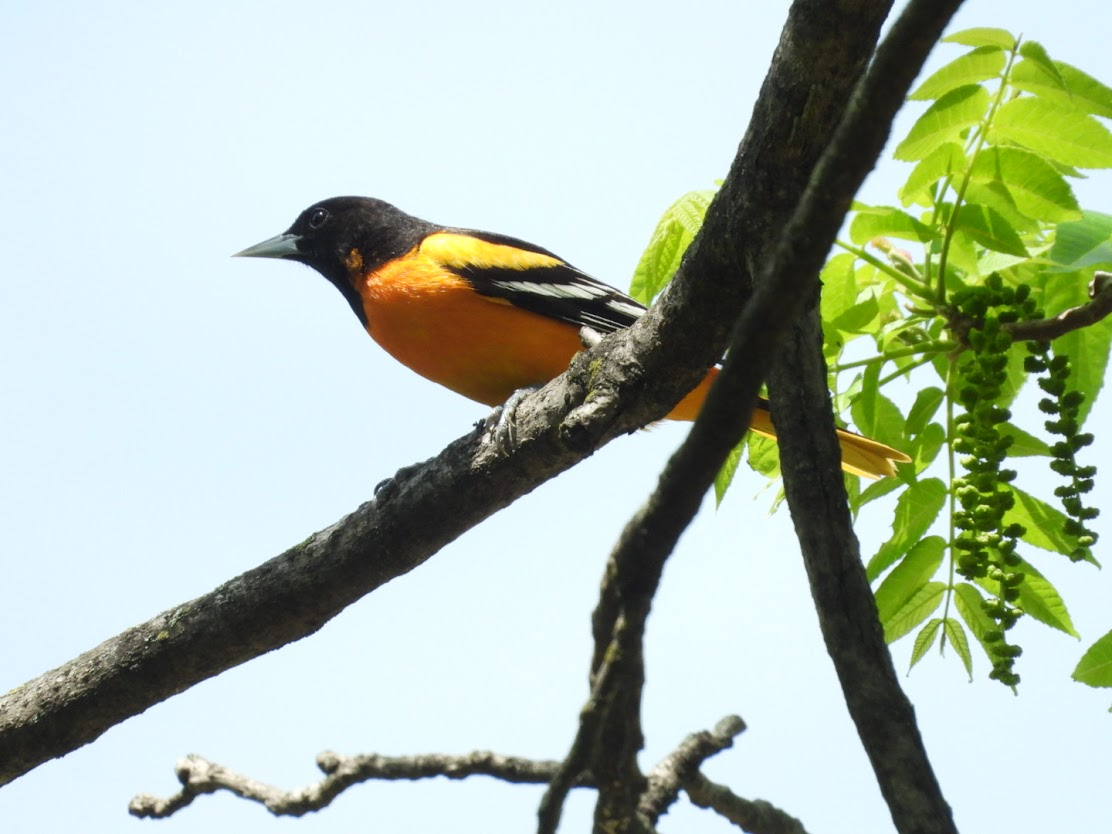 | 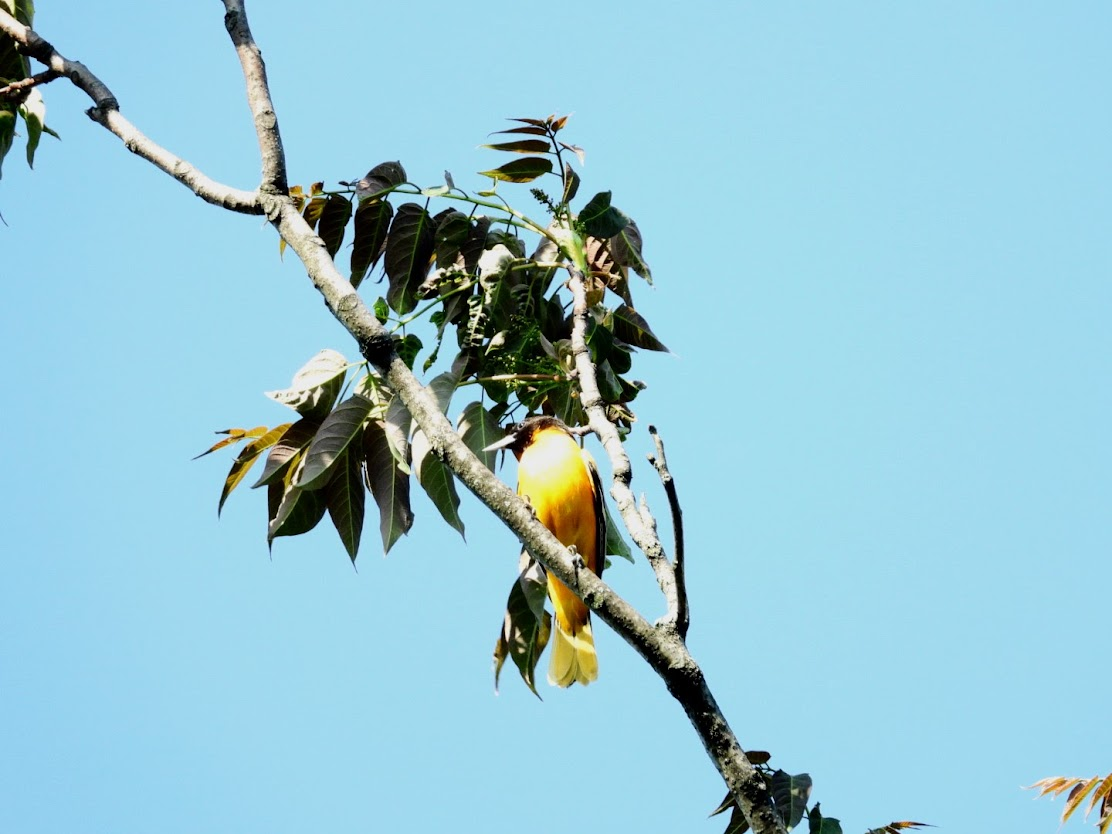 |
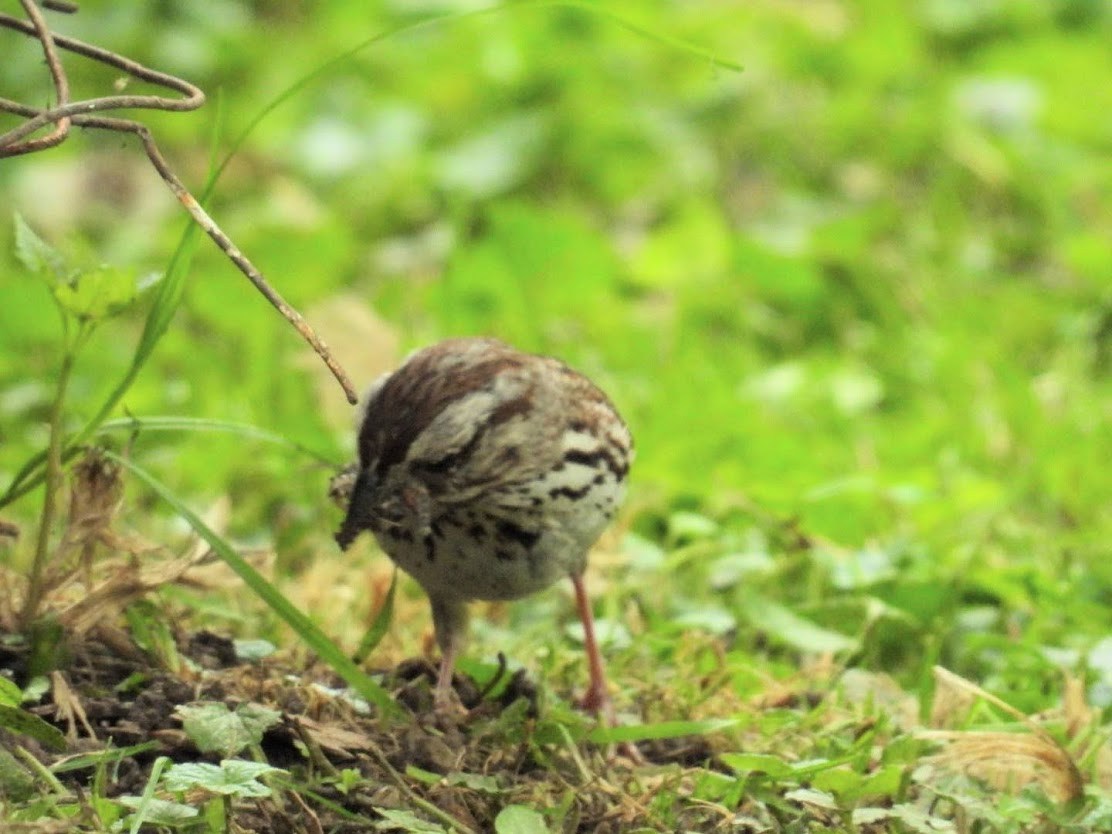
Song Sparrow
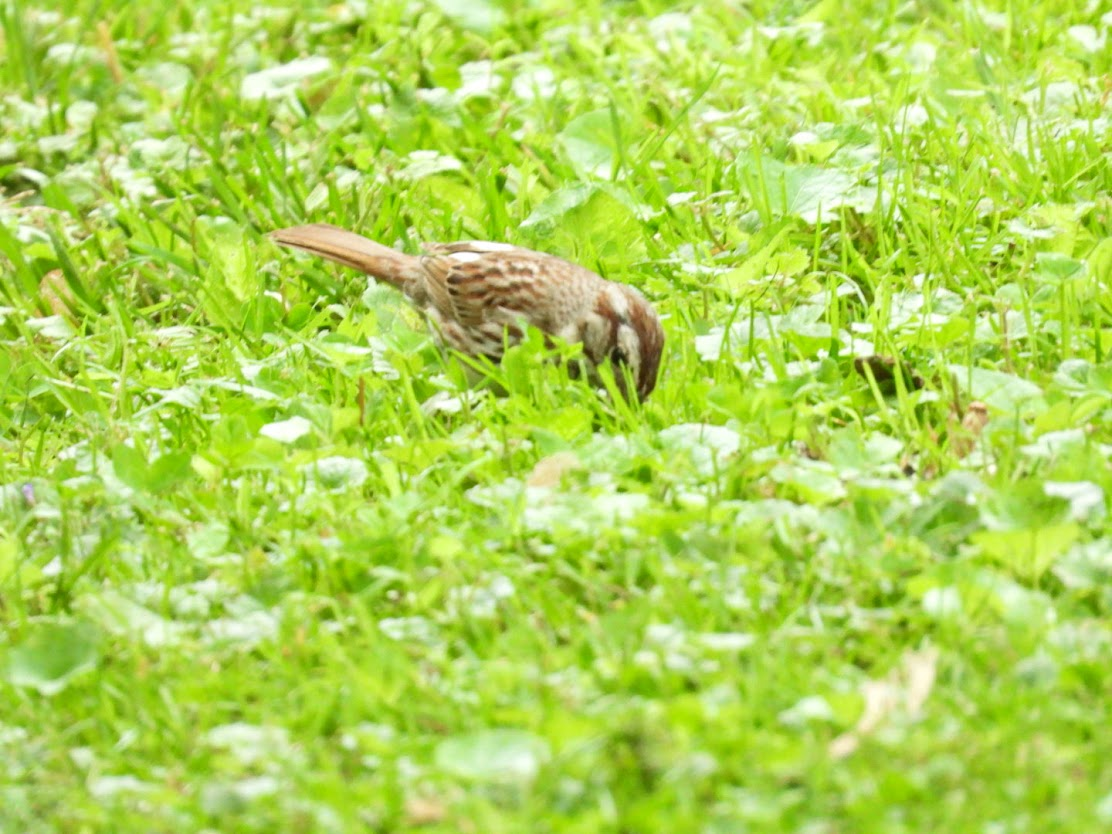
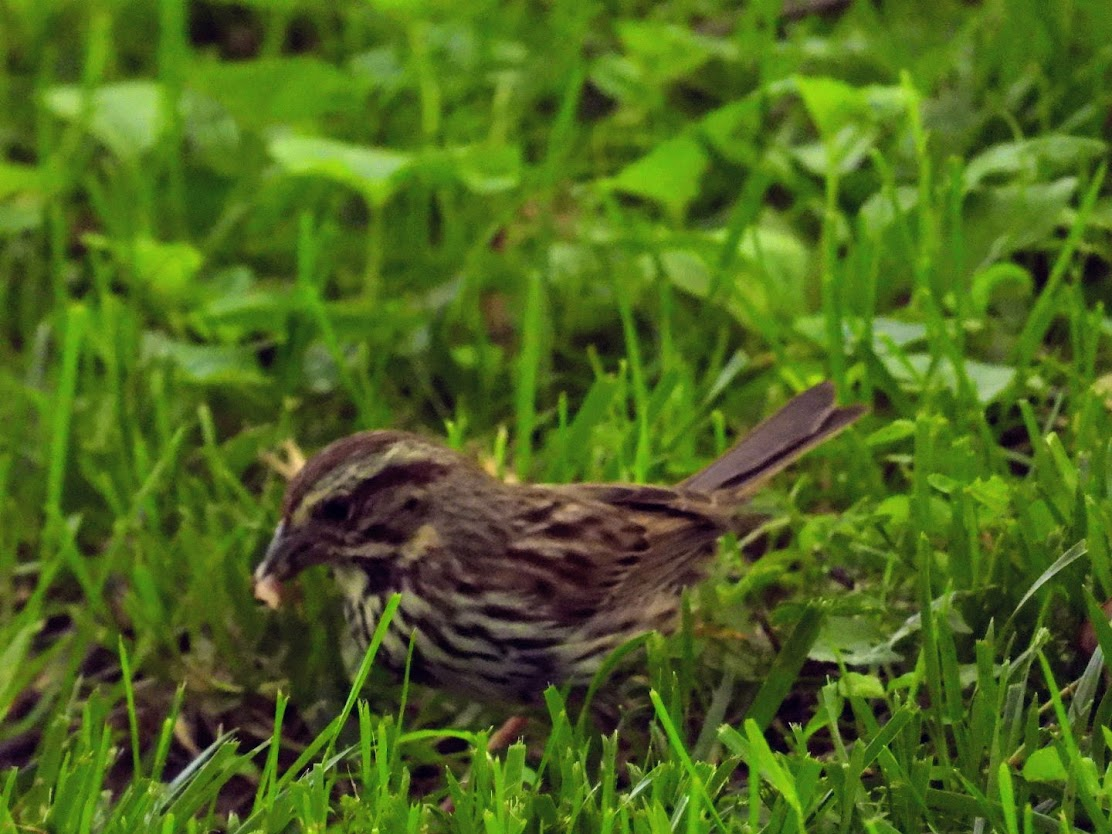
The Song Sparrow lives year-round in the Northern United States, including Pennsylvania. It also migrates north to Canada for the spring/summer and throughout the southern and central US during fall/winter. These birds typically don't migrate far south of Texas, but there's a year-round population on the plateau of central Mexico.
In a previous post, I mentioned the deadbeat (brood parasite) birds, Brown-headed Cowbirds. These birds lay their eggs in the nests of other species, and then rely on the other species to raise their young. Song Sparrows are one of the species that tends to get parasitized by the Brown-headed Cowbirds.
| Song Sparrow | |
|---|---|
| May 22 | May 26 |
| ƒ/8; 1/320; 539mm; 125x zoom; 3000mm (35mm equiv); ISO1600 | ƒ/8; 1/320; 539mm; 125x zoom; 3000mm (35mm equiv); ISO800 (with lighting adjustments) |
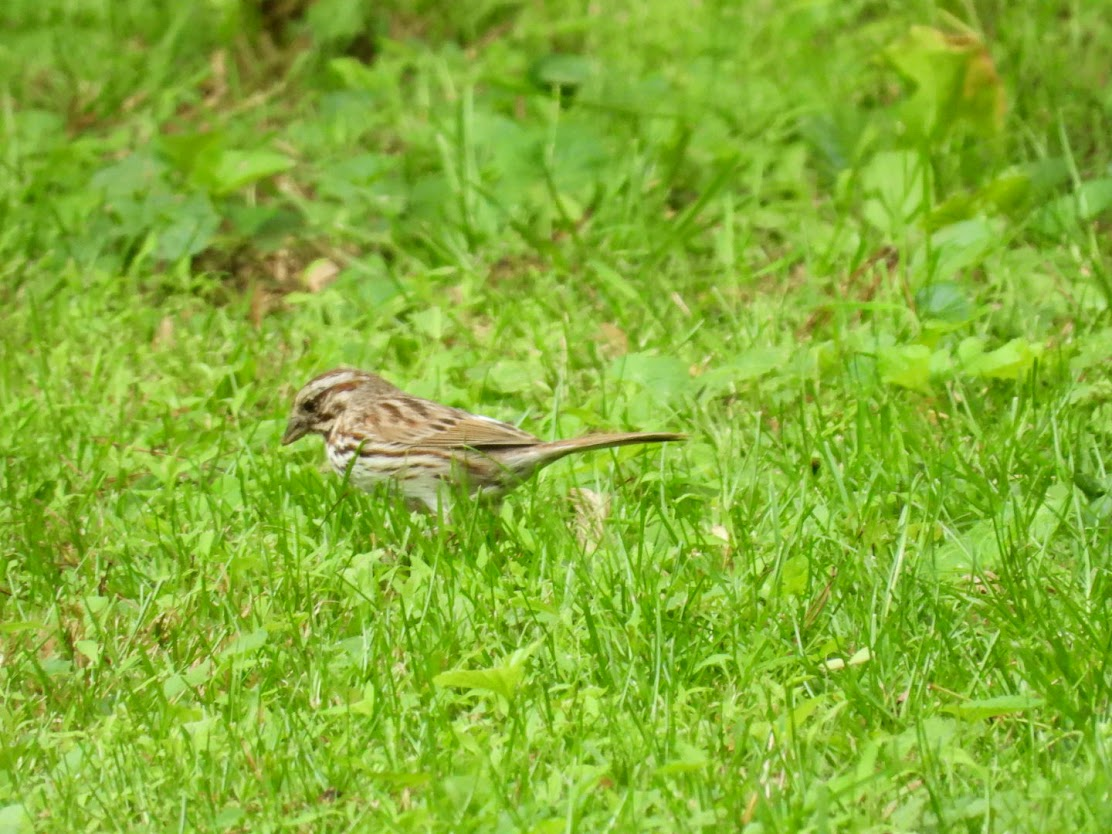 |  |
| May 26 | May 28 |
| ƒ/6.3; 1/320; 359mm; 83x zoom; 2000mm (35mm equiv); ISO1250 | ƒ/7.1; 1/500; 395mm; 91x zoom; 2200mm (35mm equiv); ISO1600 |
 |  |
Raptors
Mississippi Kite
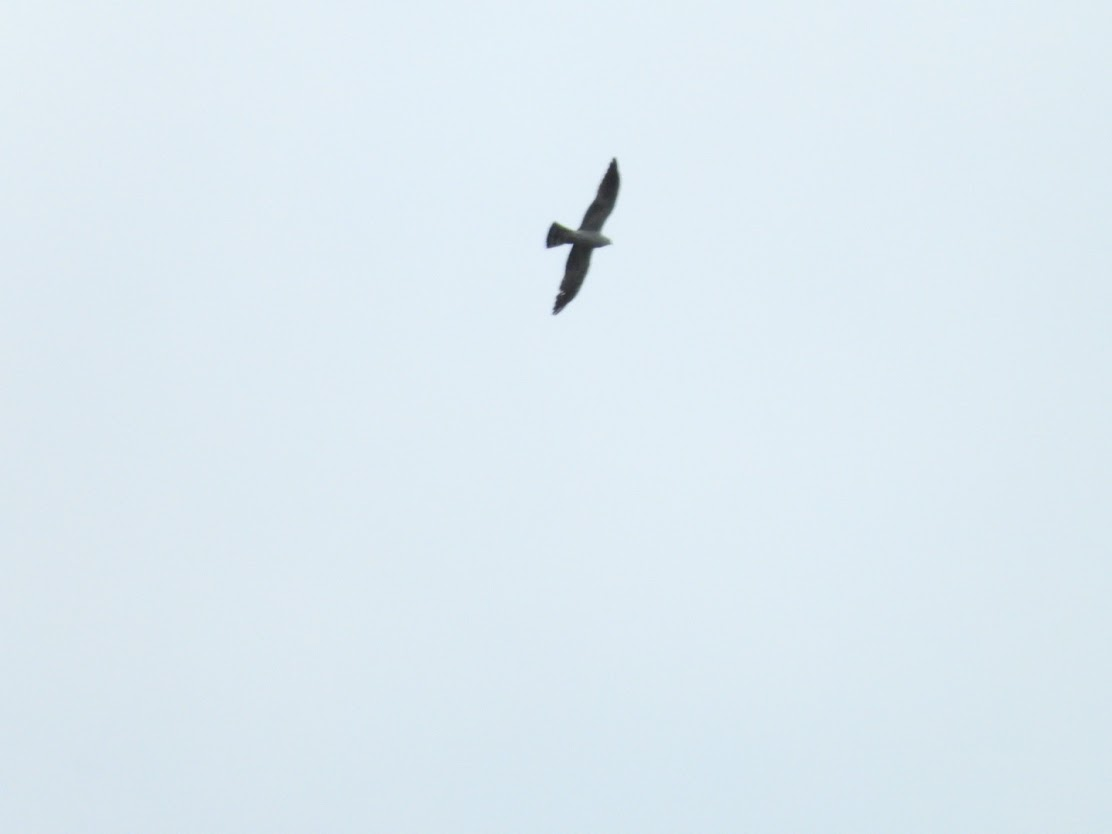
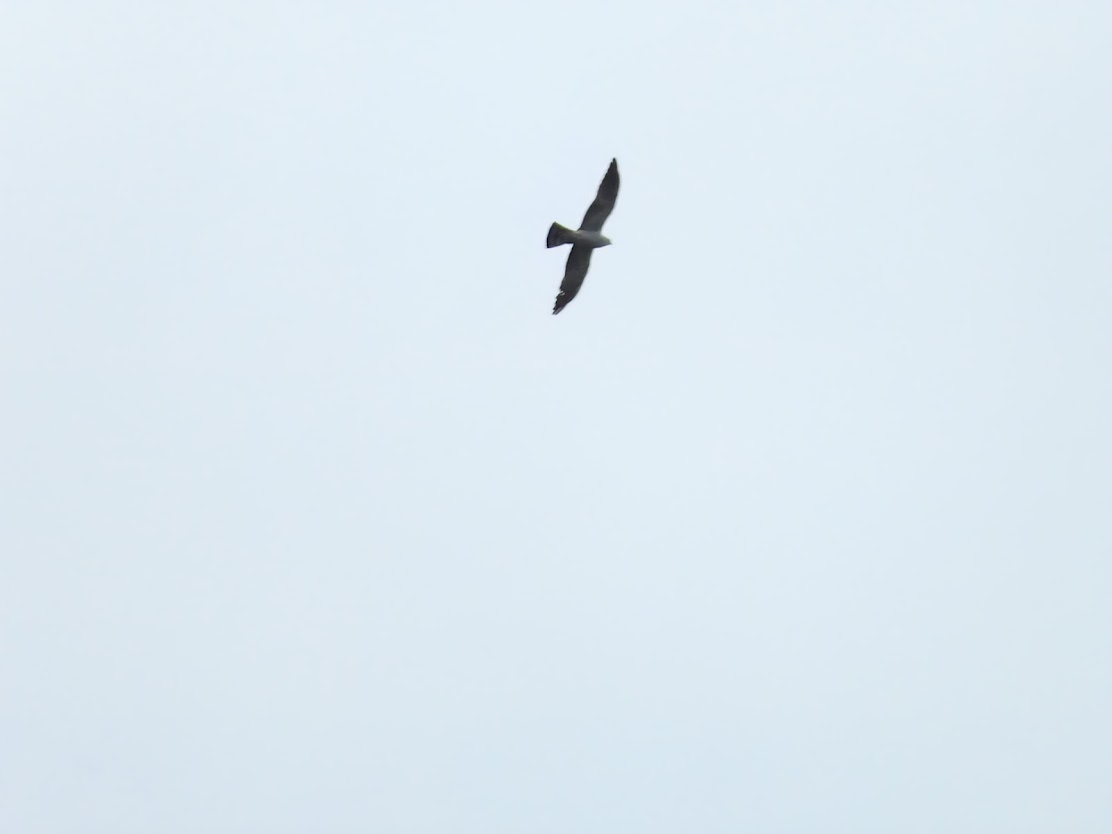
Nationally, the Mississippi Kite is not a rare bird, but it's apparently very unusual to spot one in Pennsylvania. It seems that the bird's range has been expanding northward in recent years. When I took the photos, the bird appeared at the same time as a kettle of Turkey Vultures, but it was significantly higher. Also, the vultures were circling and drifting around aimlessly, but this bird was flying in a straight line — south to north. I assumed it was a Red-tailed Hawk.
Unfortunately, the picture isn't great, so I didn't believe Merlin when it ID'd the Mississippi Kite. After confirmation from Claude, Gemini, and my own research staring at photos in Google Images, I was finally convinced. The wings are longer and narrower, and the tail is more "squared off" than a Red-tailed Hawk's.
As mentioned in a previous post, there had only been 6 observations reported in my county on iNaturalist, and all landed between the dates of May 25 and June 18 in their respective years. That number is now up to 8.
| Mississippi Kite | May 25 |
|---|---|
| ƒ/7.1; 1/2000; 395mm; 91x zoom; 2200mm (35mm equiv); ISO900 | ƒ/7.1; 1/2000; 395mm; 91x zoom; 2200mm (35mm equiv); ISO900 (cropped and upscaled) |
 |  |
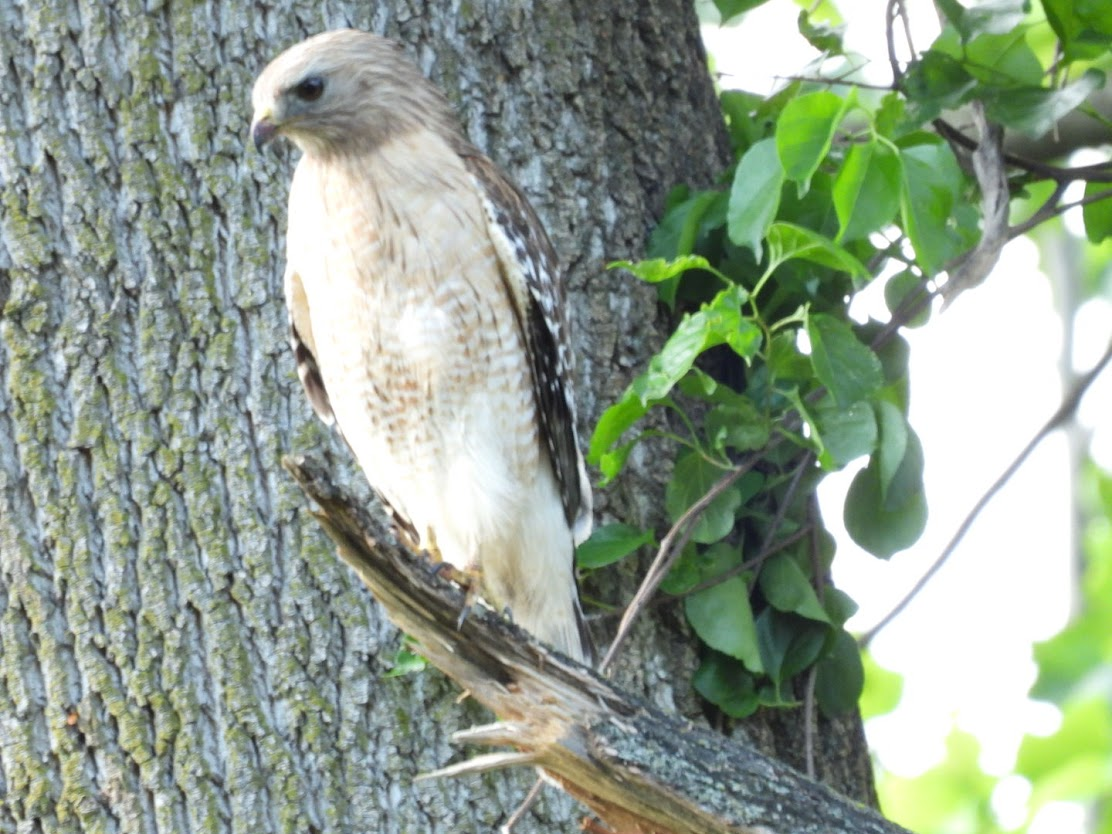
Red-shouldered Hawk
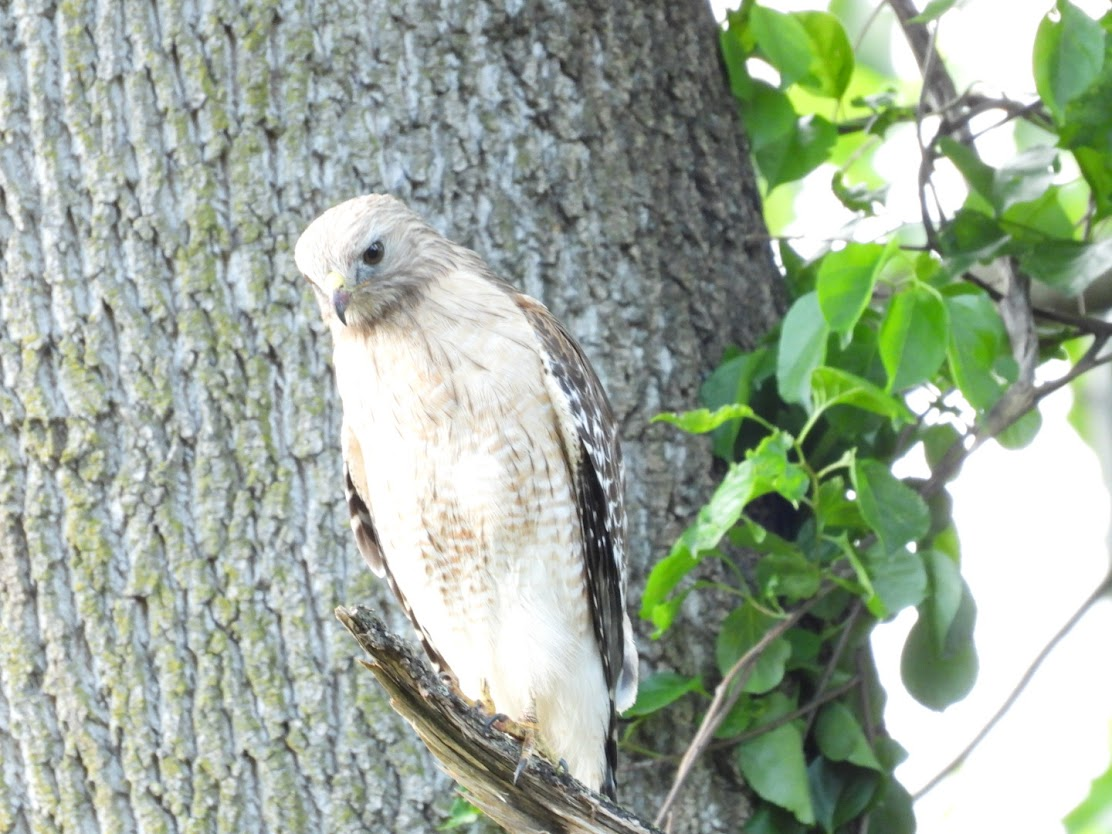
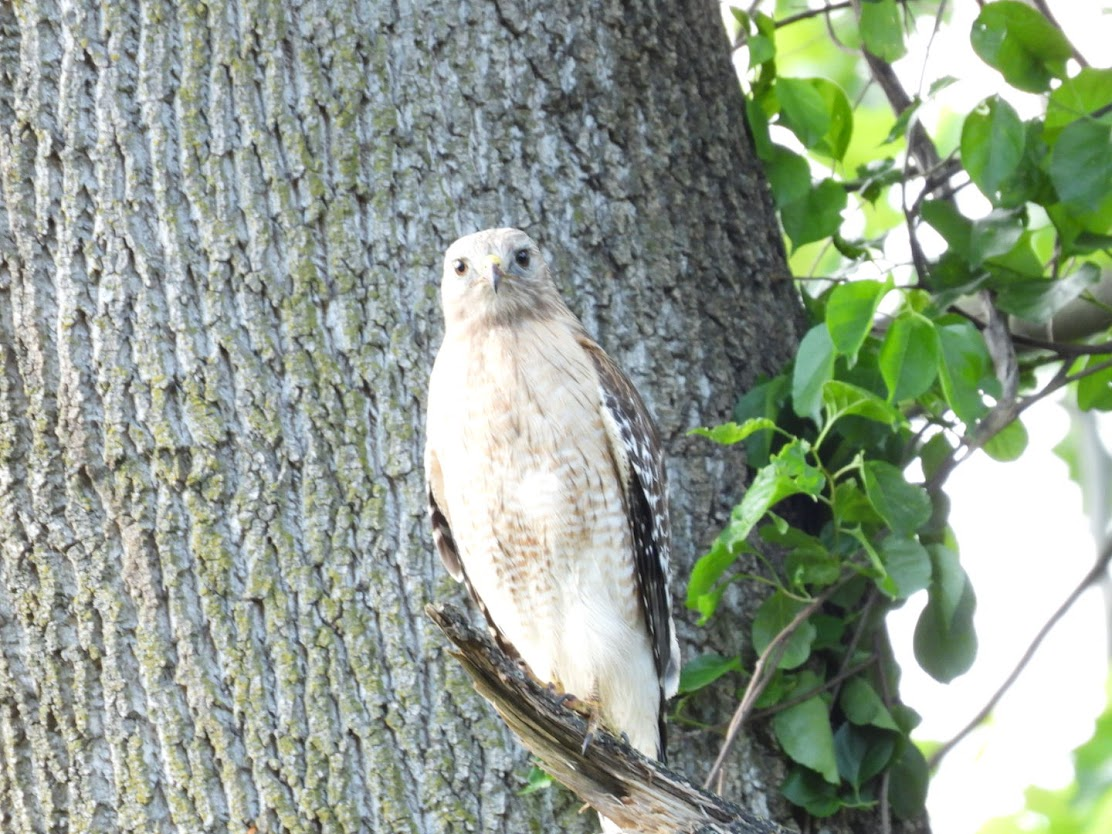
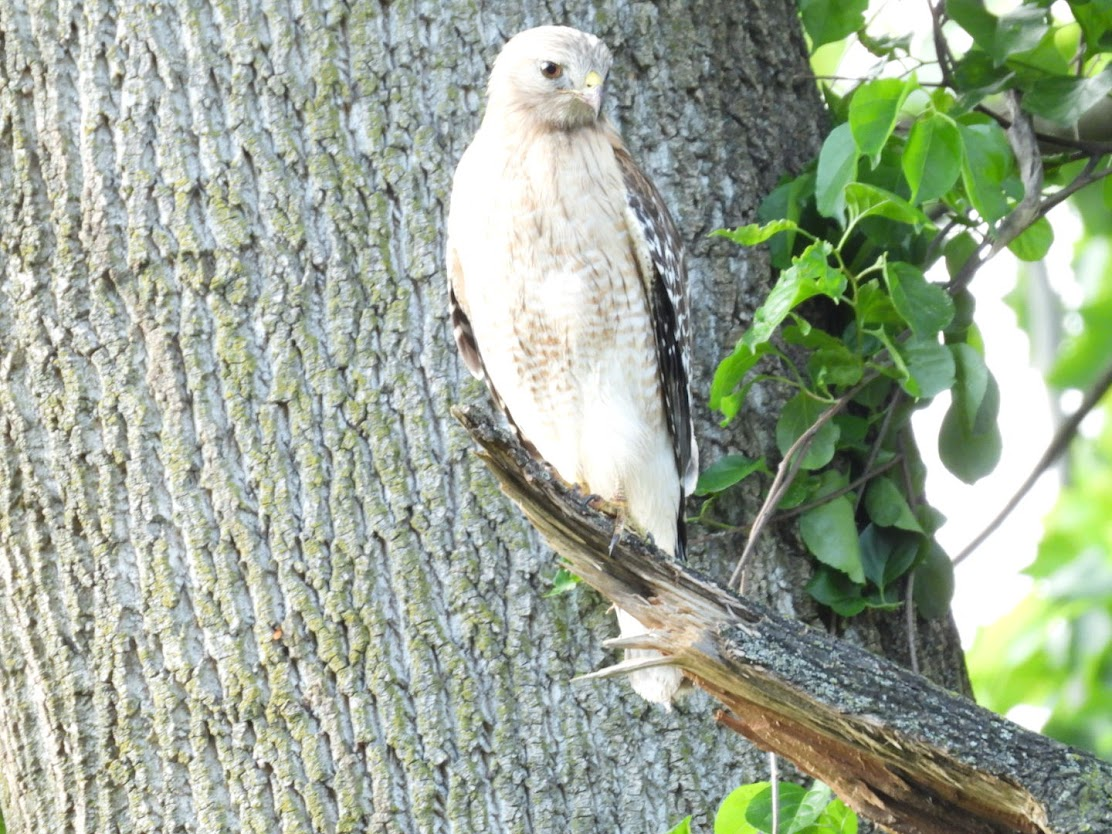
The Red-shouldered Hawk is a year-round resident in Pennsylvania and most of the eastern and south central United States. In the spring it migrates north into New England and the Great Lakes Region. In fall, it might migrate south into Mexico. They live in forests where they eat small mammals, snakes, frogs, toads, and crayfish. They often reuse their nests from year to year, and at least one lived for 25 years or more.
This one landed while my wife and I were in the yard. It sat on that tree branch for about two or three minutes, and then it left. As you can see, I was still trying to get the camera settings right for the late-afternoon lighting.
| Red-shouldered Hawk | |
|---|---|
| May 30 | May 30 |
| ƒ/6.3; 1/80; 359mm; 83x zoom; 2000mm (35mm equiv); ISO640 | ƒ/6.3; 1/80; 306mm; 71x zoom; 1700mm (35mm equiv); ISO800 |
 |  |
| May 30 | May 30 |
| ƒ/6.3; 1/80; 306mm; 71x zoom; 1700mm (35mm equiv); ISO720 | ƒ/6.3; 1/80; 359mm; 83x zoom; 2000mm (35mm equiv); ISO640 |
 |  |
Mammals
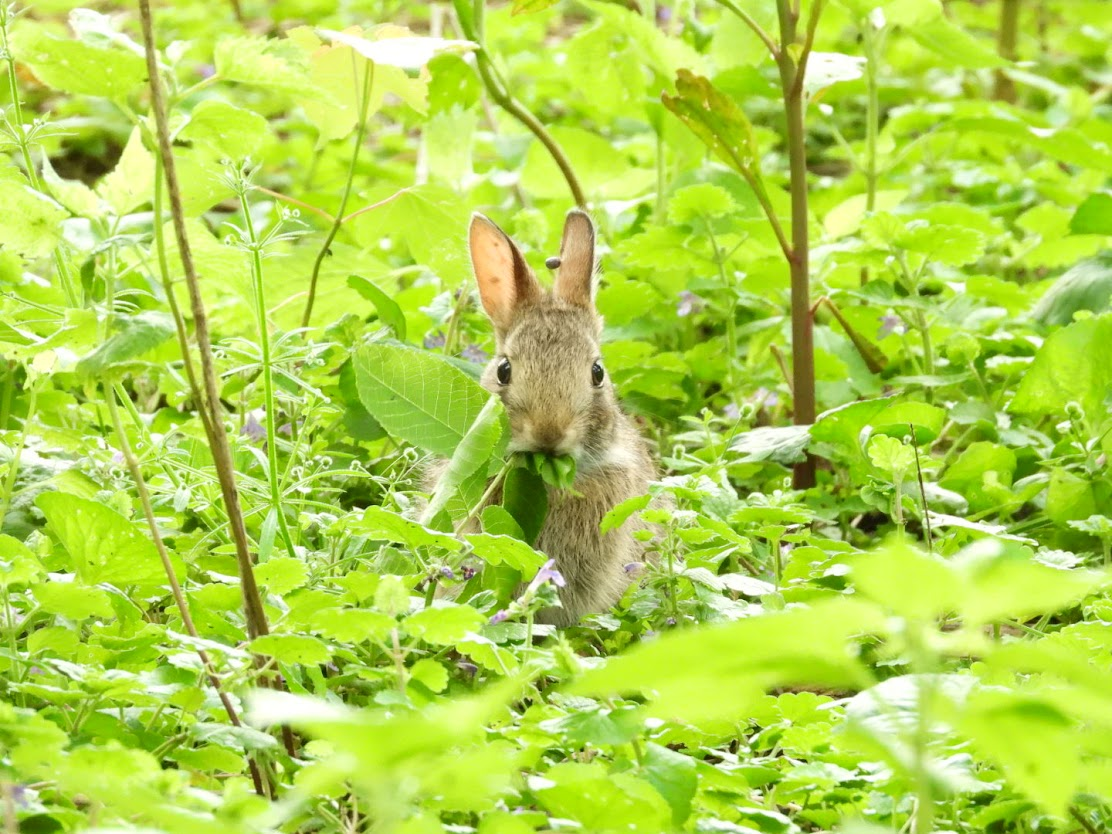
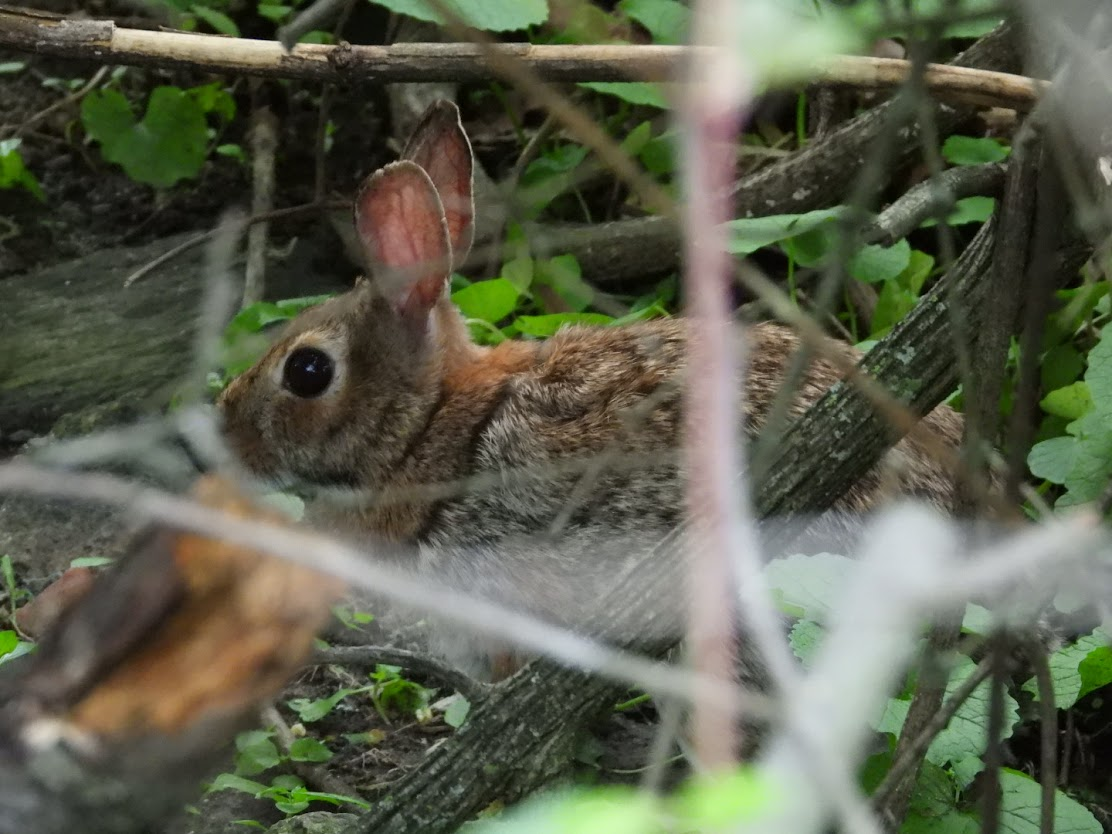
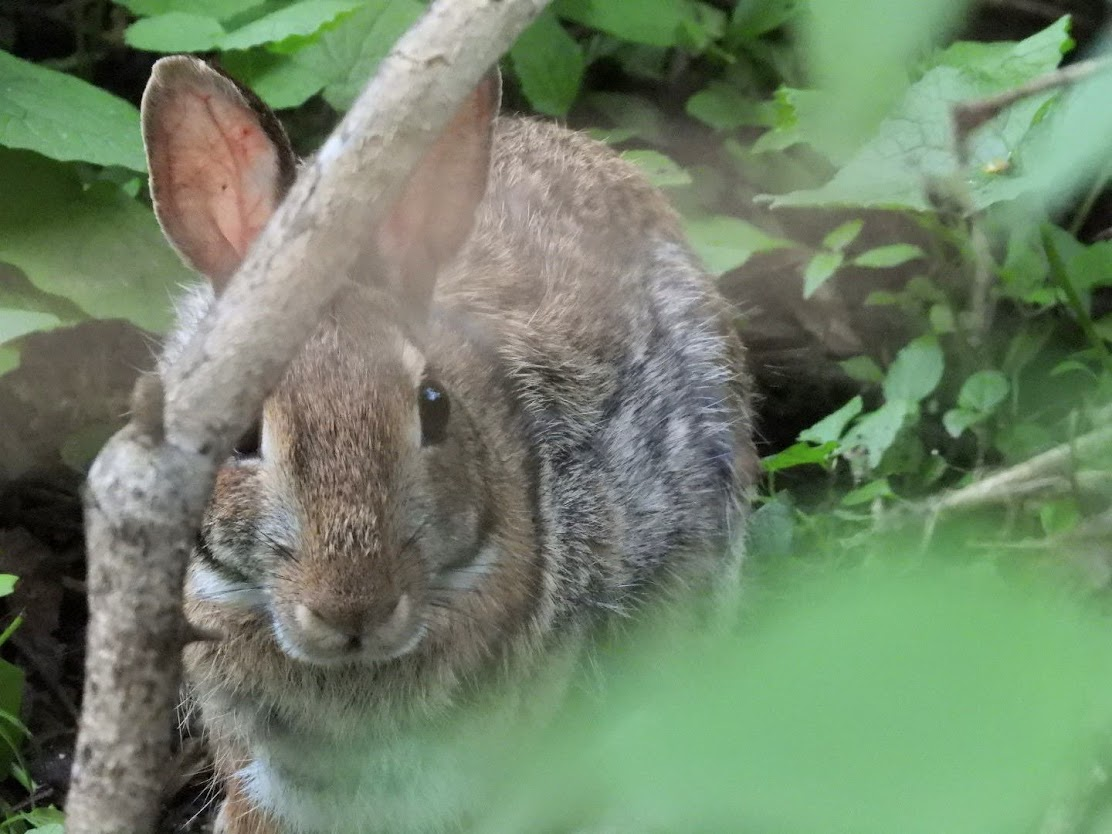
Eastern Cottontail
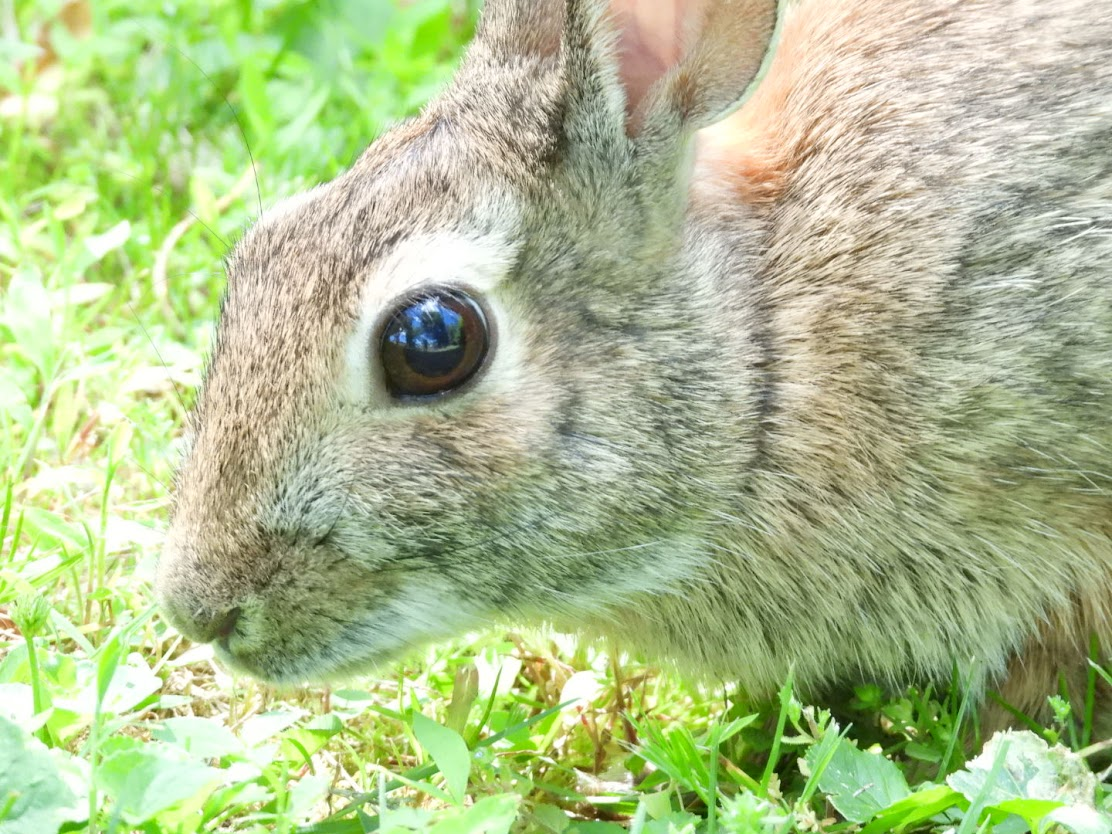
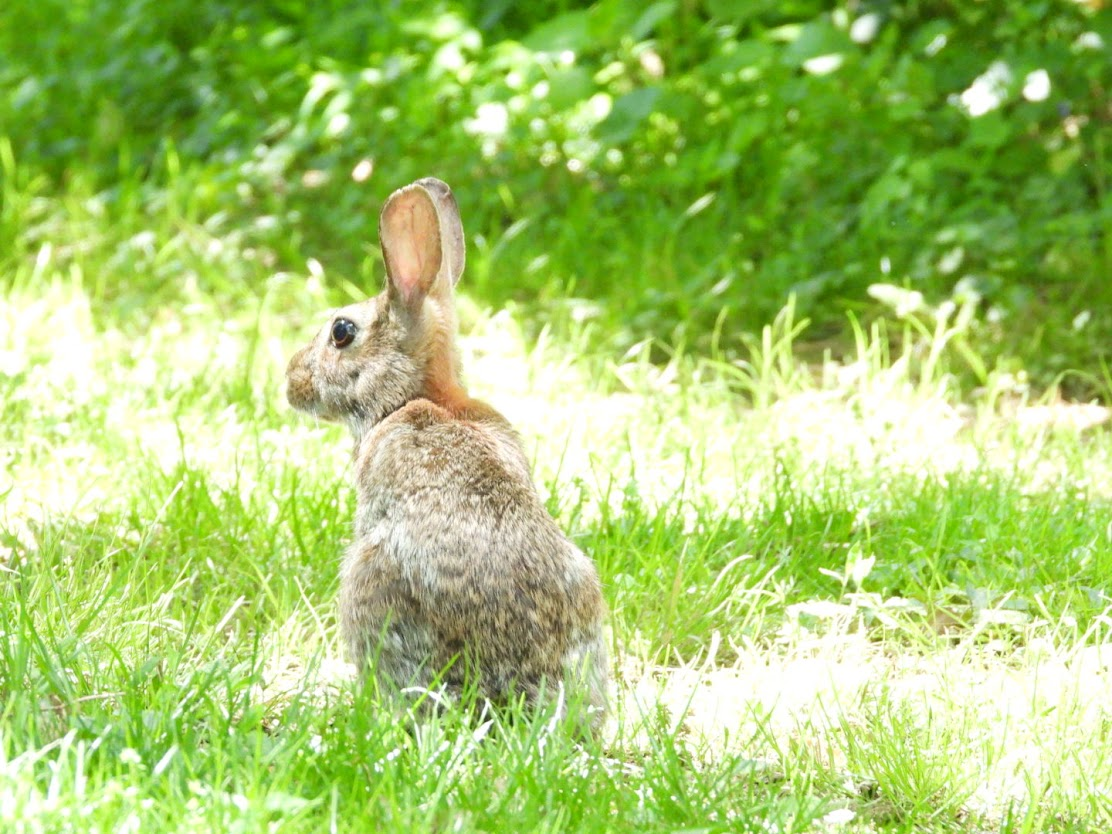
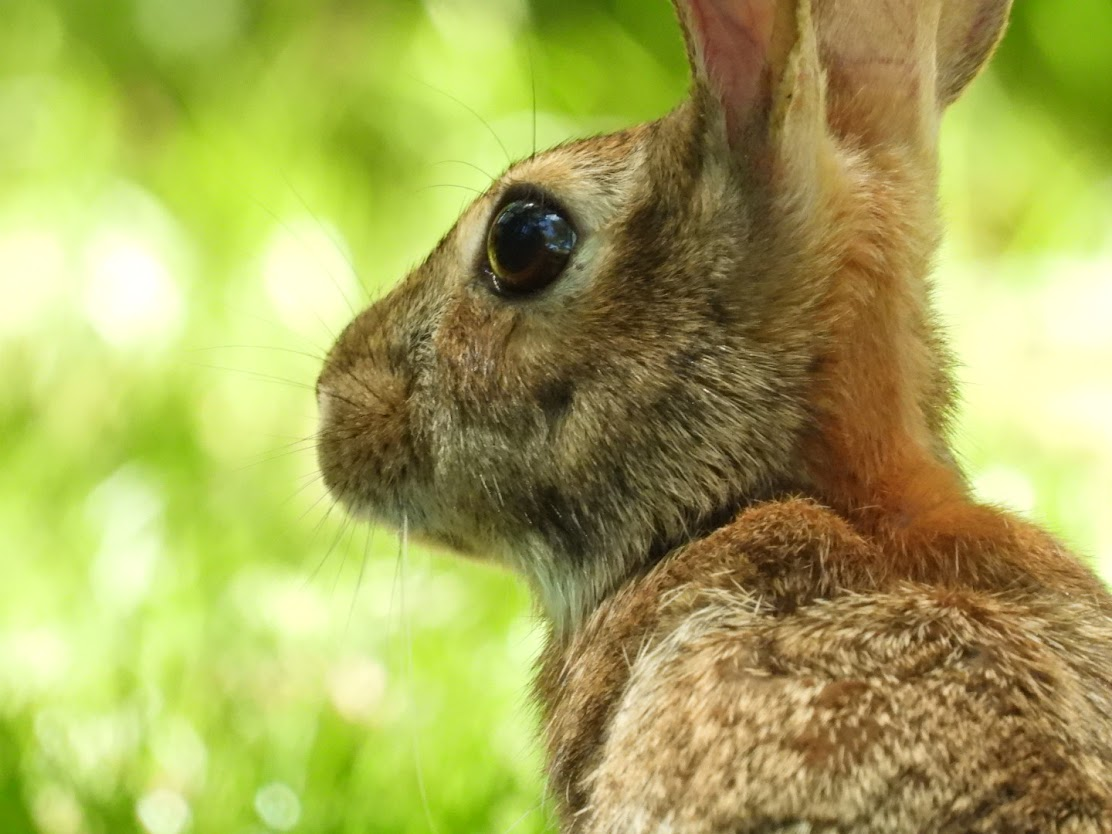
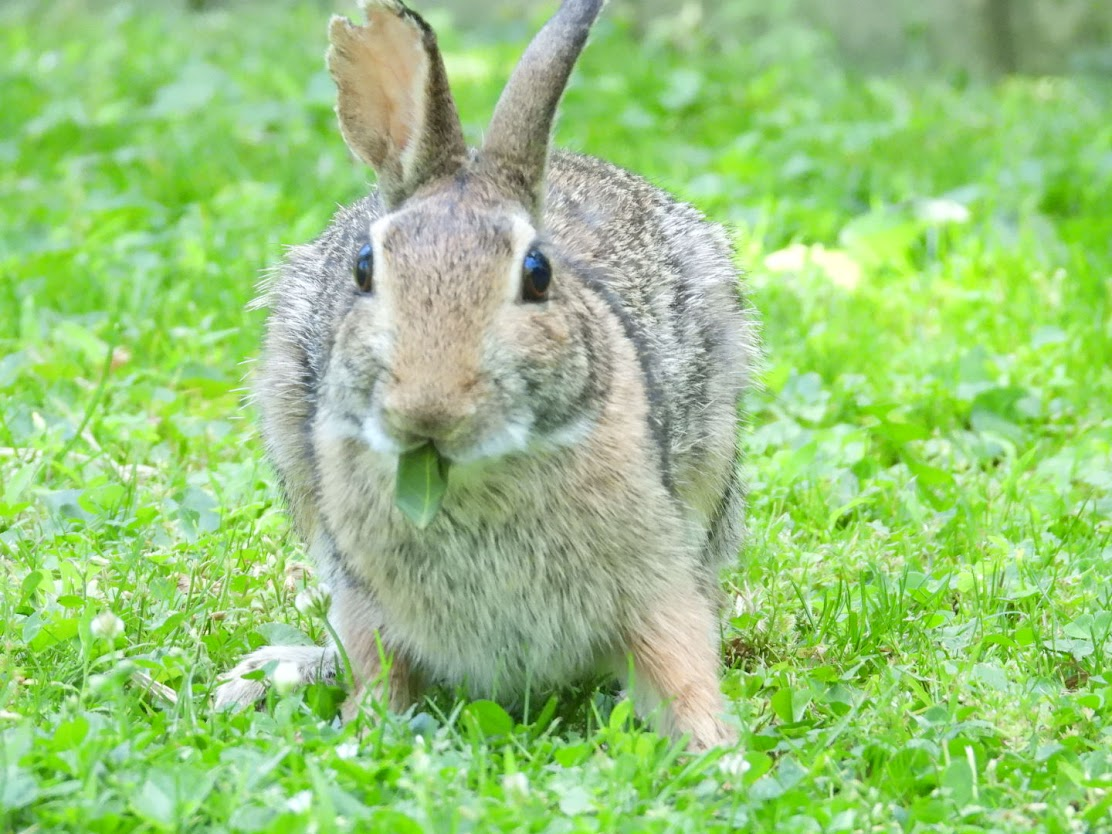
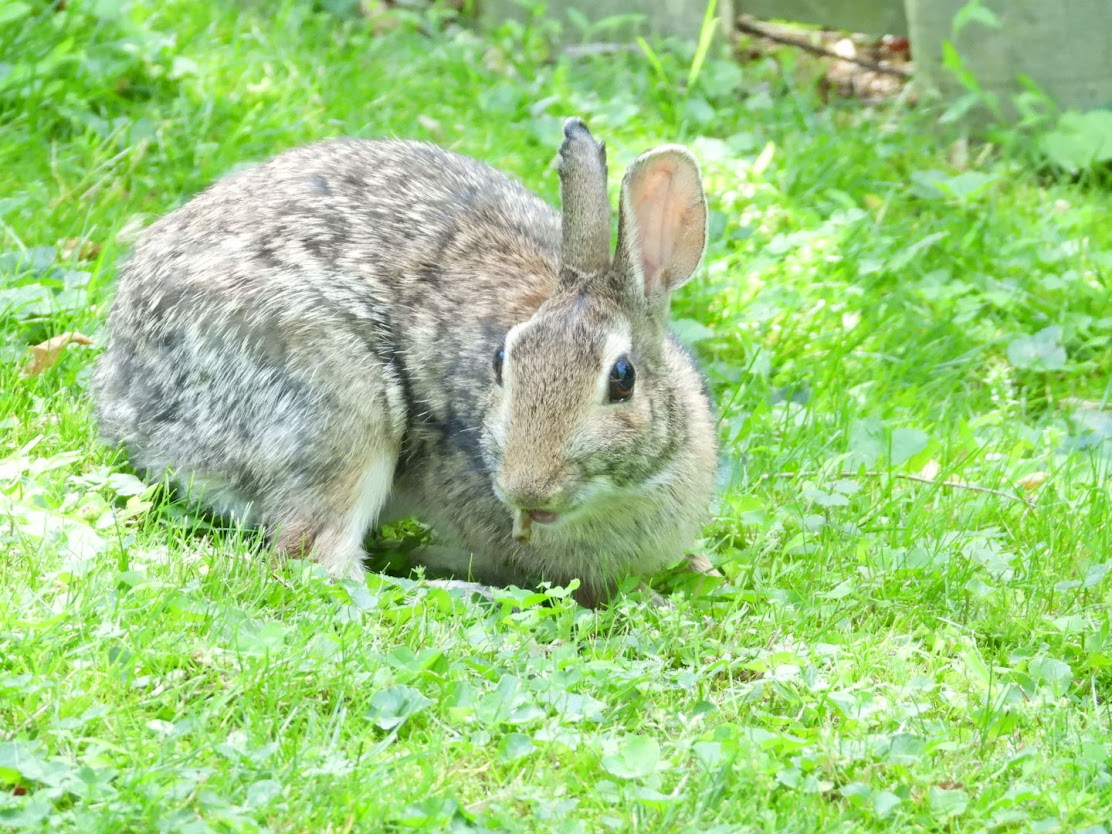
The Eastern Cottontail can be found to the east of the Rocky Mountains throughout most of the US and Mexico. In Pennsylvania, an acre of land can support 3 or 4 of them in summertime, but that same acre can only support 1 rabbit in winter time. Rabbits are known for their high rate of reproduction, but the flip side is that they also have a high mortality rate. Annual death rates for the species in Pennsylvania are between 75% and 85%.
Totally by accident... if you look in the eye of the bottom-left photo, you can see reflections of trees and skies, and even of me - taking the picture.
| Eastern Cottontail | |
|---|---|
| May 26 | May 26 |
| ƒ/5.6; 1/160; 234mm; 54x zoom; 1300mm (35mm equiv); ISO1600 | ƒ/5; 1/250; 117mm; 27x zoom; 650mm (35mm equiv); ISO1600 |
 |  |
| May 26 | May 29 |
| ƒ/5.6; 1/250; 252mm; 58x zoom; 1400mm (35mm equiv); ISO1600 | ƒ/5; 1/250; 117mm; 27x zoom; 650mm (35mm equiv); ISO1600 |
 |  |
| May 29 | May 29 |
| ƒ/8; 1/250; 503mm; 116x zoom; 2800mm (35mm equiv); ISO1600 | ƒ/5.6; 1/250; 144mm; 33x zoom; 800mm (35mm equiv); ISO1600 |
 |  |
| May 29 | May 29 |
| ƒ/5.6; 1/250; 180mm; 42x zoom; 1000mm (35mm equiv); ISO1600 | ƒ/5; 1/250; 89.9mm; 21x zoom; 500mm (35mm equiv); ISO1600 |
|  |
White-tailed Deer
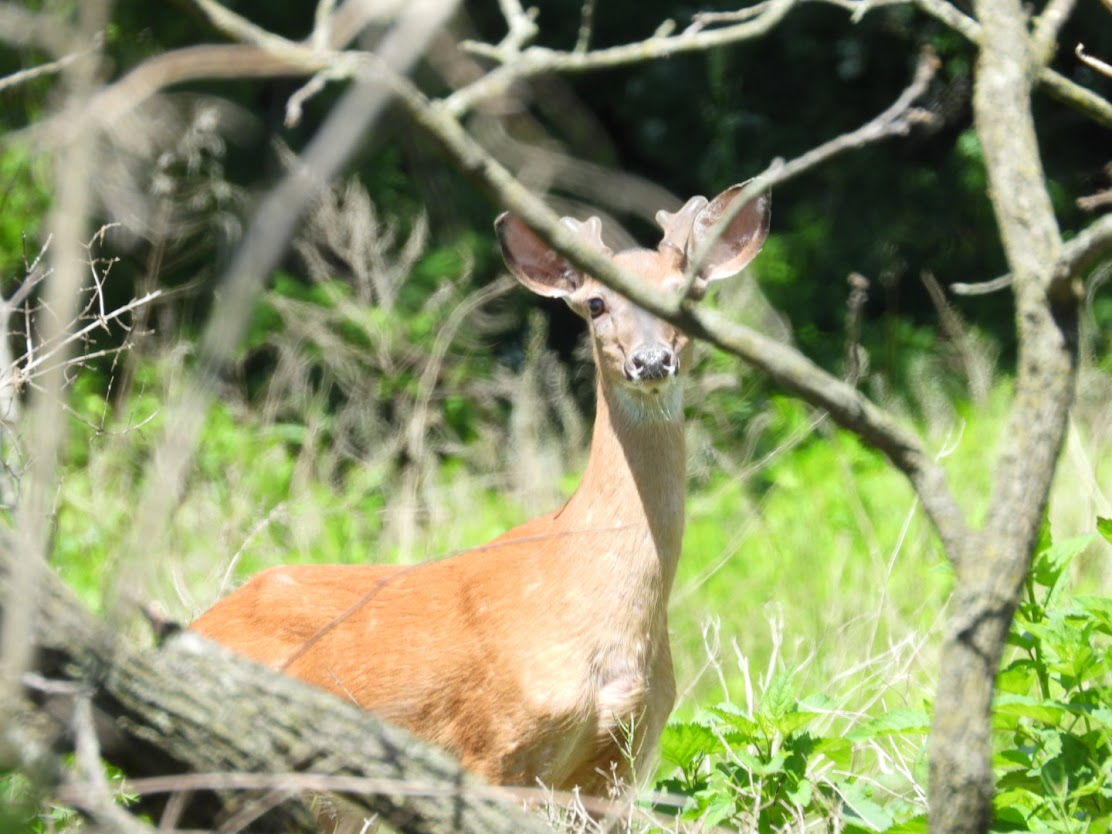
I have already posted plenty of pictures of White-tailed Deer over the years, but this is the first one that I've seen since I started this backyard photography practice.
Based on the small antlers, this one looks like a young buck (male). The antlers will be covered in "velvet" until October or November, when they harden. Then, the antlers will be shed between January and April, and the cycle will start over again next year. I only had time for a pair of nearly identical photos before he ran off again (only one photo from the pair is included here).
| White-tailed Deer |
|---|
| May 29 |
| ƒ/5.6; 1/160; 270mm; 63x zoom; 1500mm (35mm equiv); ISO125 |
 |
Wrap-up
With that, we've covered all of the animals that made their first appearances during the month of May. The main highlight of the first appearances was the Mississippi Kite, which is not commonly seen in Pennsylvania. Another was the White-tailed Deer, which used to show up frequently in my yard, but now hadn't been seen for a number of months.
As discussed above, an interesting concept that I learned while writing this post is "leapfrog migration". This happens when high latitude populations of a species migrate further south than the lower latitude populations, "leap-frogging" or jumping past the mid-latitude populations. This behavior is observed in three species from this post: Swainson's Thrush, Baltimore Orioles (in limited circumstance), and Song Sparrows.
During the rest of this month, I'll be posting photographs from May showing new photos of some animals that had been seen before. I'm not quite sure how I'll be splitting them up into posts this month, but it will require at least another two or three posts during June - maybe more.
Appendix
Here are my previous wildlife photography posts:
May's photographs
- Backyard wildlife photography in southeastern Pennsylvania: First encounters during May - post 2
- Backyard wildlife photography in southeastern Pennsylvania: Something Old - Something New
- Photography meets citizen science: May's wildlife in south-eastern Pennsylvania
April's photographs
- [Citizen Science] April's Raptors in South-Eastern Pennsylvania
- Photography meets citizen science: April's wildlife in south-eastern Pennsylvania
- Learning photography with wildlife in south-eastern Pennsylvania: First encounters in the month of April
- Learning photography with wildlife in south-eastern Pennsylvania: First encounters in the month of April - part 2
- April wildlife observations in south-eastern Pennsylvania: repeated encounters with small animals
March's photographs
- Backyard Photography in Chester County, Pennsylvania during March 2026: Warm-up Shots
- [Citizen Science] Observations of Small Birds and Animals in South-eastern Pennsylvania from March of 2026
- [Citizen Science] The Raptors of March in South-Eastern Pennsylvania
Thank you for your attention!
All photos above were taken by me with a Nikon P1000 camera. I'm sharing them under the CC BY 4.0 license (share & adapt freely with attribution to the original source).