Backyard wildlife photography in southeastern Pennsylvania: Uncommon moments with the American Robin in May
If you had told me a year ago, or even a couple months ago, that I'd be doing a blog post that focused on the American Robin, I'd never have believed it. These birds are extraordinarily common. I photograph them for practice with lighting and zoom, but I generally think of them as "throwaway" shots. I have also started trying to get shots of Robins in flight, but that's actually harder than the overhead raptor shots. The Robins fly in unpredictable directions and they are low & close. So far, this thumbnail picture of a fledgling Robin is the only decent launch/in-flight photo of a Robin that I have managed to capture.
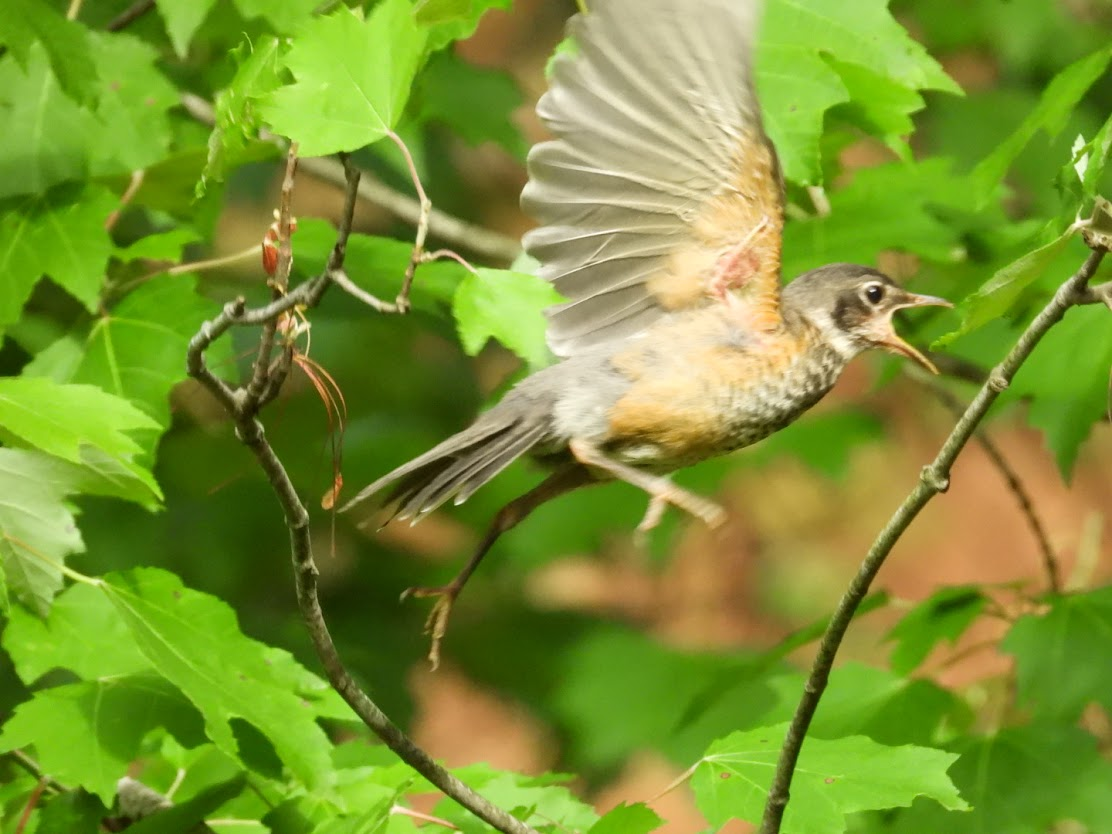
The Robin lives year round in most of the continental United States, migrating north to Canada during the spring & summer months, and south to Florida and Mexico during the fall and winter. The total population in North America is estimated at 370 million, with 79% in the United States. In my own yard, it's common for me to see a half-dozen or more during a single photography session.
But it turns out that when a bird is extraordinarily common, that gives many opportunities to see the bird doing uncommon things, particularly since the average Robin has 3 broods per year during the spring & summer months. During the month of May, I learned this lesson.
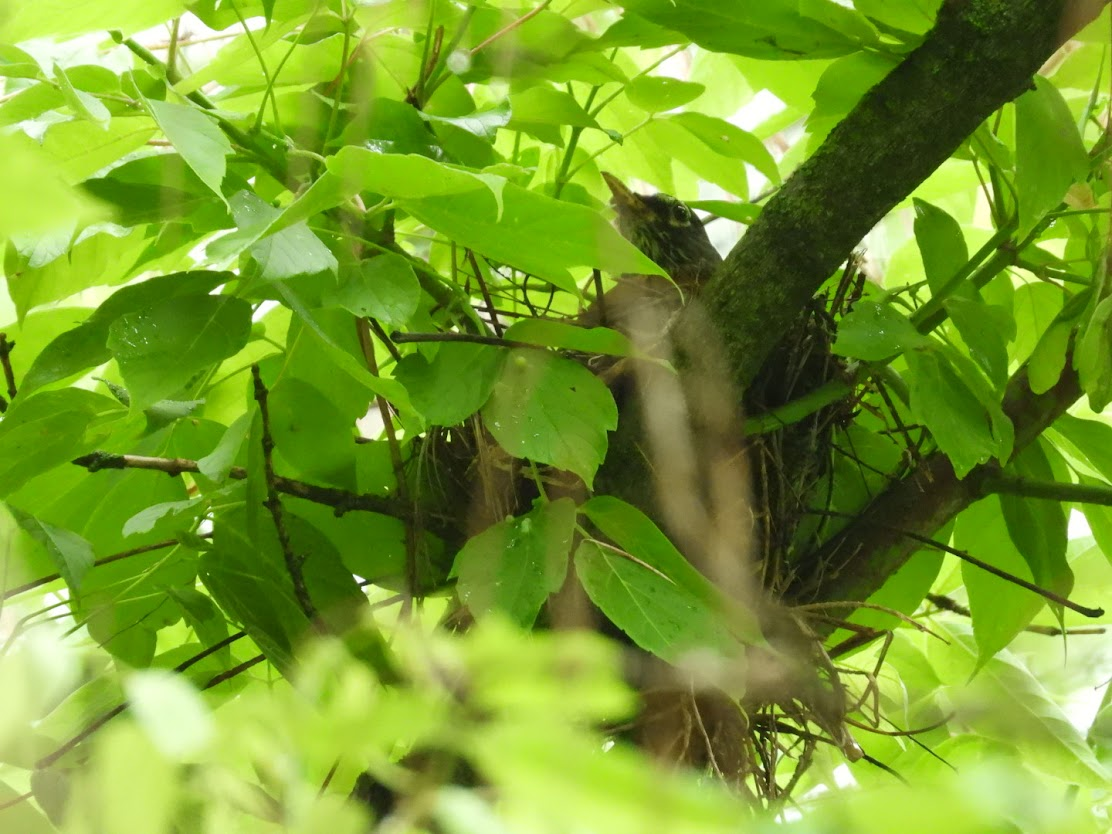
First up, as in April, I had another chance in May to observe a Robin in its nest (different nest, probably a different Robin). As with April, I only saw it once. Every other time I checked the Robin's nest, I couldn't see anything inside. Either there was no bird there, or the bird was down below the edge of the nest.
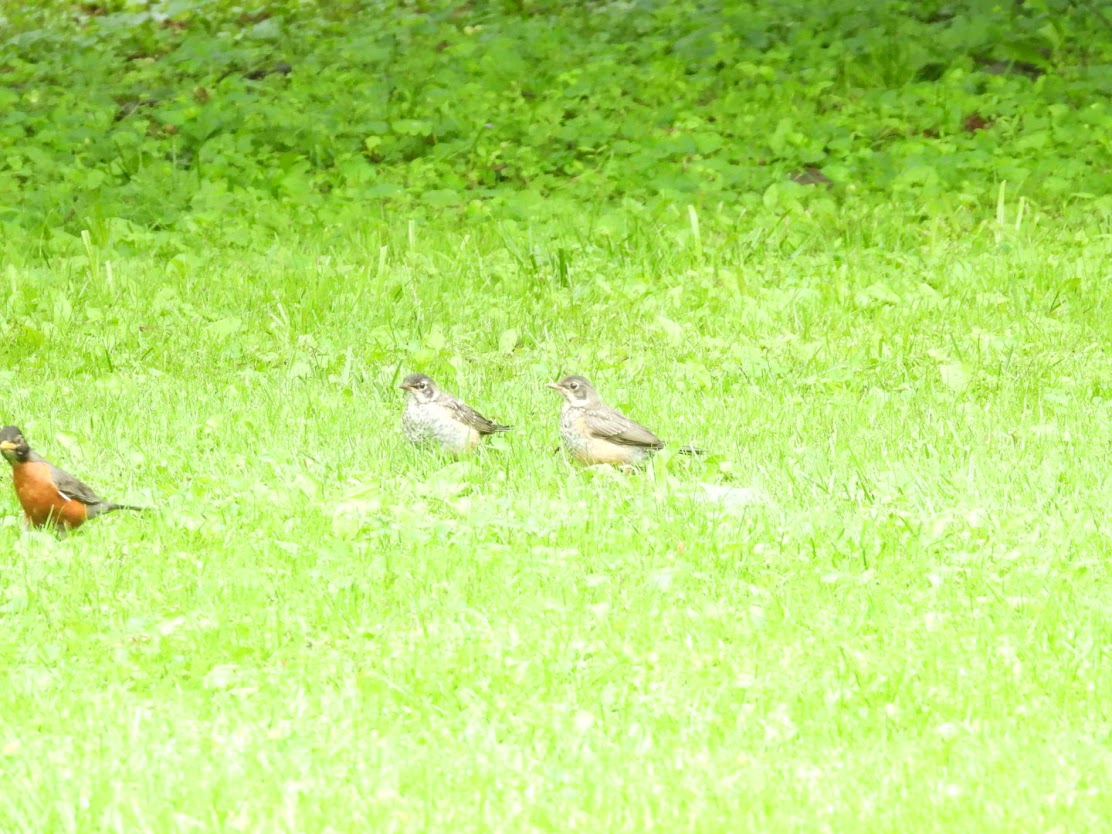
However, something new during May is that I had multiple opportunities to take photographs of fledgling Robins (immature, still learning to fly). I learned this month that the fledglings are easily distinguished from adults by the black and white spots on their chest. Of course, the adults have solid red breasts that the American Robin is so well known for.
It's hard to appreciate just how brutal nature can be for animals like these. As I previously mentioned about the Eastern Cottontail, Robins also have a high reproduction rate and a high mortality rate. The oldest Robins live to be almost 14 years old, or older, but on average the population turns over every 6 years with each bird having an average lifespan of 2 years. 75% of fledglings die before their first winter. One of their most common predators is the Cooper's Hawk that I mentioned here.
So, let's move on to the photos of this common, but often short-lived bird. I'm guessing that the juveniles/fledglings in these next pictures came out of that nest, but I have no way to know if that's right or not.
May 24 : Robin in its nest | May 26: Fledgling takes flight |
ƒ/6.3; 1/200; | ƒ/5.6; 1/800; |
 | |
May 25: Adult with Two Juveniles | |
ƒ/5.6; 1/200; | |
 |
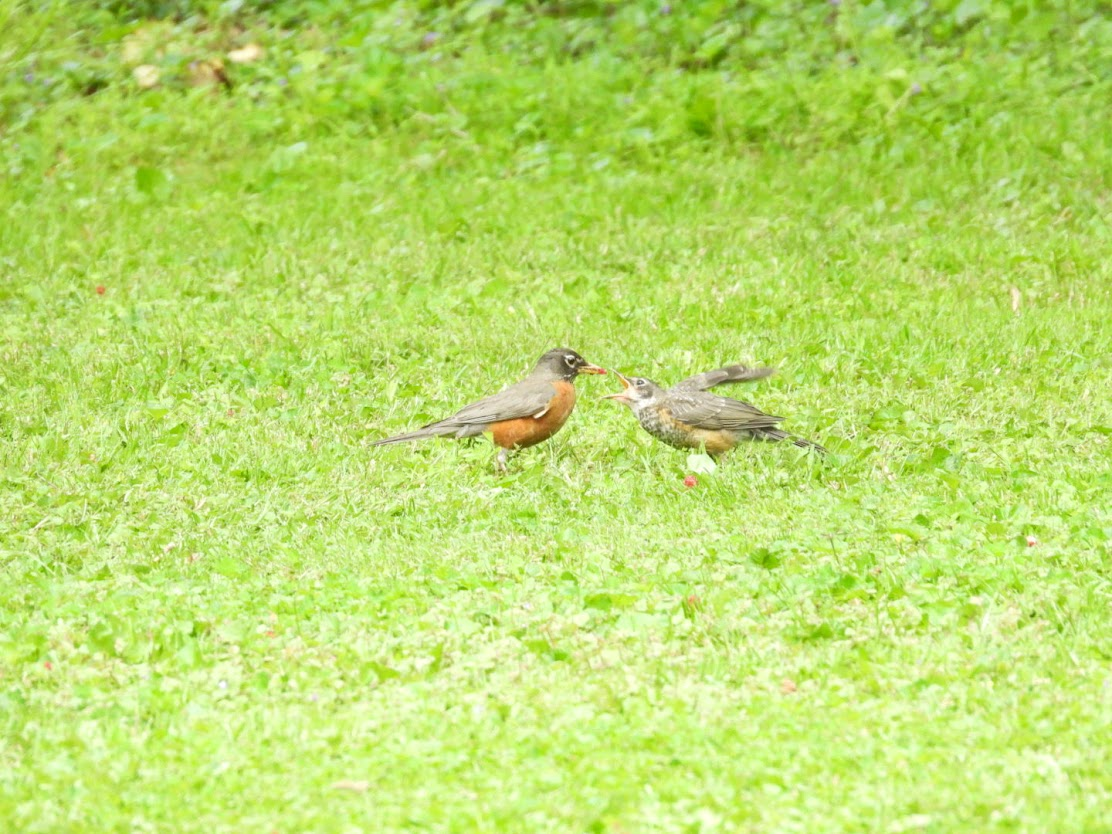
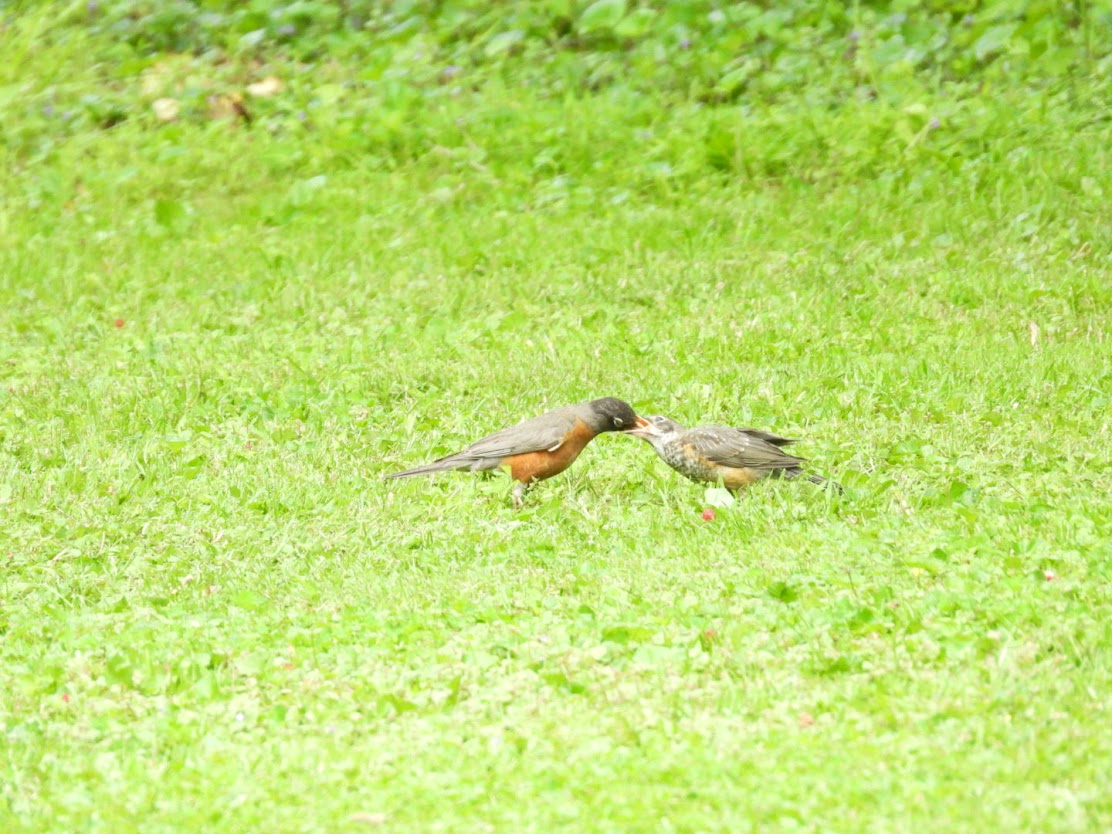
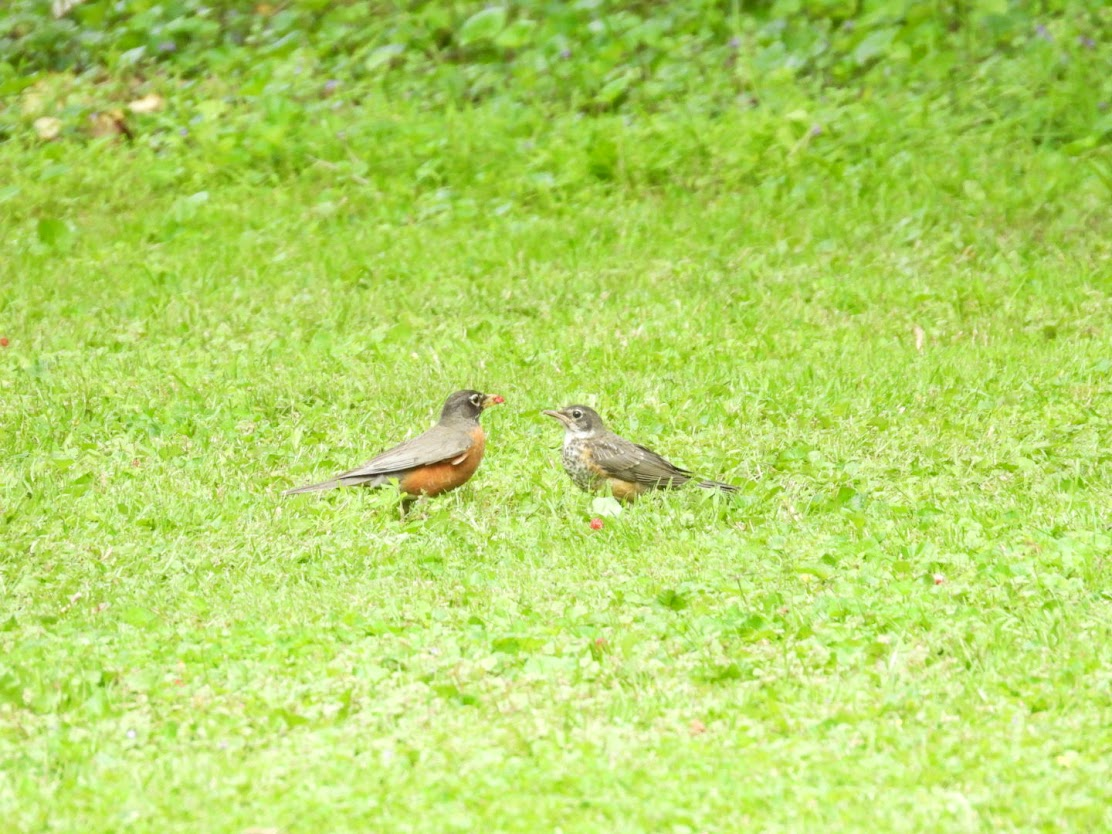
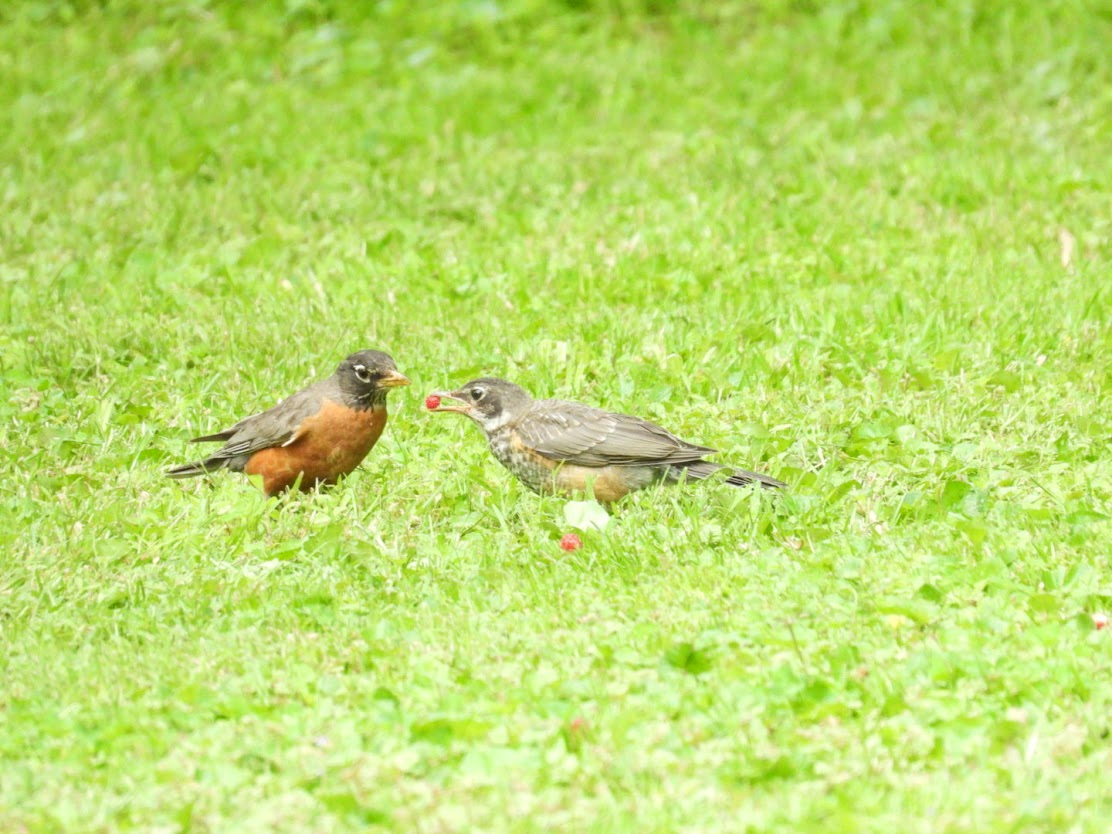
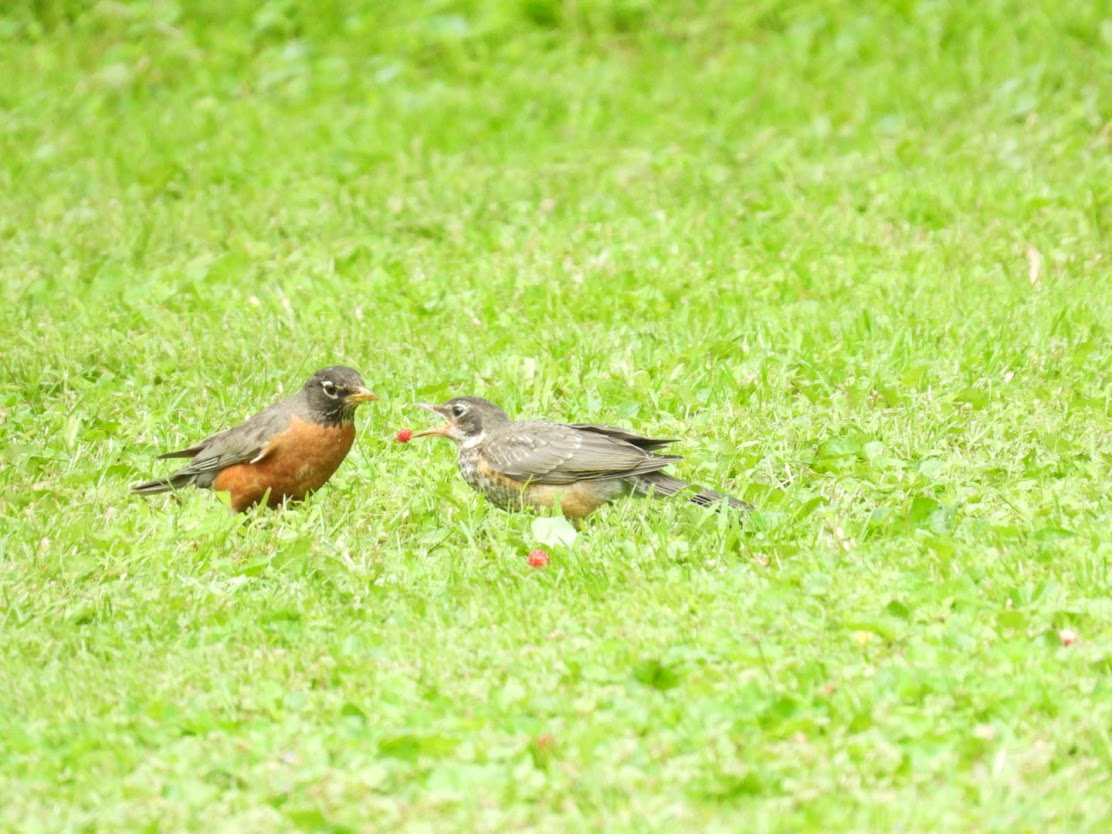
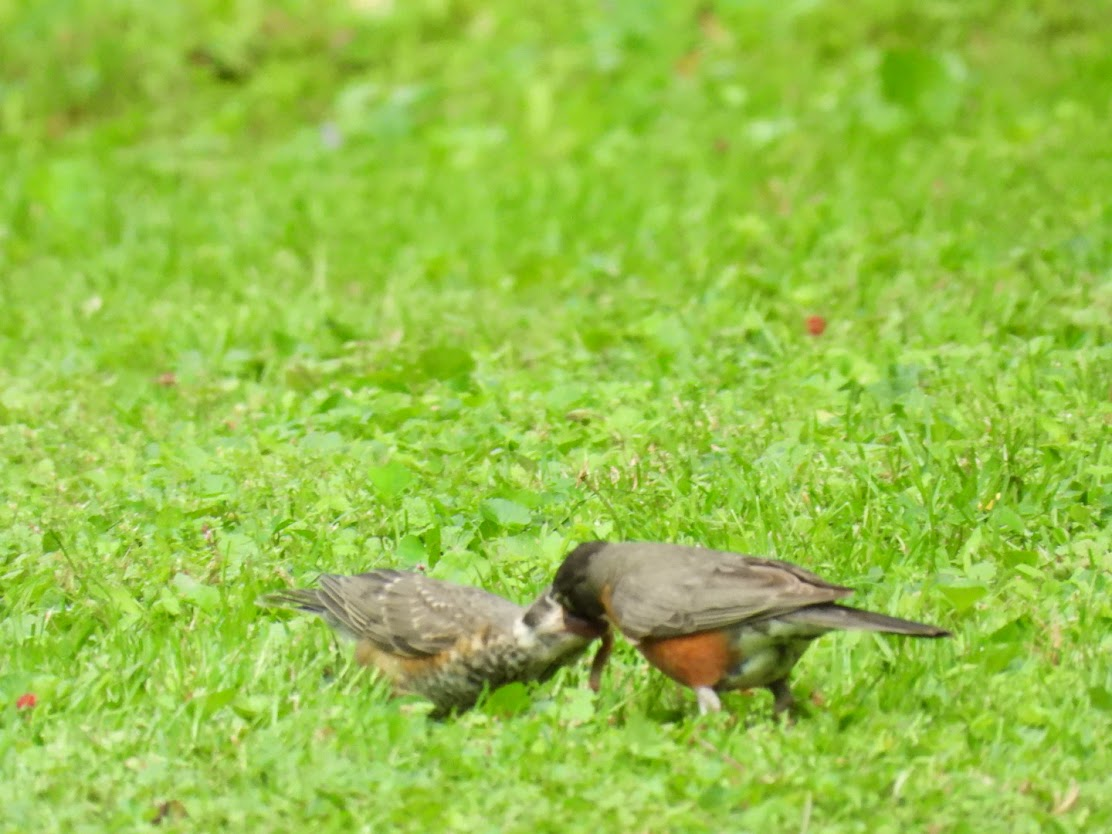
And now, let's get on to photos from the three bursts that justified an entire blog post for the American Robin. This is observation# 366219583 on iNaturalist, but there are probably some different photos here.
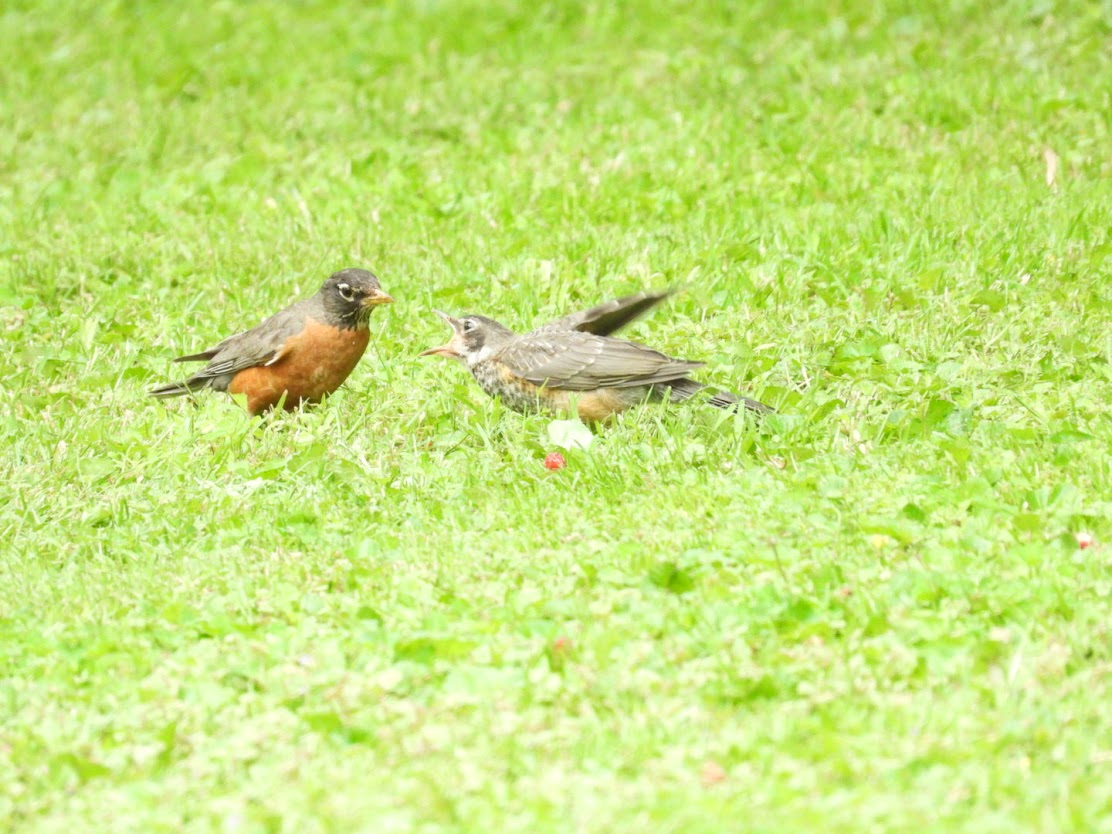
I don't know what these little red things are, but they were soundly rejected (possibly mock strawberries)
Apparently, it's not just young humans who are picky eaters.
May 26: An adult feeding a fledgling (set 1) | Food - Rejected |
| ƒ/5.6; 1/320; 234mm (54X, 1302mm equiv.); ISO1100 | ƒ/5.6; 1/320; 234mm (54X, 1302mm equiv.) |
 |  |
ƒ/5.6; 1/320; | ƒ/6.3; 1/320; |
 |  |
ƒ/6.3; 1/320; | ƒ/6.3; 1/320; |
 |  |
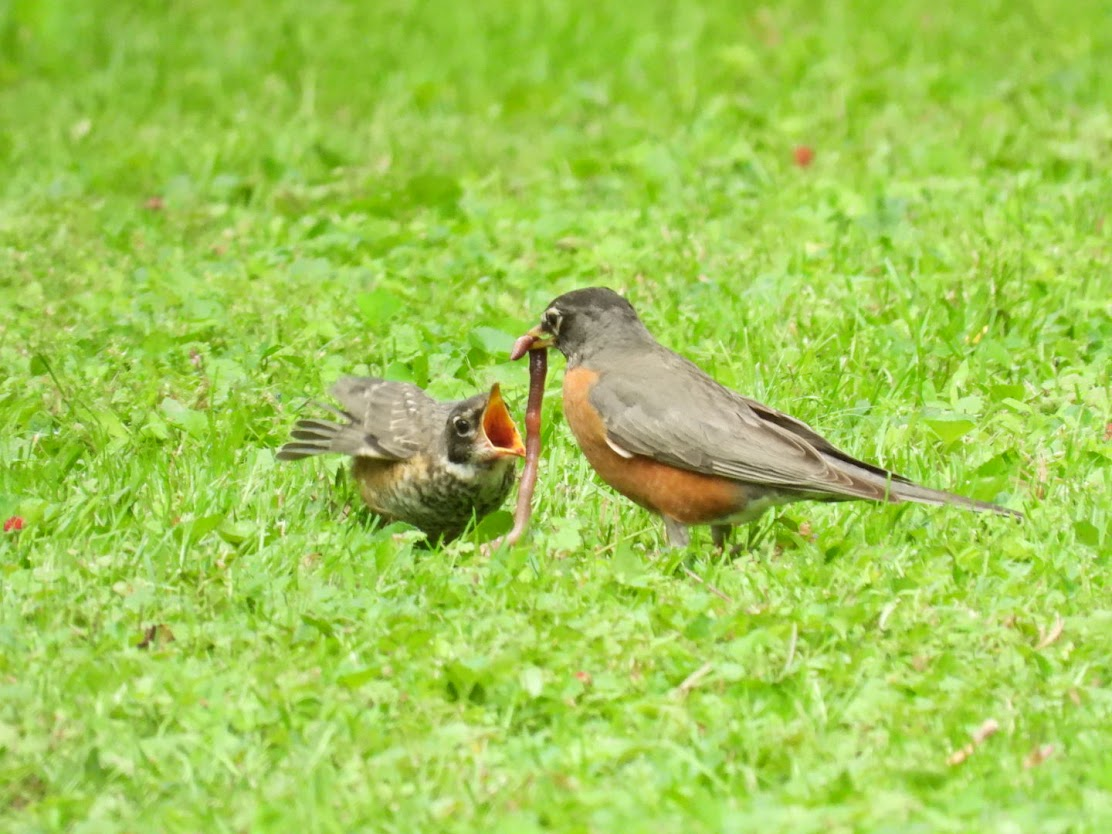
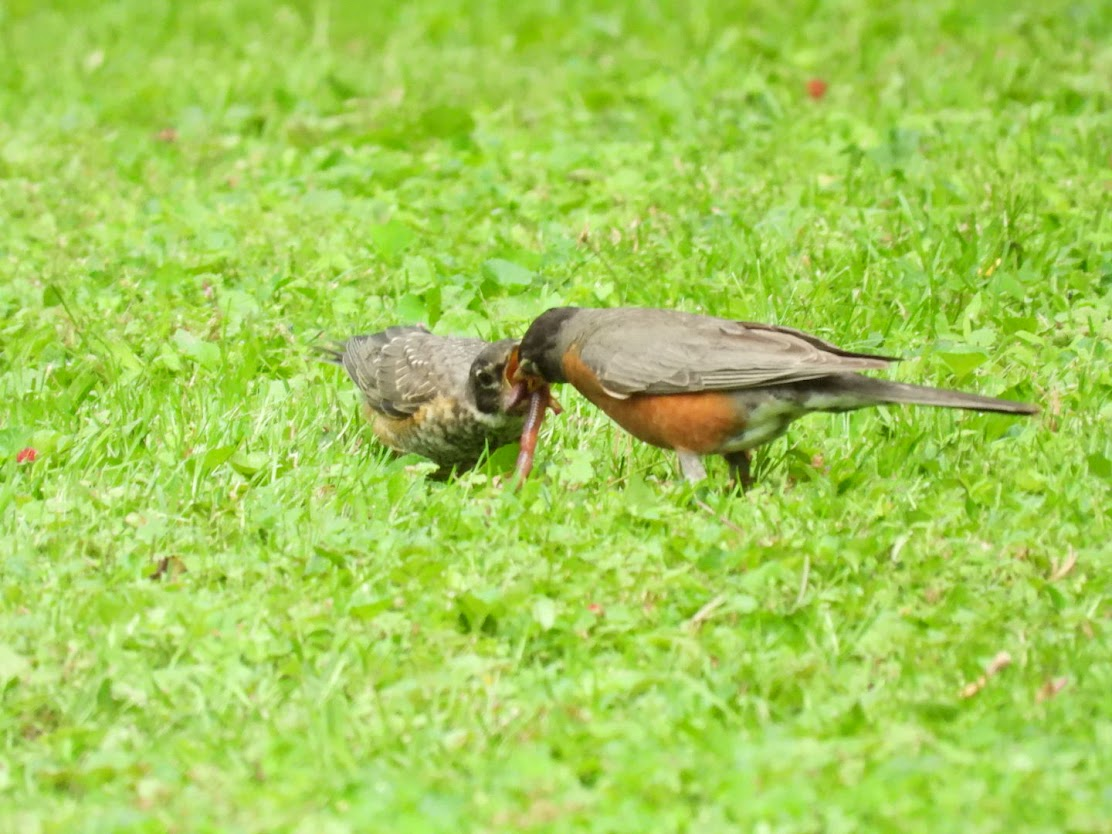
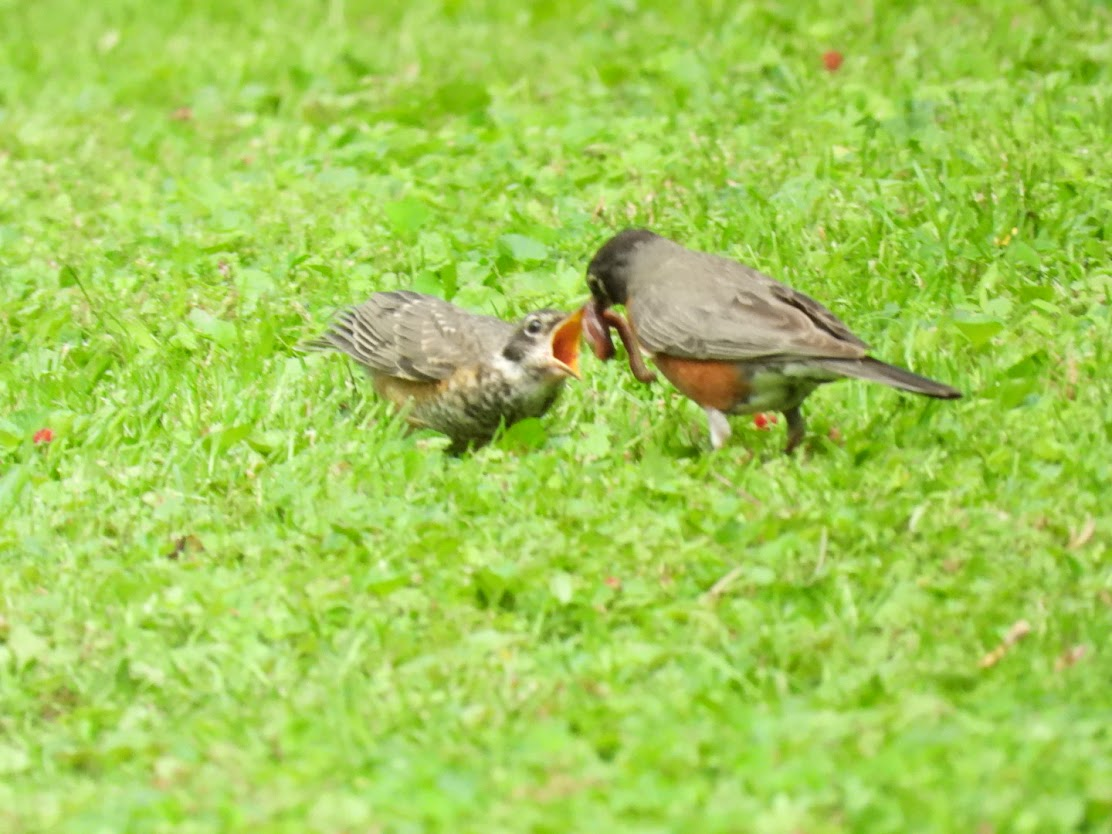
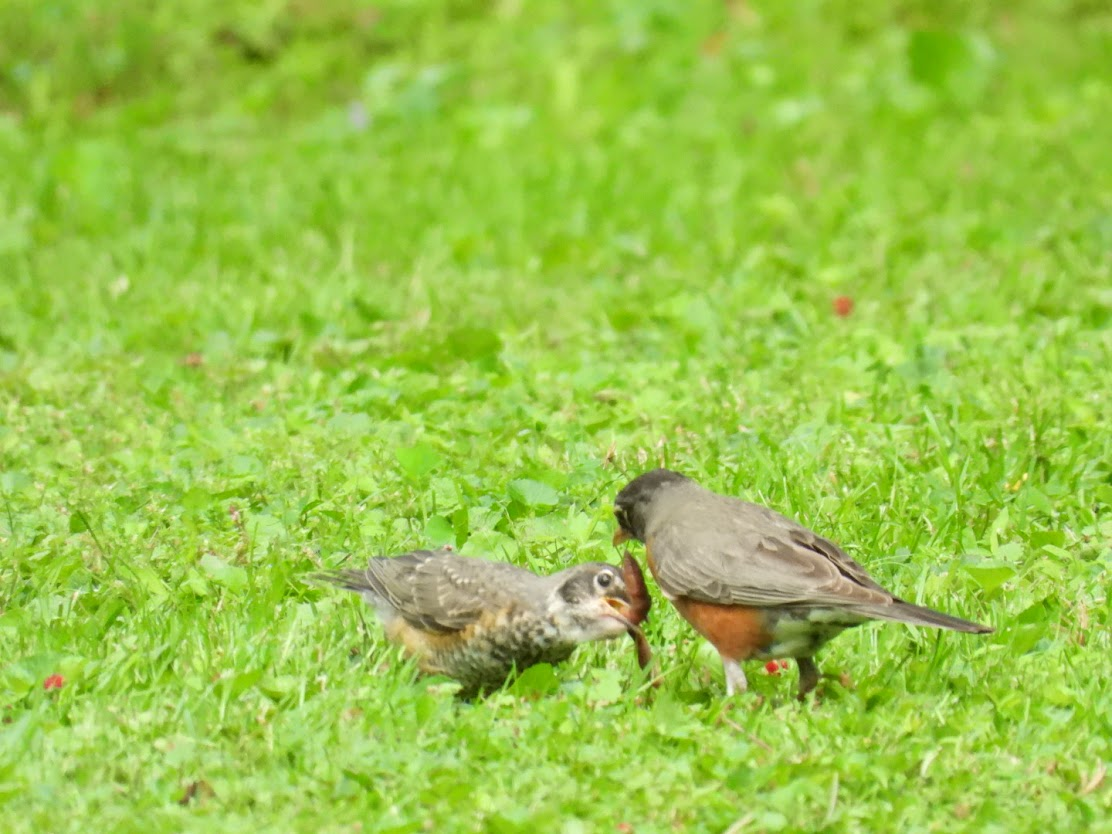
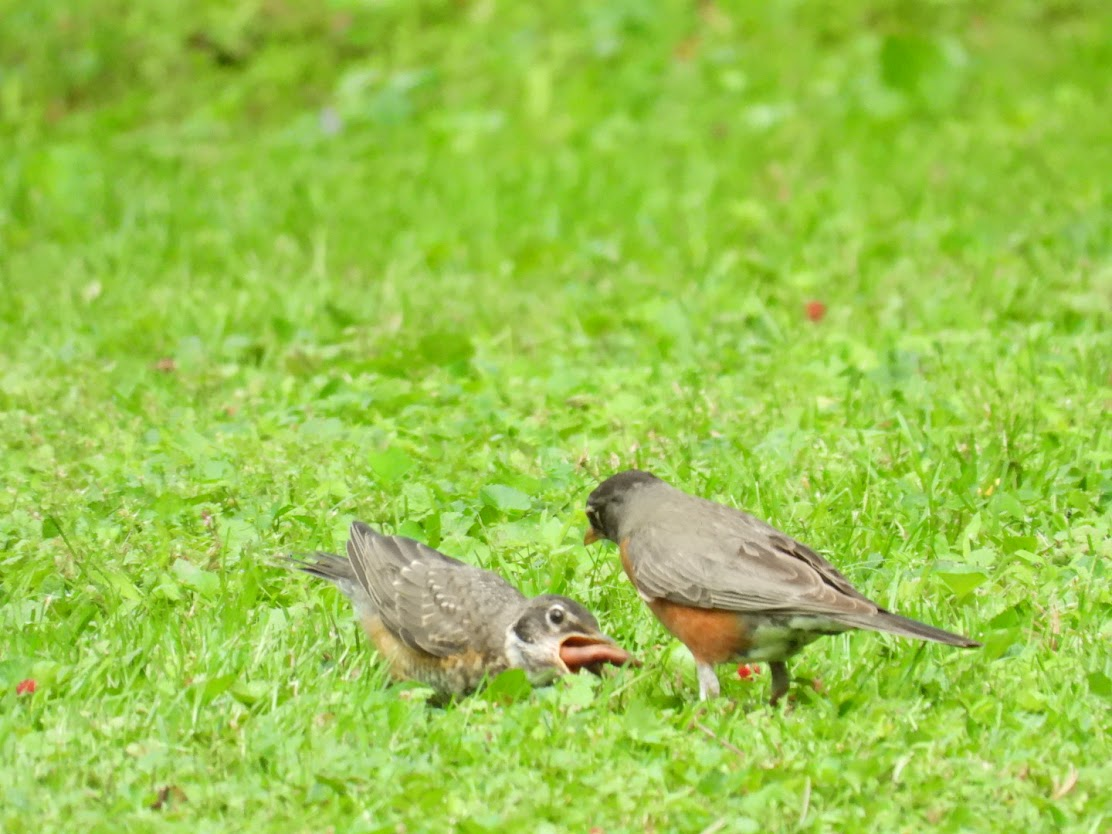
But, an earthworm was acceptable
This is certainly something that I've never seen before, and I had no idea what I was going to capture when I shot that first burst, but I was lucky to be in the right place at the right time with the right lighting to get some decent photos of this activity.
May 26: An adult feeding a fledgling (set 2) | Food - Acceptable |
ƒ/8; 1/320; | ƒ/8; 1/320; |
 |  |
ƒ/8; 1/320; | ƒ/8; 1/320; |
 |  |
ƒ/8; 1/320; | ƒ/8; 1/320; |
 |  |
Wrap-up
And that's a wrap on another post. The Robin is such a common bird that I never expected to dedicate a blog post to it, but I think I got some candid shots of Robins doing interesting things. I've certainly never seen Robins engaged in this sort of activity before - not in person, and not in photographs.
It's anthropomorphizing, but seeing the fledgling reject the one food and instantly demand something else is really quite comical.
Do you have any photos of common animals doing surprising or interesting things? If so, feel free to post them in the replies.
Appendix
Here are my previous wildlife photography posts:
May's photographs
- Backyard wildlife photography in southeastern Pennsylvania: Uncommon moments with the American Robin in May
- Backyard wildlife photography in southeastern Pennsylvania: First encounters during May - post 2
- Backyard wildlife photography in southeastern Pennsylvania: Something Old - Something New
- Photography meets citizen science: May's wildlife in south-eastern Pennsylvania
April's photographs
- [Citizen Science] April's Raptors in South-Eastern Pennsylvania
- Photography meets citizen science: April's wildlife in south-eastern Pennsylvania
- Learning photography with wildlife in south-eastern Pennsylvania: First encounters in the month of April
- Learning photography with wildlife in south-eastern Pennsylvania: First encounters in the month of April - part 2
- April wildlife observations in south-eastern Pennsylvania: repeated encounters with small animals
March's photographs
- Backyard Photography in Chester County, Pennsylvania during March 2026: Warm-up Shots
- [Citizen Science] Observations of Small Birds and Animals in South-eastern Pennsylvania from March of 2026
- [Citizen Science] The Raptors of March in South-Eastern Pennsylvania
Thank you for your attention!
All photos above were taken by me with a Nikon P1000 camera. I'm sharing them under the CC BY 4.0 license (share & adapt freely with attribution to the original source).