Backyard Wildlife Photos in Southeastern Pennsylvania: Mammals and Small Birds during June
It's been a while since my previous post, Photography meets citizen science: June's wildlife in south-eastern Pennsylvania. It seems that I can work on code or I can post blog articles, but I can't keep up with both activities.... Fortunately, wildlife activity slowed during June and July, so I don't have quite as much material to cover.
This post continues my ongoing series of articles that combine wildlife photography practice, citizen-science observations submitted to iNaturalist, and Steem blogging.
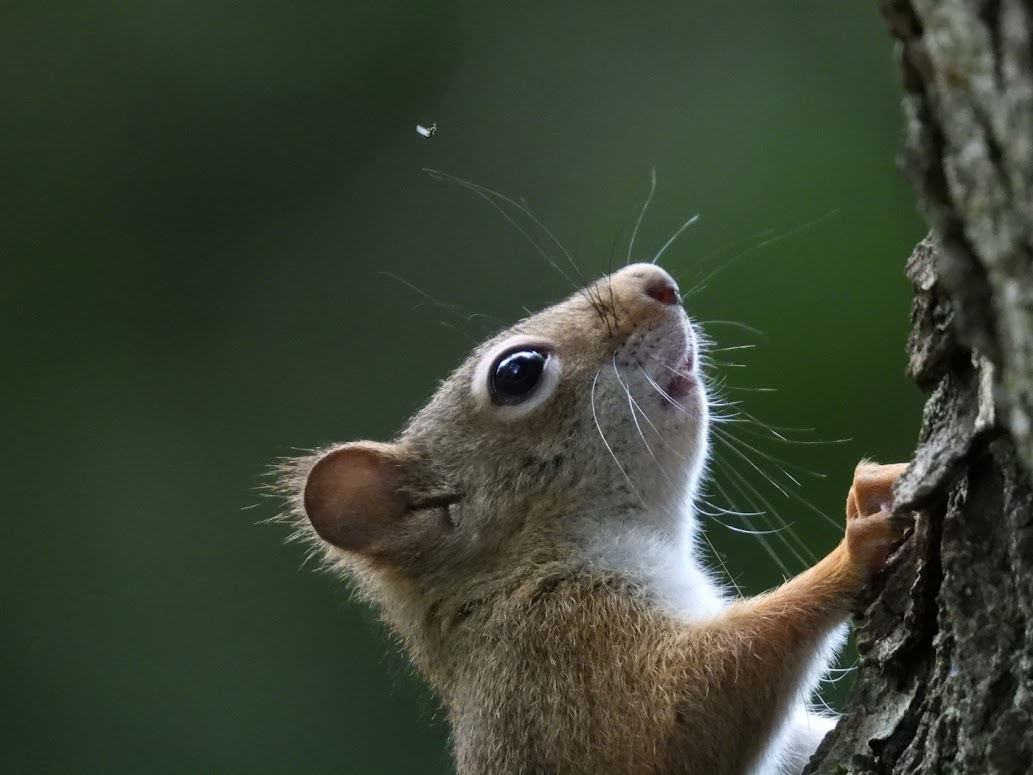
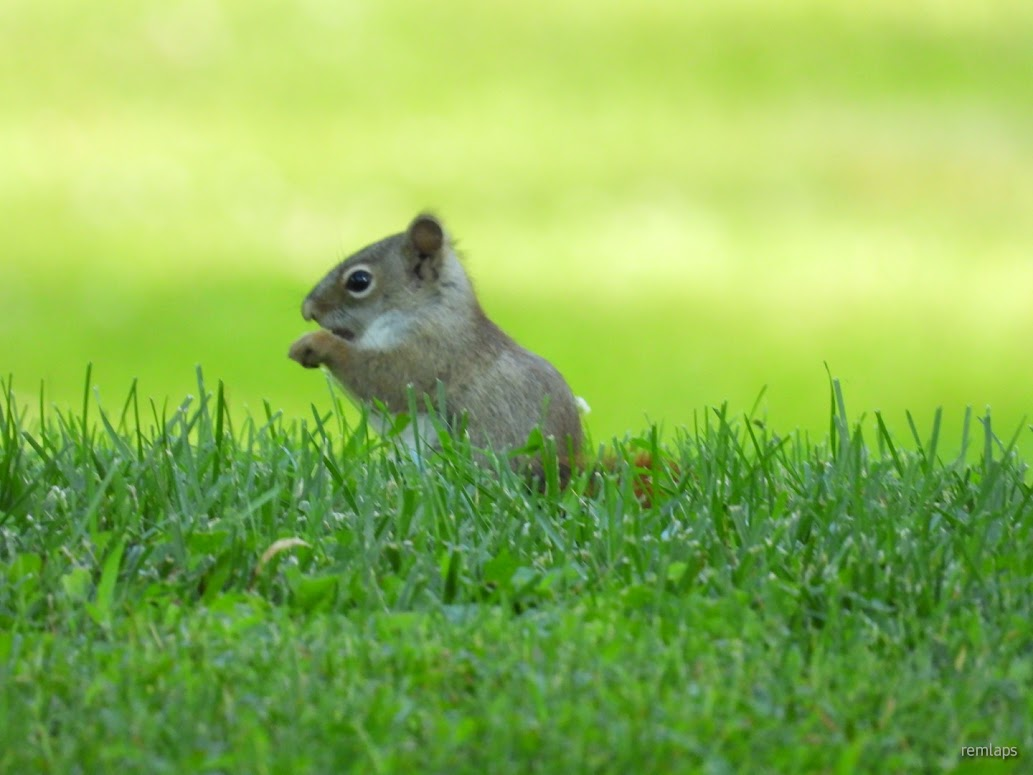
American Red Squirrel;
June 1:
ƒ/6.3; 1/400; ISO1600;
324mm (75X, 1800mm equiv)
Today's post is going to be the first of two that will focus on mammals and small birds that were observed during June. The mammals are all going to be covered in this post along with some of the small birds.
The table that follows contains the iNaturalist observations that were submitted for these animals. As mentioned previously, I have reduced the frequency of submitting observations of repeated species, so it's likely that many of the photos that follow were not uploaded to iNaturalist. All of these observations were made in Chester County, Pennsylvania.
| Common Name | First Observation Date | Most Recent Observation Date | Observation Count | June Observation Count | June Observations |
|---|---|---|---|---|---|
| American Red Squirrel | 2026-03-22 | 2026-06-14 | 12 | 4 | 2026-06-01, 2026-06-06, 2026-06-09, 2026-06-14 |
| Eastern Cottontail | 2026-05-26 | 2026-07-01 | 6 | 3 | 2026-06-09, 2026-06-14, 2026-06-23 |
| Song Sparrow | 2026-05-22 | 2026-07-02 | 7 | 3 | 2026-06-02, 2026-06-08, 2026-06-17 |
| Mourning Dove | 2026-03-21 | 2026-07-03 | 11 | 2 | 2026-06-08, 2026-06-19 |
| Northern Flicker | 2026-03-25 | 2026-07-01 | 10 | 2 | 2026-06-10, 2026-06-20 |
| House Sparrow | 2026-06-26 | 2026-06-26 | 1 | 1 | 2026-06-26 |
| White-tailed Deer | 2026-05-29 | 2026-06-06 | 2 | 1 | 2026-06-06 |
Now, let's get on to the photos.
American Red Squirrel
The American Red Squirrel is very common in my yard and throughout the area. It ranges from Alaska and Canada south into the Rocky Mountains in the western United States, and as far south as Virginia in the east. They can be distinguished from the also common Eastern Grey Squirrel by their small size, aggressive behavior, reddish tail coloring, and the pronounced white rings around their eyes.
In general, it seems that the grey squirrel is the more common variety, but in my yard I encounter the red squirrels much more frequently. The red squirrel has an average lifespan of 3-5 years, so I guess the young ones don't have the same high mortality rate that we see with rabbits and robins.
The black line on the side of their bellies is a summertime marking.
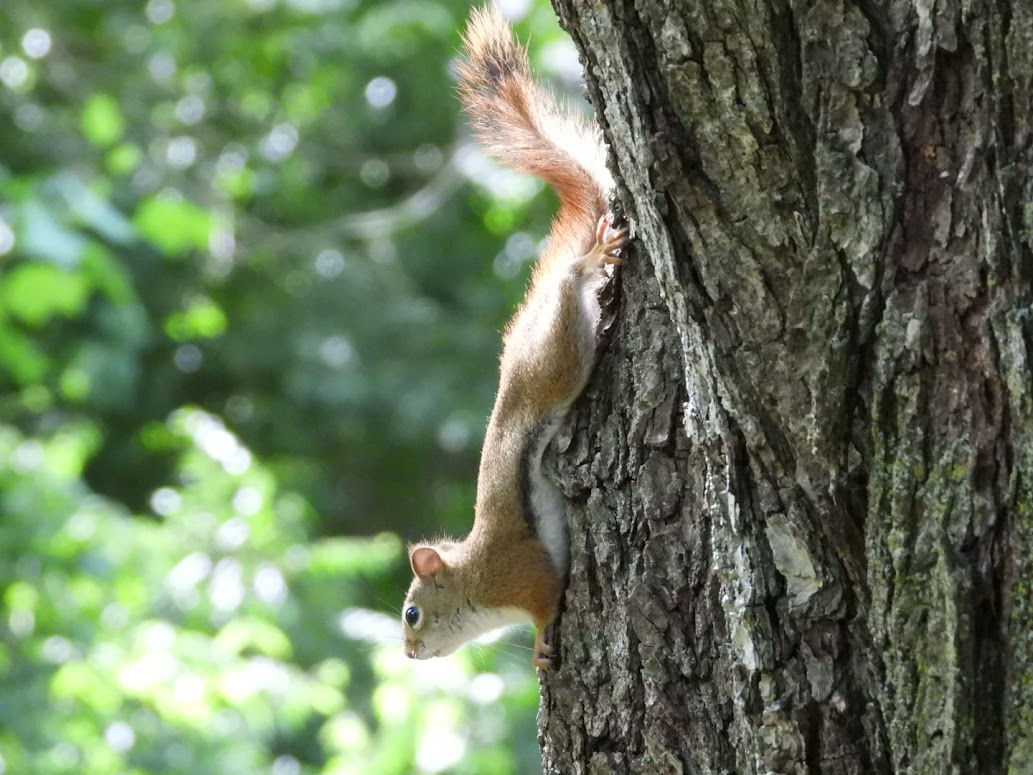 | 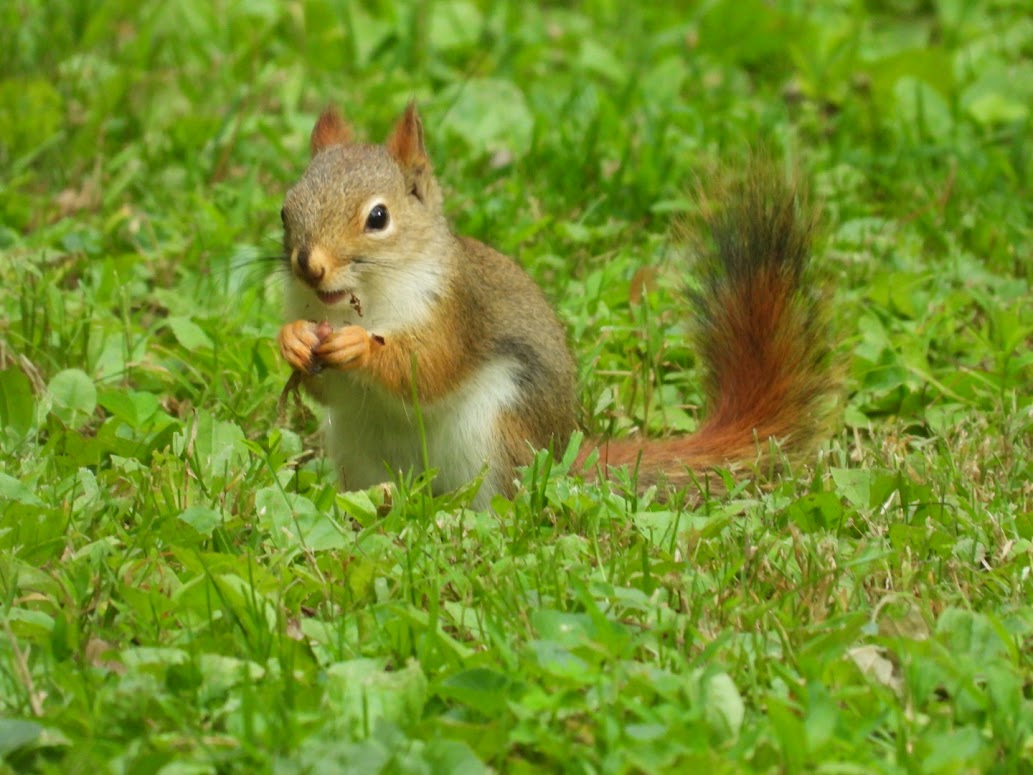 |
| June 1: ƒ/5; 1/400; ISO1600 ; 77.8mm (18X, 443mm equiv.) | June 9: ƒ/8; 1/125; ISO640 539mm (125X, 3000mm equiv.) |
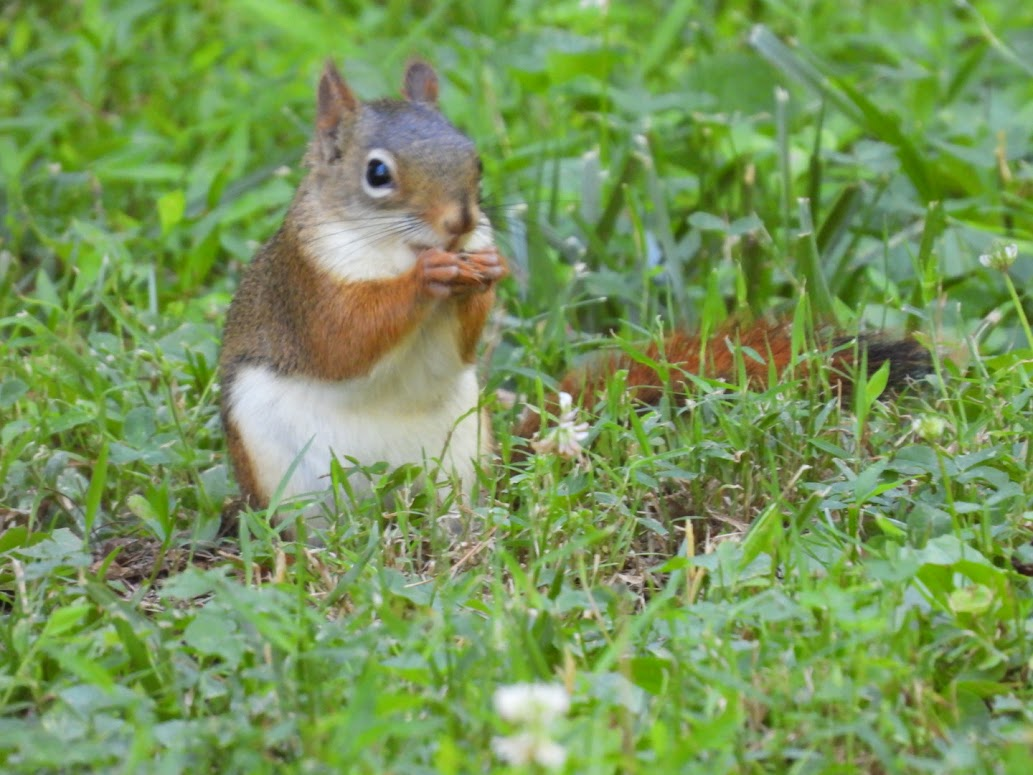 |  |
| June 15: ƒ/7.1; 1/50; ISO800; 395mm (91X, 2200mm equiv.) | June 24: ƒ/7.1; 1/100; ISO800; 395mm (91X, 2200mm equiv.) |
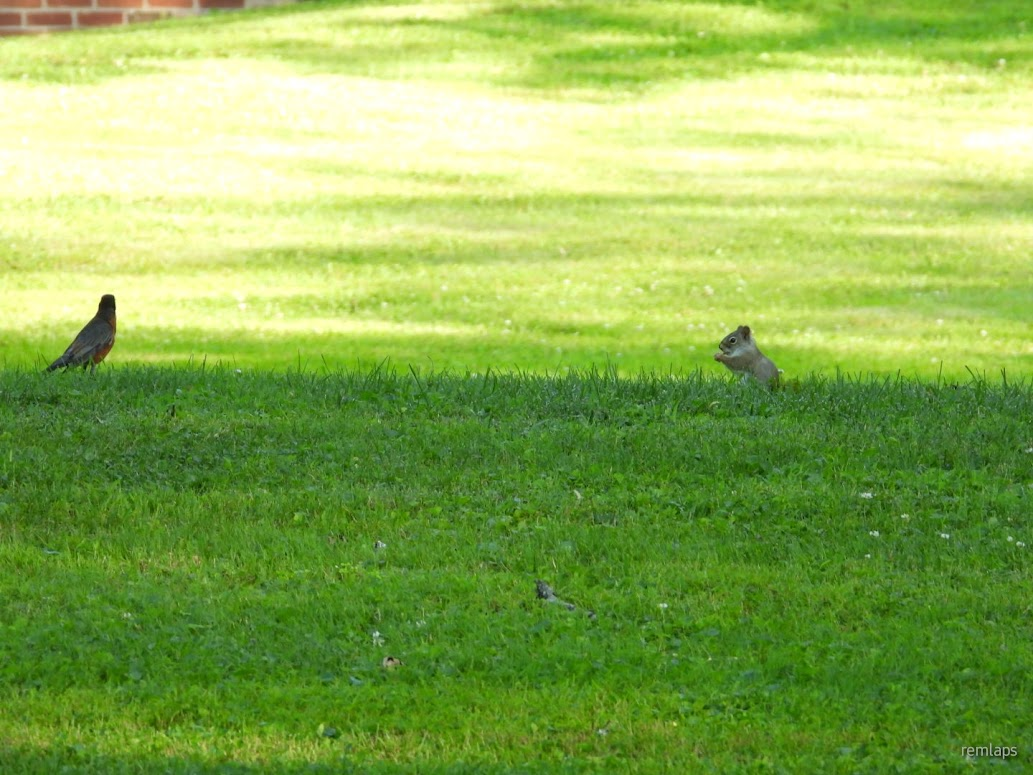 | American Robin & American Red Squirrel June 24: ƒ/5; 1/125; ISO400; 83.9mm (19X, 467mm equiv.) |
Surprise!: While writing this post, I remembered that I encountered an Eastern Gray Squirrel, too. This one has not yet been submitted to iNaturalist. I'll be submitting it later, and that'll be another "first seen" for the month of June.
Update (July 23): Here is the Gray Squirrel observation on iNaturalist.
You can see that it also has the white rings around the eye, but they're much less prominent, especially in front of the eye.
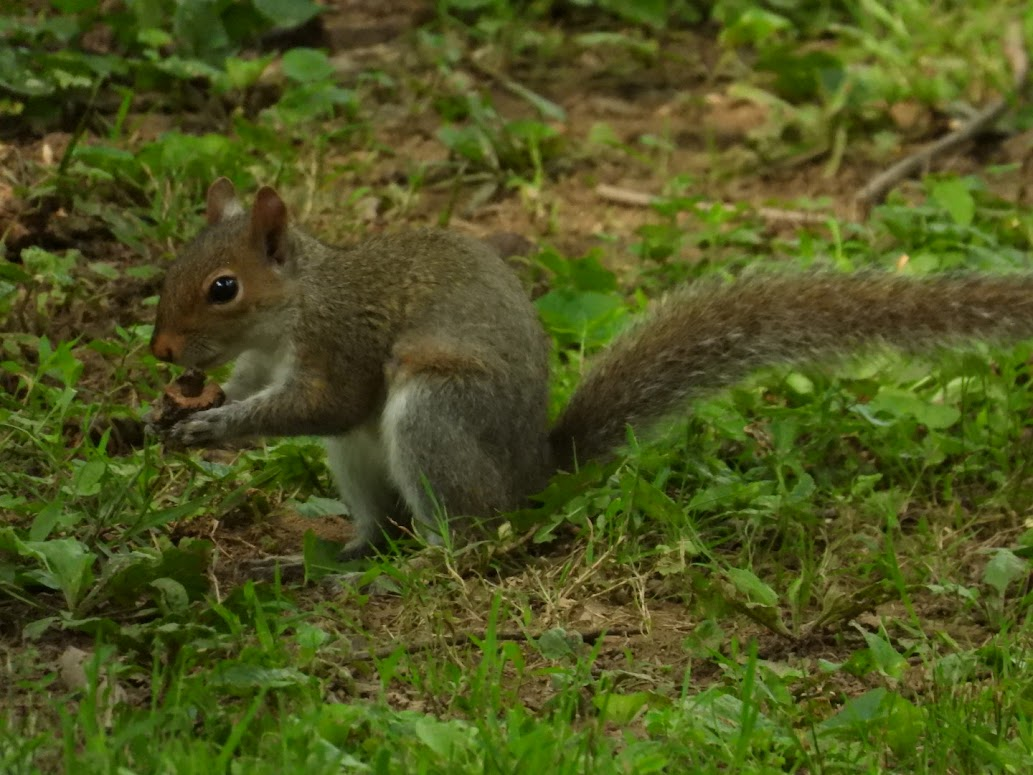 | 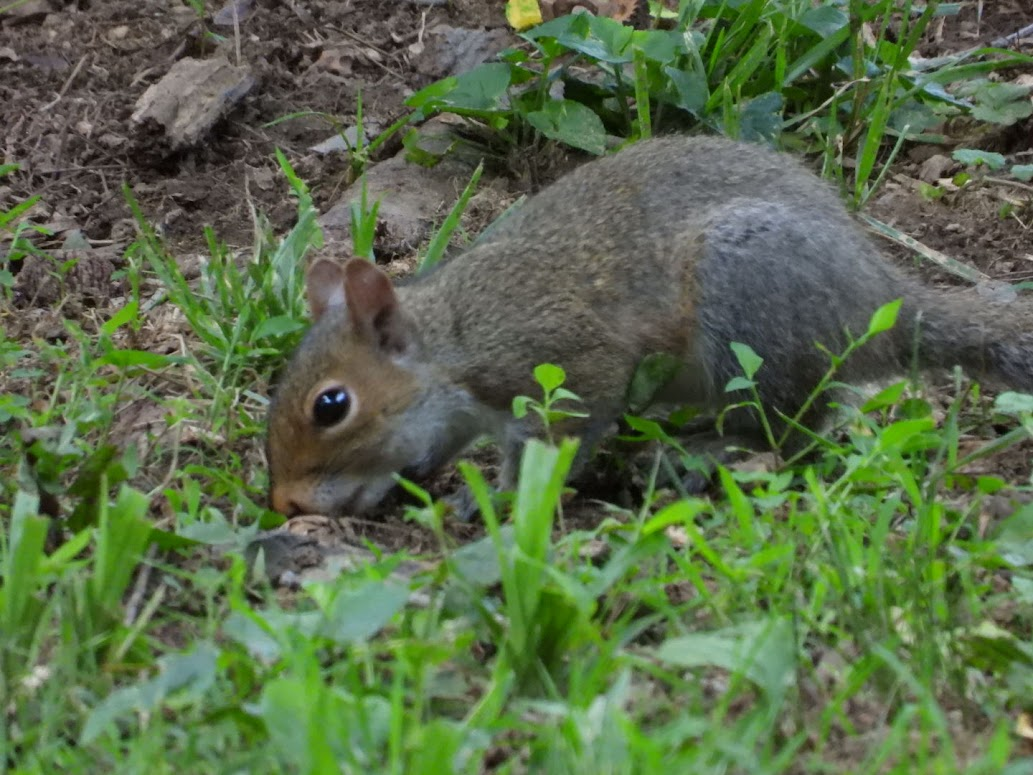 |
| June 12: ƒ/7.1; 1/800; ISO1600; 395mm (91X, 2200mm equiv.) | June 12: ƒ/8; 1/250; ISO1600; 539mm (125X, 3000mm equiv.) |
Eastern Cottontail
The Eastern Cottontail ranges from northernmost latitudes in South America through Central America and most of Mexico to east of the Rockies in the US and southern Canada. As mentioned previously, most of these rabbits don't make it through their first winter, so the average lifespan is just 15 months. I have to admit that after learning about their high-risk lifespan, I feel a twinge of sympathy/sadness when I see them now.
According to the link above, they're normally nocturnal, but I have probably seen them at all hours of the day.
Funny story: I joined a FB group of nature/wildlife photographers and posted a picture of an Eastern Cottontail. I mentioned that with the high zoom, I like to try for interesting reflections in the rabbit's eye. A moderator responded to say that photos zooming in on the rabbit's eye do not qualify as "nature pictures". I'm not a member of that group any more.
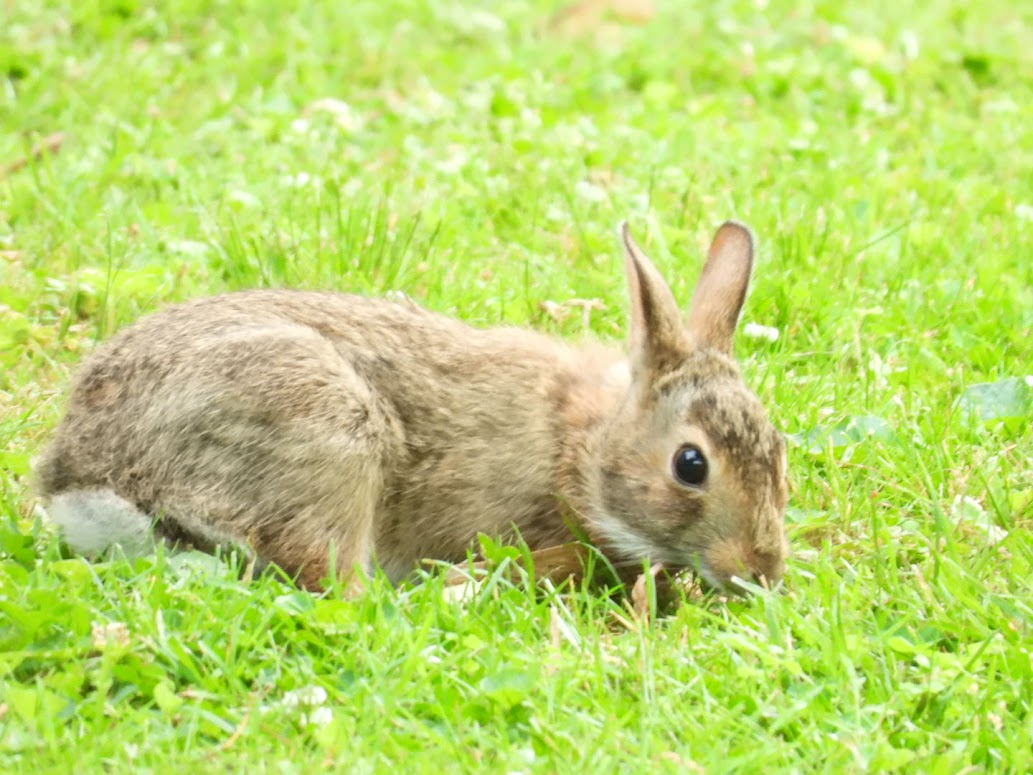 | 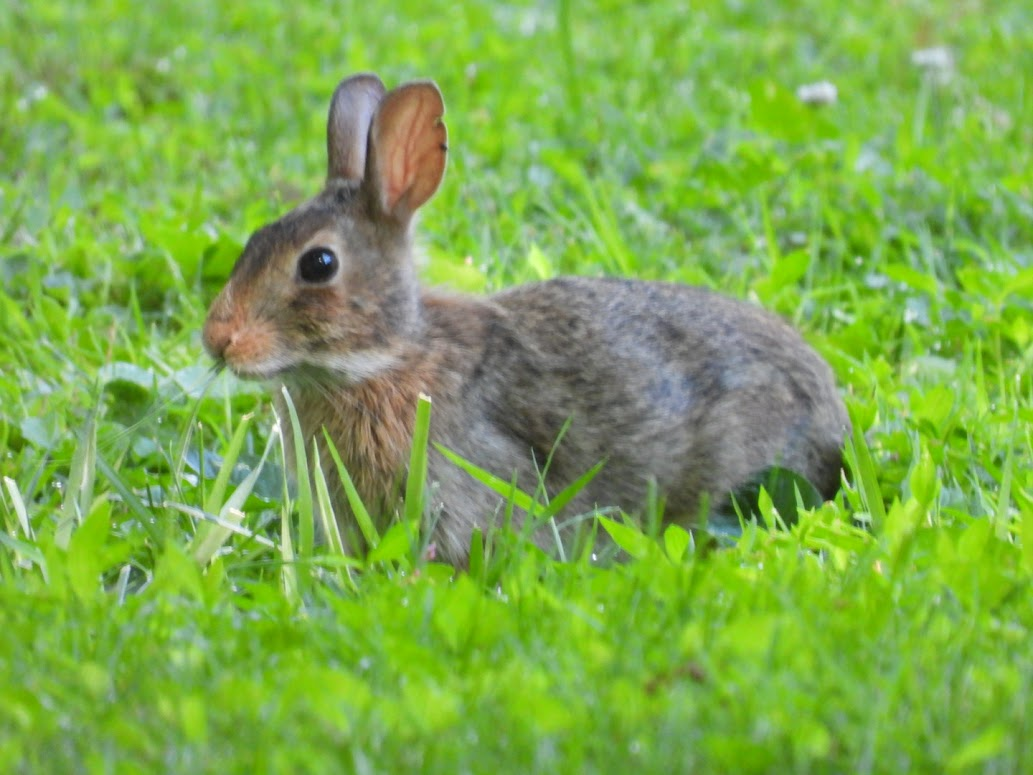 |
| June 9: ƒ/8; 1/125; ISO1600; 503mm (116X, 2800mm equiv.) | June 14: ƒ/8; 1/60; ISO800 ; 503mm (116X, 2800mm equiv.) |
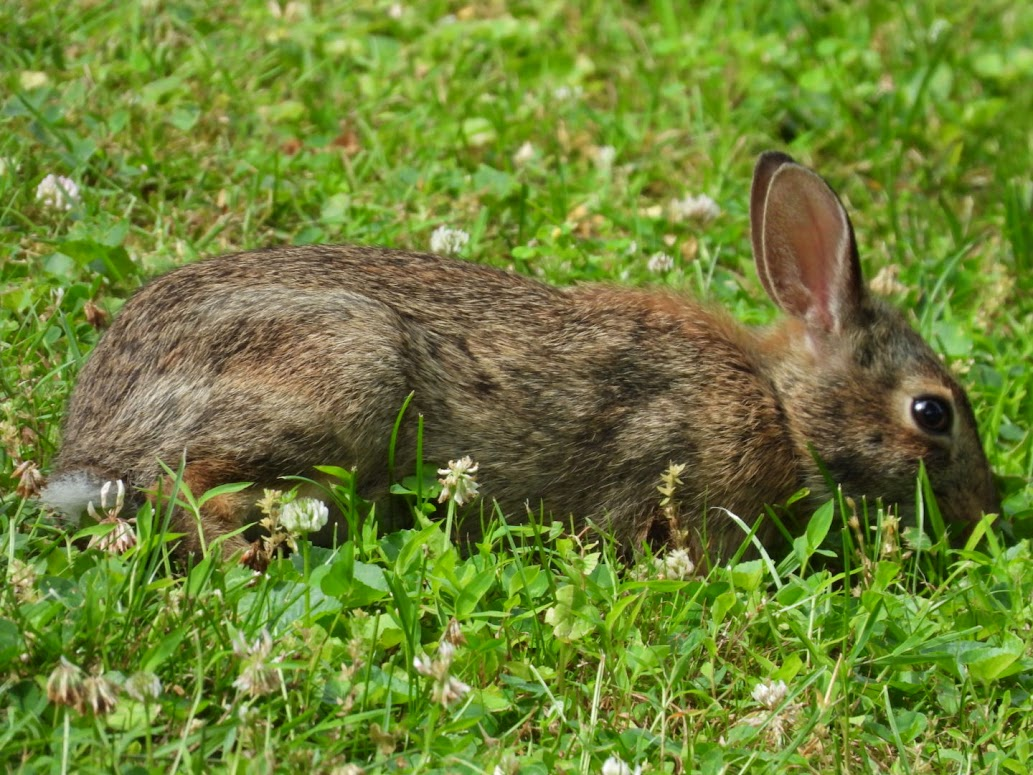 | 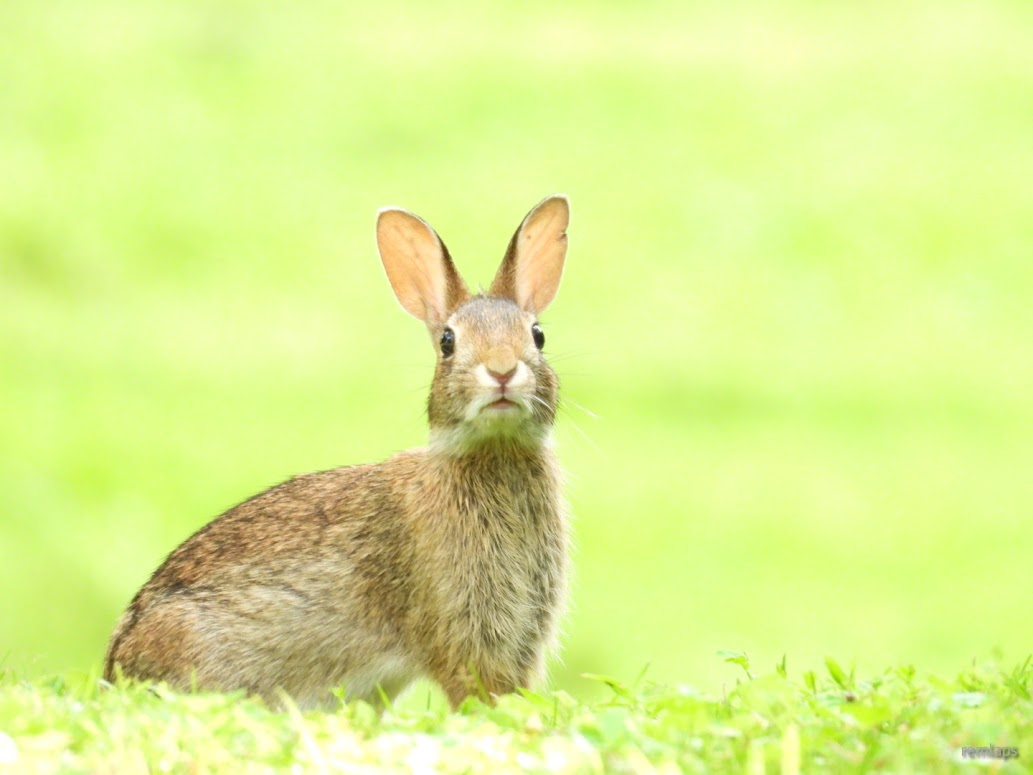 |
| June 19: ƒ/7.1; 1/320; ISO400; 395mm (91X, 2200mm equiv.) | June 23: ƒ/6.3; 1/80; ISO800; 306mm (71X, 1703mm equiv.) |
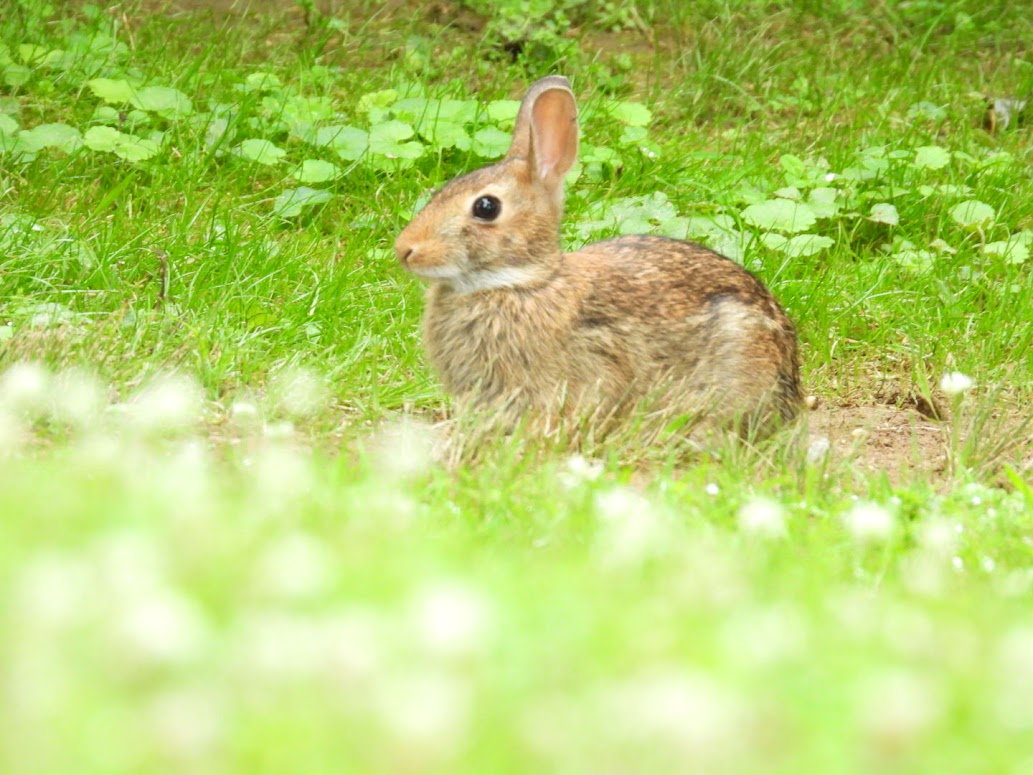 | 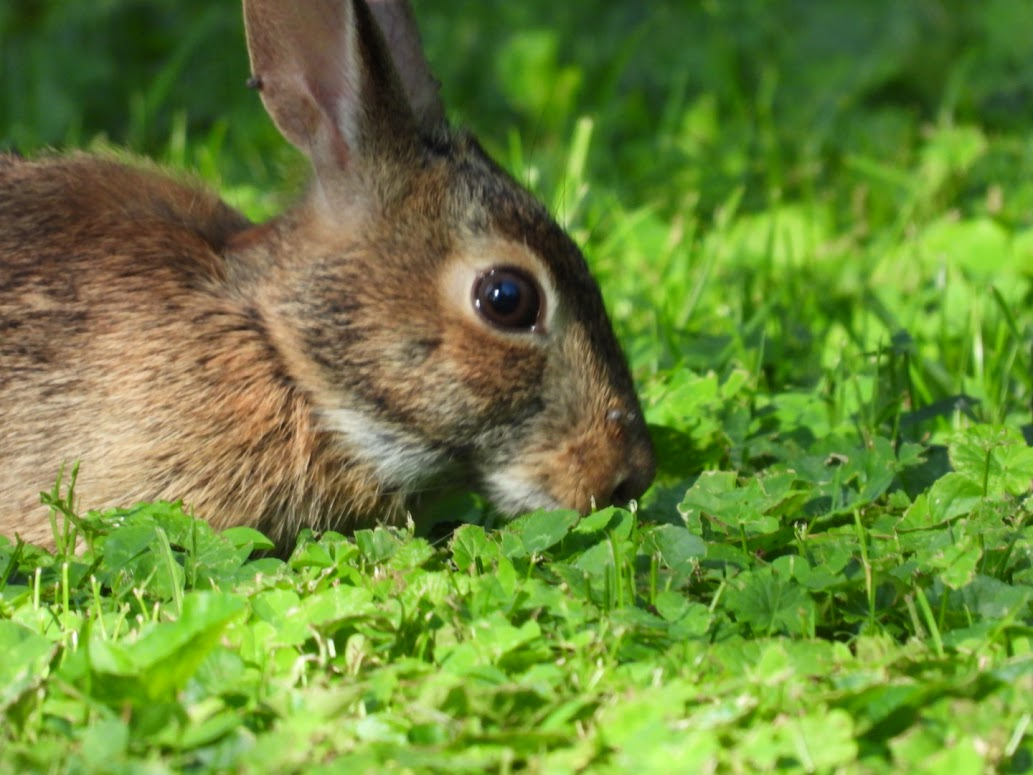 |
| June 27: ƒ/5.6;1/100; ISO800; 216mm (50X, 1200mm equiv.) | June 30: ƒ/8; 1/160; ISO400; 539mm (125X, 3000mm equiv.) |
- The June 19 photo is the rabbit that I mentioned in the previous post. It was eating, happily, in the yard for 10 or 15 minutes until it saw a hawk and made off in a hurry. The direction of its glance before it bolted told me where to look for the hawk.
Song Sparrow
The Song Sparrow ranges throughout Mexico, Canada, and the United States for at least part of the year. In Pennsylvania, the bird is a year-round resident. Apparently, they look different in different areas, so this is "the Pennsylvania look". The oldest known Song Sparrow was 11 years and 4 months. These birds don't tend to stay put in one place, so they're a little bit challenging to photograph.
We have a puddle that accumulates where our air conditioner discharges its condensation, and I've seen multiple bird species using it for a bird bath. The June 8 photos show a Song Sparrow splashing about in the water.
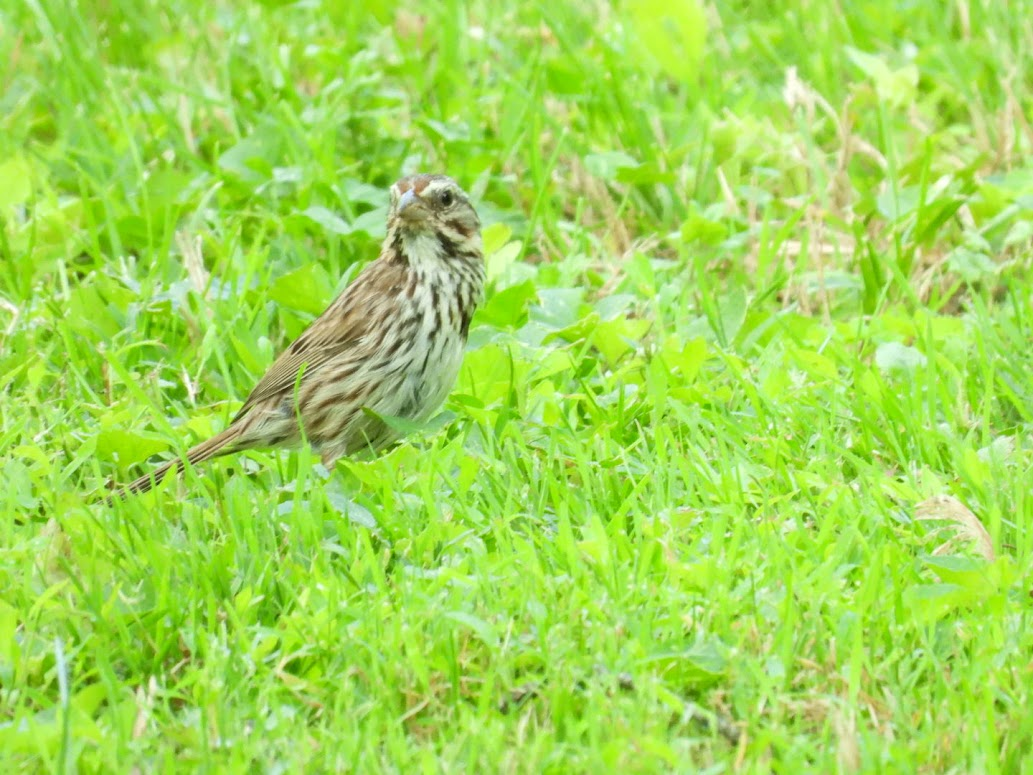 | 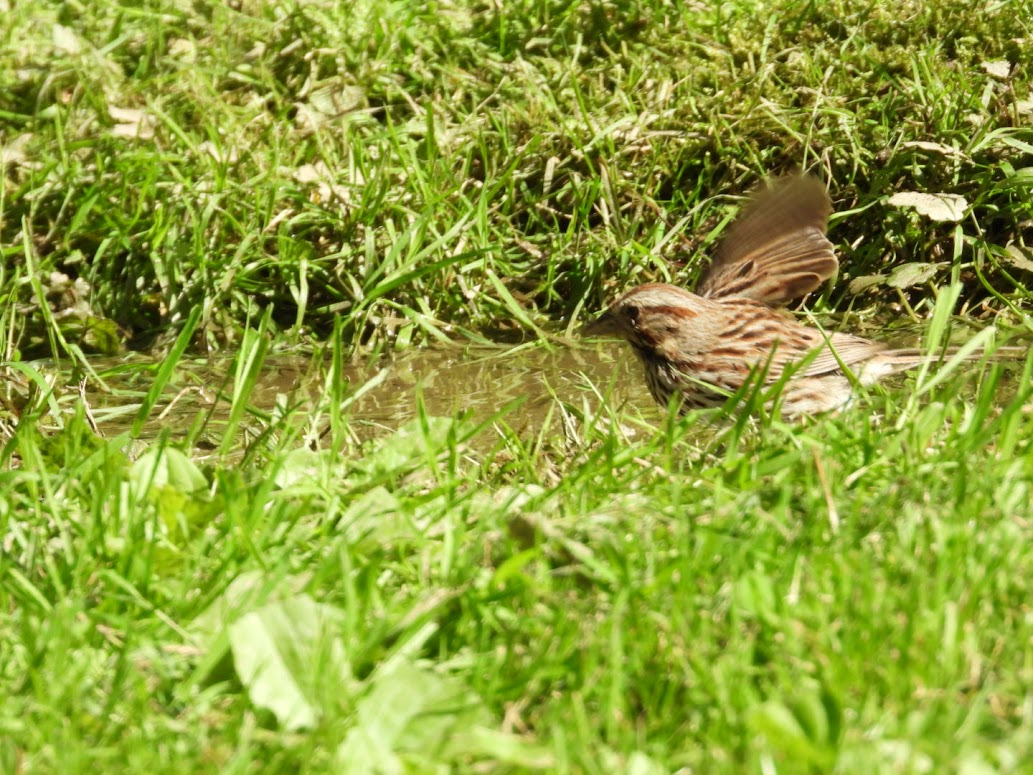 |
| June 2: ƒ/8; 1/125; ISO1600 ; 503mm (116X, 2800mm equiv.) | June 8: ƒ/5.6; 1/640;ISO360; 167mm (38X, 929mm equiv.) |
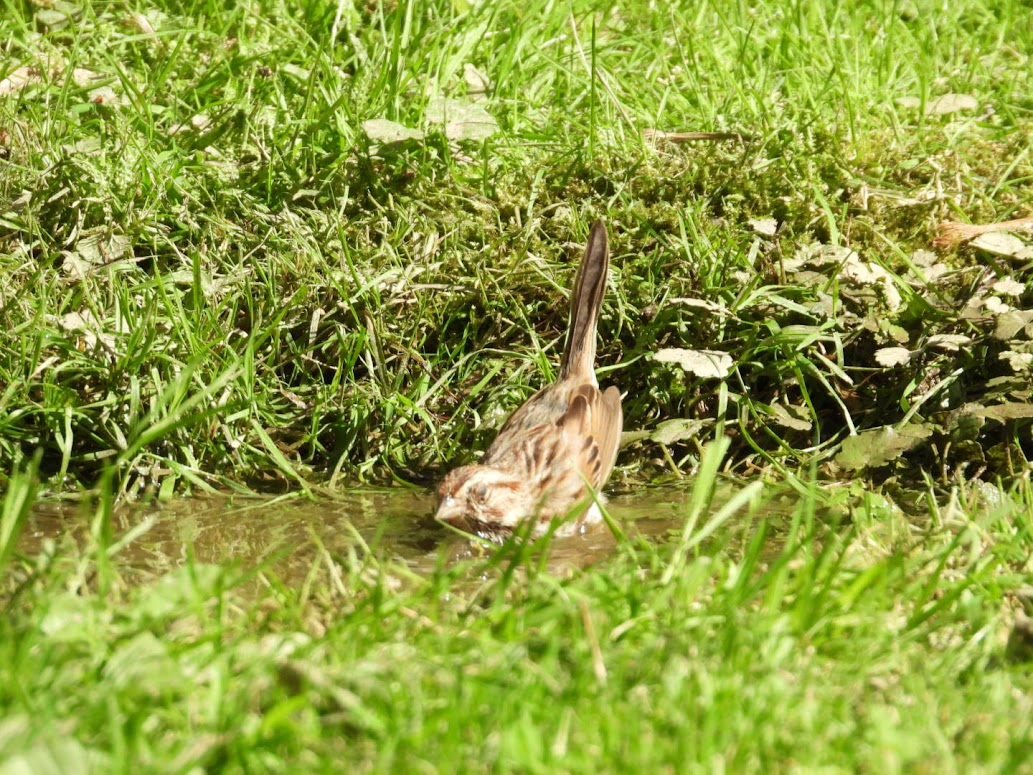 | 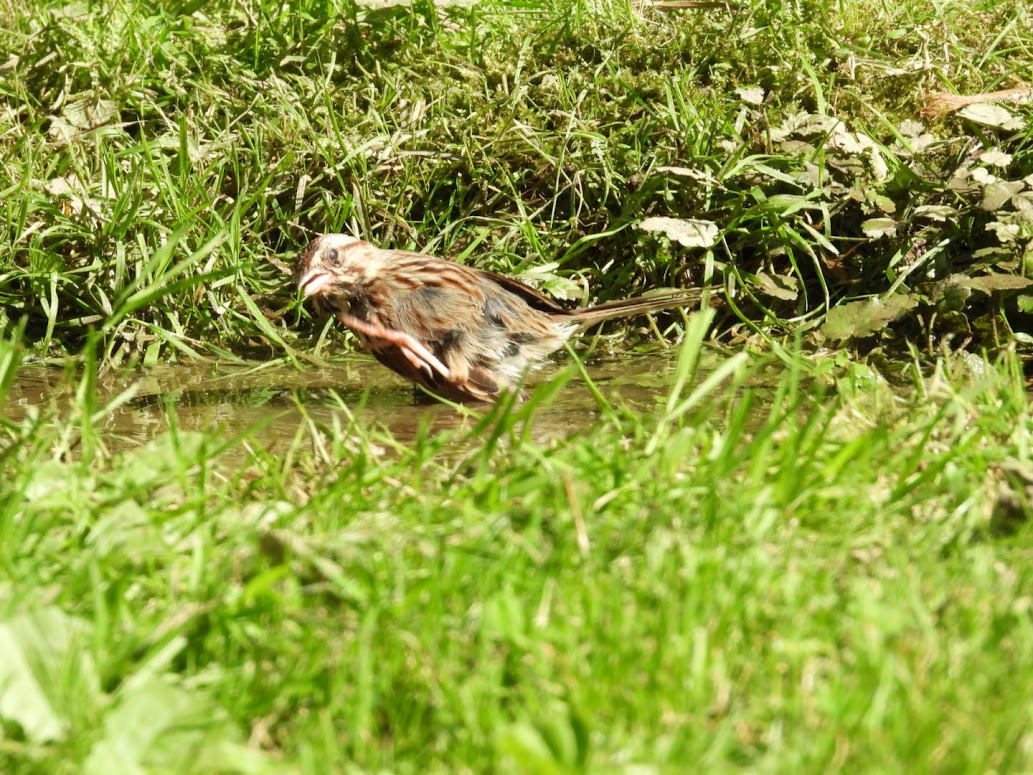 |
| June 8: ƒ/5.6; 1/640;ISO360; 167mm (38X, 929mm equiv.) | June 8: ƒ/5.6; 1/640;ISO360; 167mm (38X, 929mm equiv.) |
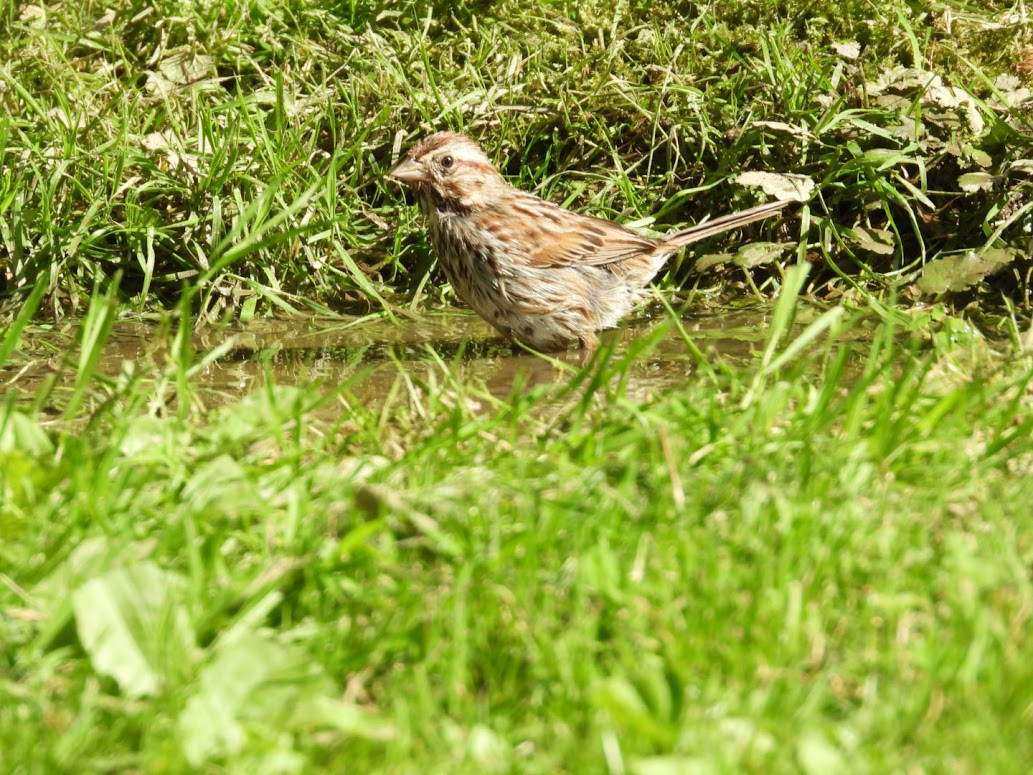 | 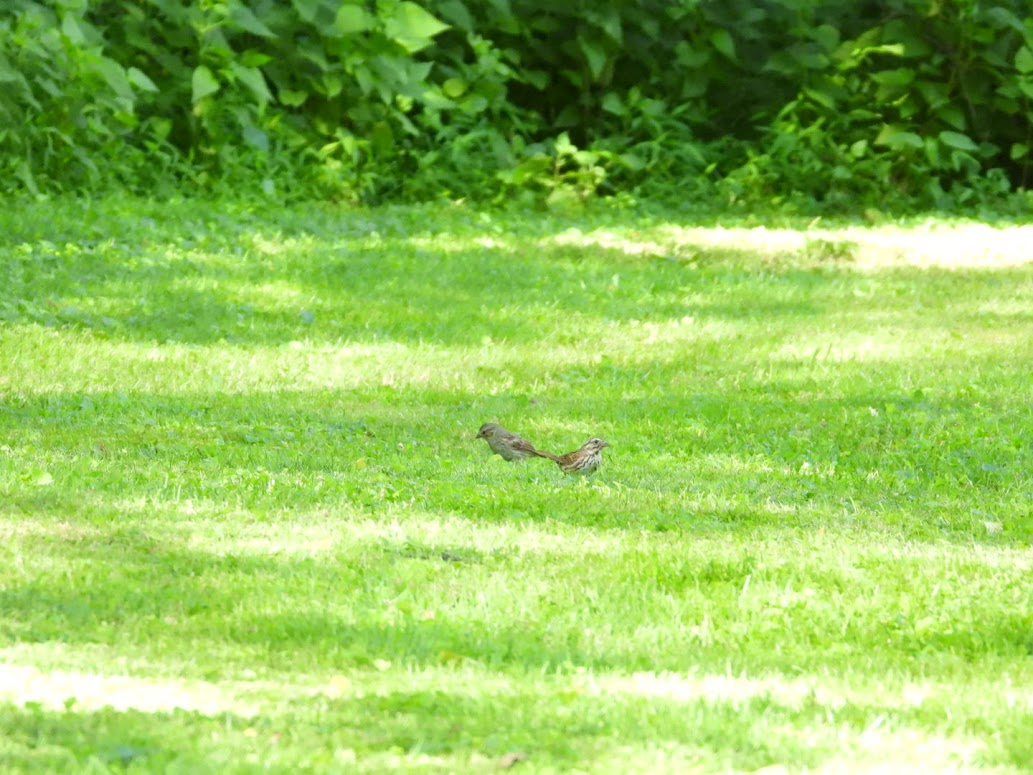 |
| June 8: ƒ/5.6; 1/640;ISO360; 167mm (38X, 929mm equiv.) | June 17: ƒ/5; 1/500; ISO1600 ; 117mm (27X, 651mm) |
Mourning Dove
The most common time for seeing the Mourning Dove in my yard seems to be right around dusk. In the spring time, they liked to sit on the phone wires across the street. So far during summer months, they seem to prefer the dead branches at the top of the tallest tree in the yard. I've also seen them on the ground, maybe two or three times. They get their names from the mournful sound of their call, which is easily recognizable. I normally hear them before I see them.
The grey coloring and their tendency to appear at the top of trees when the light is dimming make them another challenging species to photograph. Normally, I just get greyscale photos that don't do justice to the bird's appearance. I have lots of photos of these birds, but a very low percentage is worth posting.
These birds range throughout the US and Mexico year round, and they're found in Canada during the breeding season.
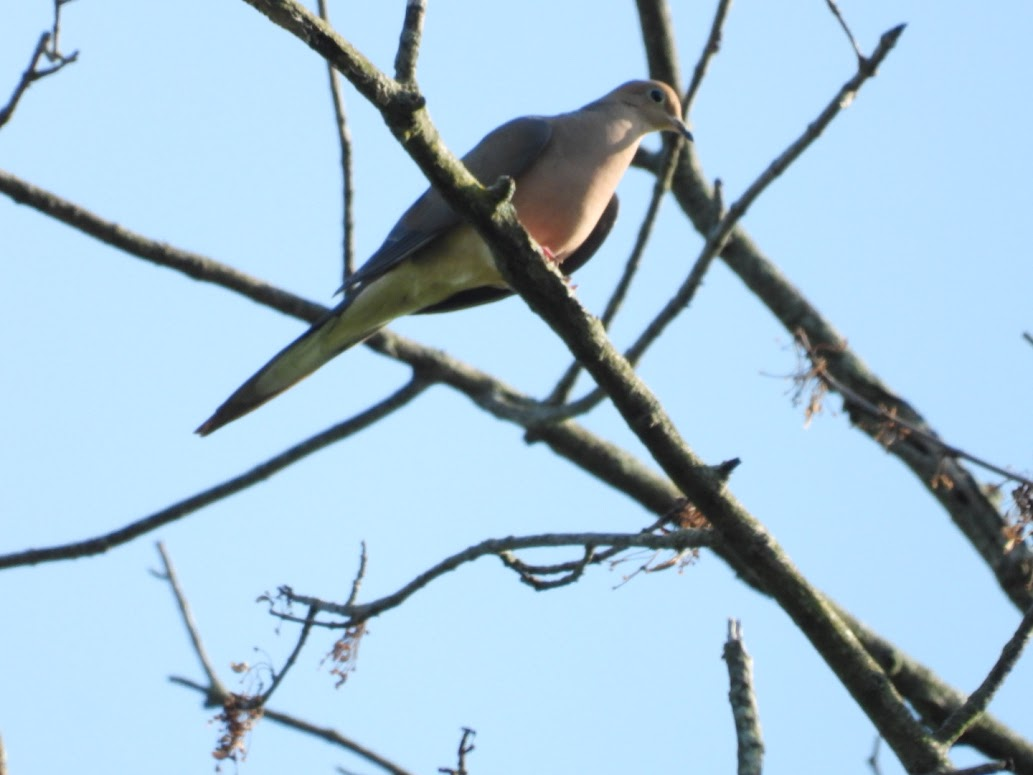 | 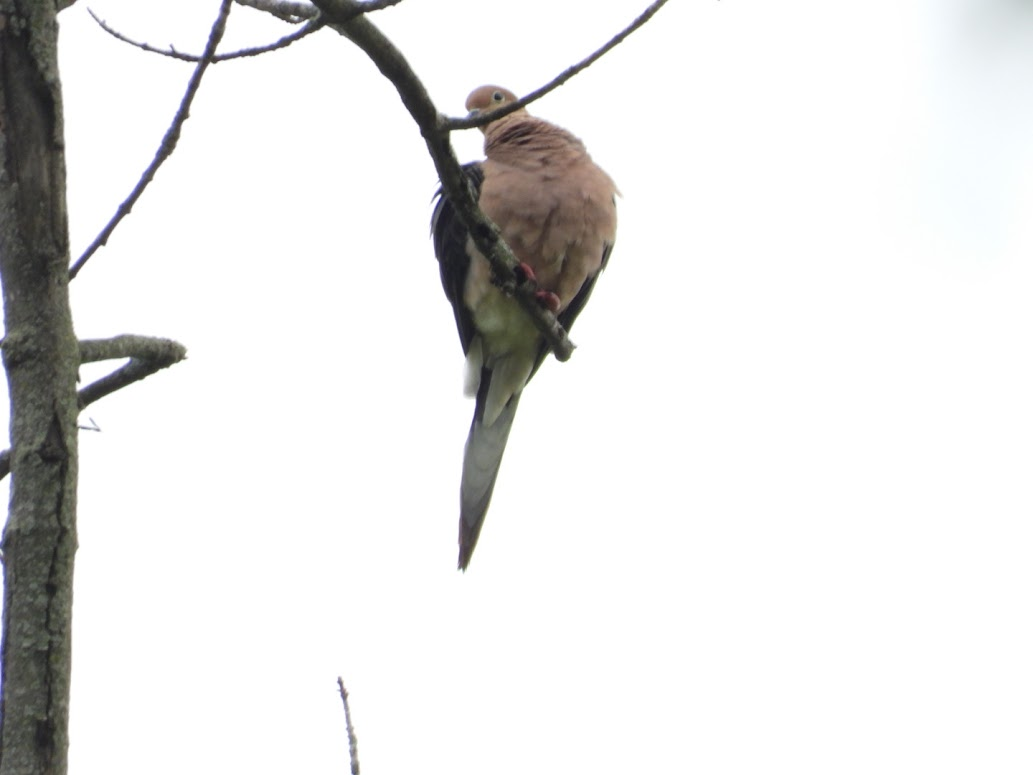 |
| June 12: ƒ/8; 1/400; ISO500; 539mm (125X, 3000mm equiv.) | June 26: ƒ/8;1/125; ISO450; 503mm (116X, 2800mm equiv.) |
Northern Flicker
I had never heard of a Northern Flicker before I began my photography hobby this spring. I've probably seen them every month, though, so they are surprisingly common birds. They are a variety of woodpecker, living in holes in trees. However, unlike most woodpeckers, their main diet consists of ants and insects on the ground.
In June, I managed to find two of them on the ground together - a male and a female, I'm guessing. July has been slow, but when I get to those photos, one of the highlights so far has been a pair of juvenile Northern Flickers.
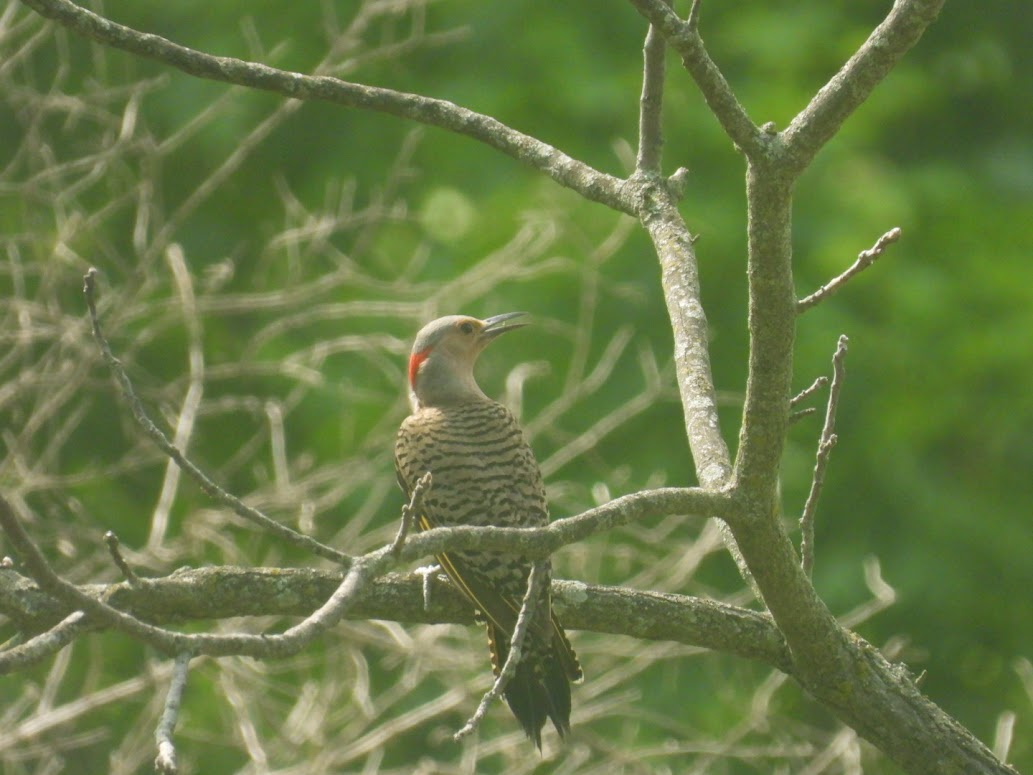 | 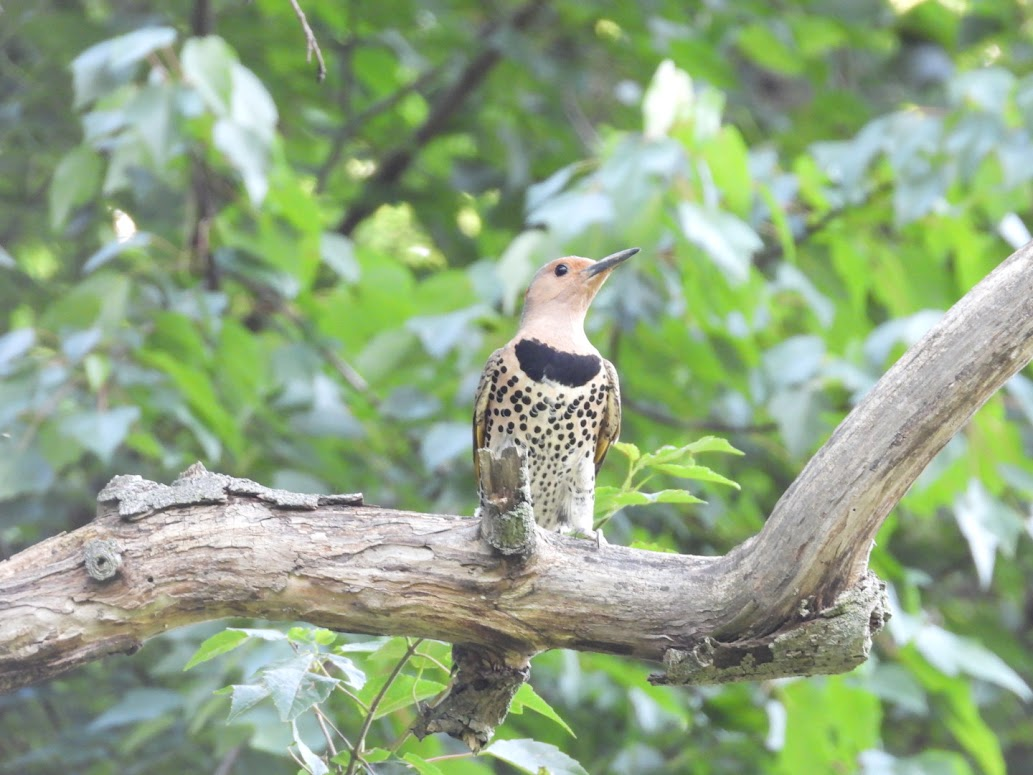 |
| June 10: ƒ/8; 1/500;ISO800; 503mm (116X, 2800mm equiv.) | June 21: ƒ/5.6; 1/80; ISO800; 216mm (50X, 1200mm equiv.) |
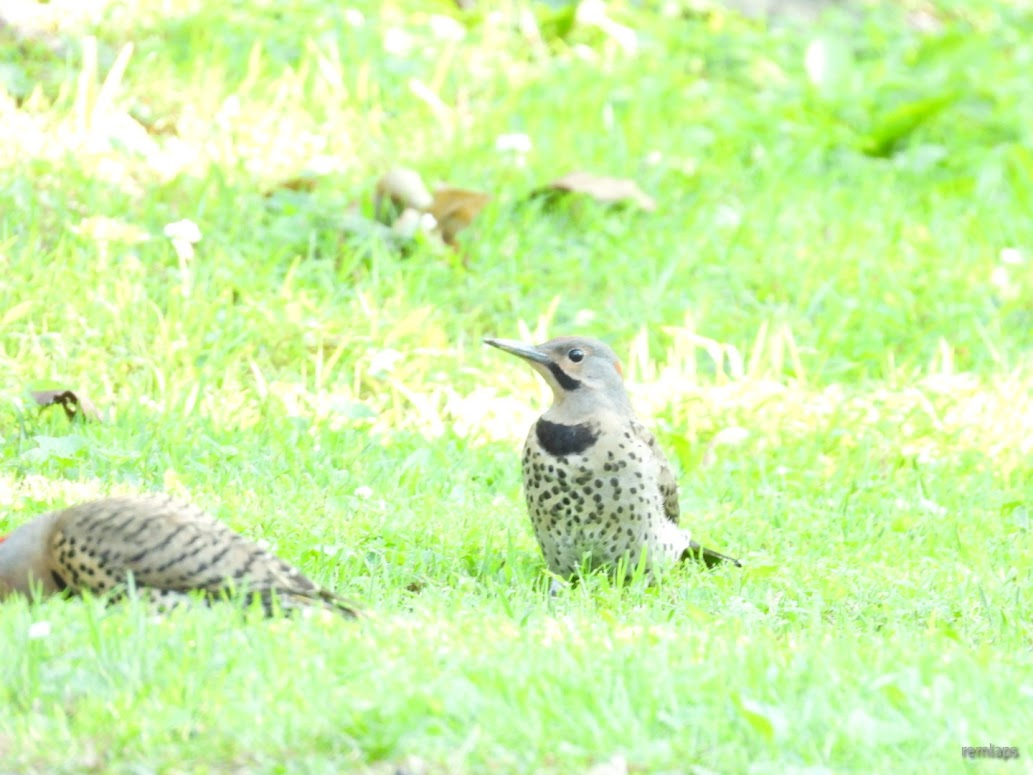 | June 24: ƒ/6.3; 1/30; ISO800; 288mm (66X, 1600mm equiv.) |
House Sparrow
So far, June was the first (and only) month that I've seen the House Sparrow. According to iNaturalist, these birds are classified as an introduced species in North America. As with the European Starling that I discussed before, the House Sparrow was introduced to the US on purpose. The bird was introduced from England into Portland, Brooklyn, Boston, and even Philadelphia during the middle of the 1800s as an effort at insect control.
By the late 1800s, it was realized that the House Sparrow was interfering with native species and campaigns began to eradicate them, but those campaigns were unsuccessful. The sparrow had already spread across most of the continent. Unlike many other bird species that had been threatened and are now recovering, the House Sparrow population in North America has declined by 84% in the US and Canada during the years since 1966.
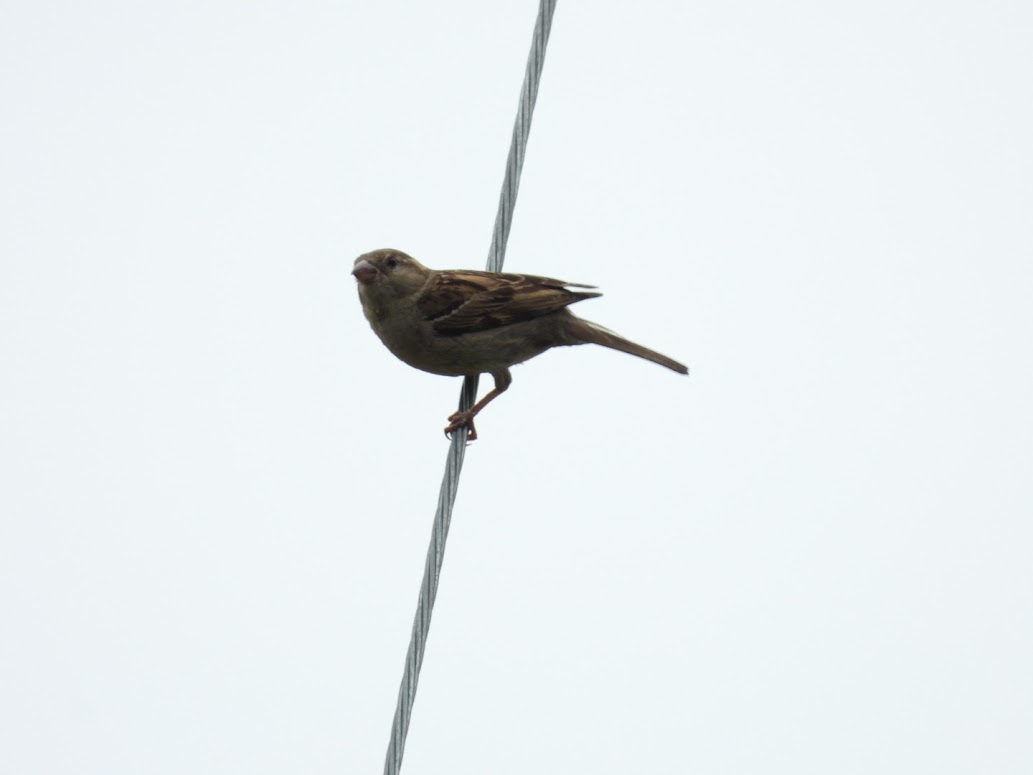 | 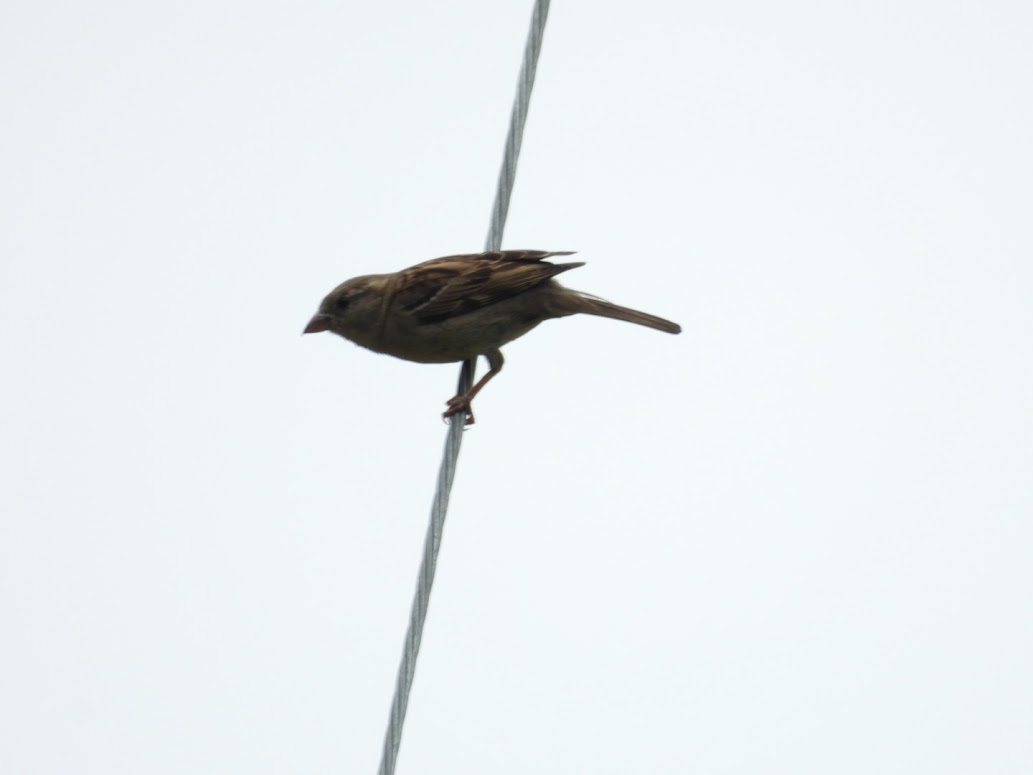 |
| June 26: ƒ/8; 1/60;ISO140; 539mm (125X, 3000mm equiv.) | June 26: ƒ/8; 1/60;ISO140; 539mm (125X, 3000mm equiv.) |
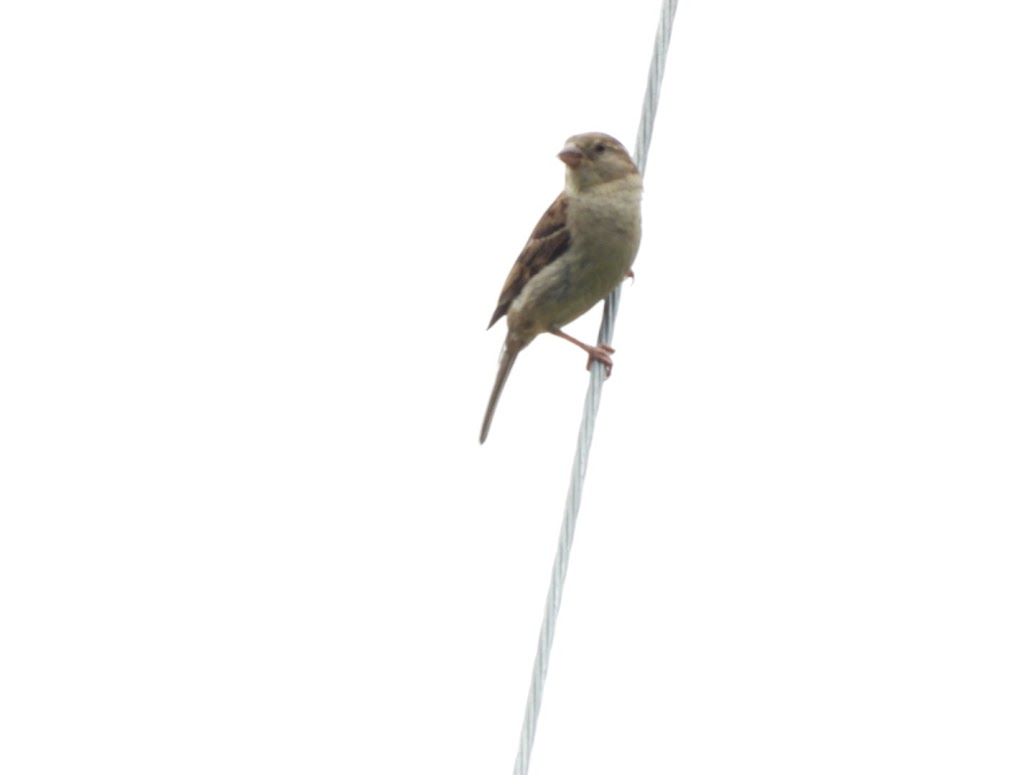 | June 26: ƒ/8; 1/60;ISO140; 539mm (125X, 3000mm equiv.) |
White-tailed Deer
I have mentioned before that White-tailed Deer used to be in my yard, almost daily, but in recent months I have seen them much less frequently. I have a theory about why, and it has to do with the amount of time that neighborhood kids spend playing outside - which typically happens when kids are in a certain age range. If my theory is right, I suppose the deer will be back more often in the winter and year-round in 3 or 4 years. We'll see.
Anyway, these deer range throughout most of North America, and they are extremely common in Pennsylvania. In fact, due to car accidents, they're actually considered to be one of Pennsylvania's most deadly species.
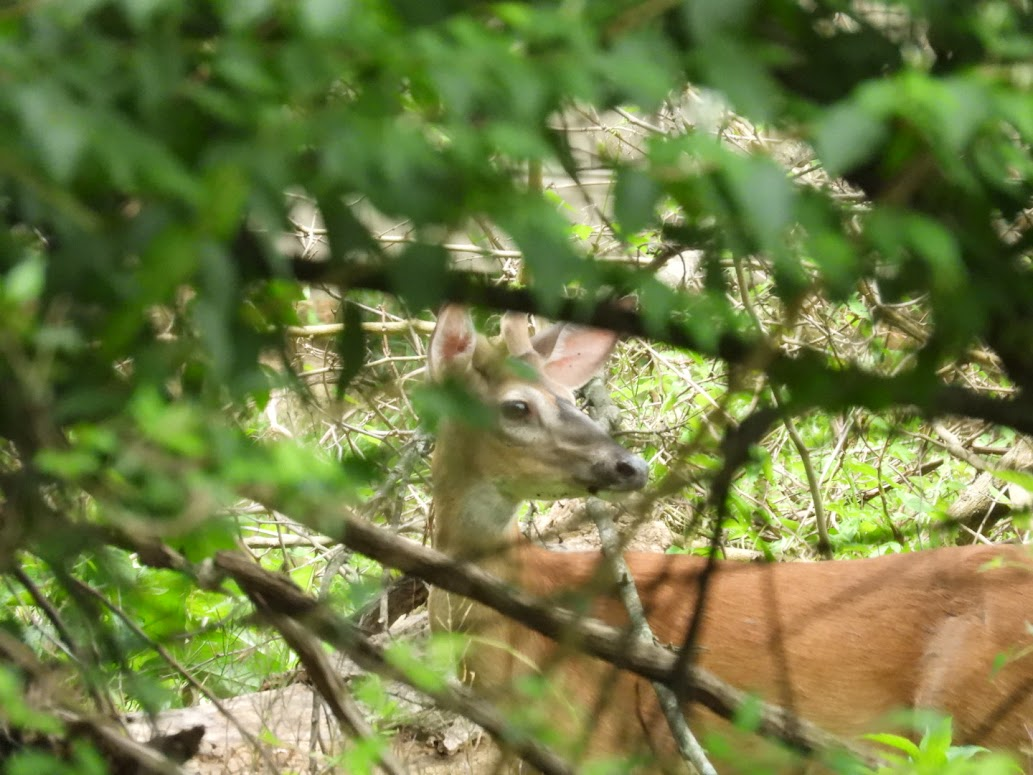 | 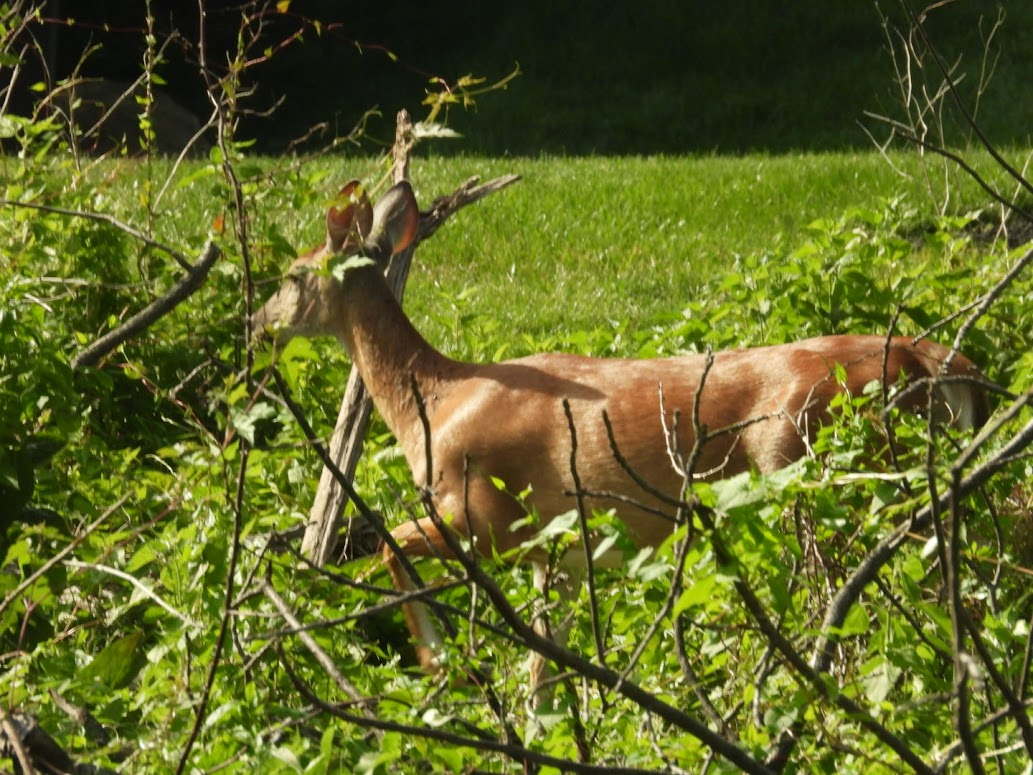 |
| June 6: ƒ/6.3; 1/800; ISO1600; 306mm (71X, 1703mm equiv.) | June 21: ƒ/8; 1/200; ISO400; 216mm (50X, 1200mm) |
Wrap-up
Keep an eye on my blog for another couple of posts with photographs from June before we move onto July. Unless things change, I'm thinking there will be one more post with small birds and another post with raptors. After the high-volume of activity during the May migration season, June tapered off and July has been even slower, so the number of posts is also slowing down.
Appendix
Here are my previous wildlife photography posts:
June photographs
- Backyard Wildlife Photos in Southeastern Pennsylvania: Mammals and Small Birds during June
- Photography meets citizen science: June's wildlife in south-eastern Pennsylvania
May's photographs
- Hawks and a Bald Eagle: May raptor photography practice in southeastern Pennsylvania - part 2
- Vultures and Kites: May raptor photography practice in southeastern Pennsylvania - part 1
- Wildlife photographs in southeastern Pennsylvania: Small animals with multi-month sightings in May - part 2
- Wildlife photographs in southeastern Pennsylvania: Small animals with multi-month sightings in May - part 1
- Backyard wildlife photography in southeastern Pennsylvania: First encounters during May - post 2
- Backyard wildlife photography in southeastern Pennsylvania: Something Old - Something New
- Photography meets citizen science: May's wildlife in south-eastern Pennsylvania
April's photographs
- [Citizen Science] April's Raptors in South-Eastern Pennsylvania
- Photography meets citizen science: April's wildlife in south-eastern Pennsylvania
- Learning photography with wildlife in south-eastern Pennsylvania: First encounters in the month of April
- Learning photography with wildlife in south-eastern Pennsylvania: First encounters in the month of April - part 2
- April wildlife observations in south-eastern Pennsylvania: repeated encounters with small animals
March's photographs
- Backyard Photography in Chester County, Pennsylvania during March 2026: Warm-up Shots
- [Citizen Science] Observations of Small Birds and Animals in South-eastern Pennsylvania from March of 2026
- [Citizen Science] The Raptors of March in South-Eastern Pennsylvania
Thank you for your attention!
All photos above were taken by me with a Nikon P1000 camera. I'm sharing them under the CC BY 4.0 license (share & adapt freely with attribution to the original source).