Backyard Wildlife Photos in Southeastern Pennsylvania: Still more small birds during June
This is the third and final post in the collection covering the small birds that I photographed during backyard photography practice during the month of June. This post covers the Northern Cardinal, the House Finch, the Blue Jay (pictured here) and the Eastern Kingbird.
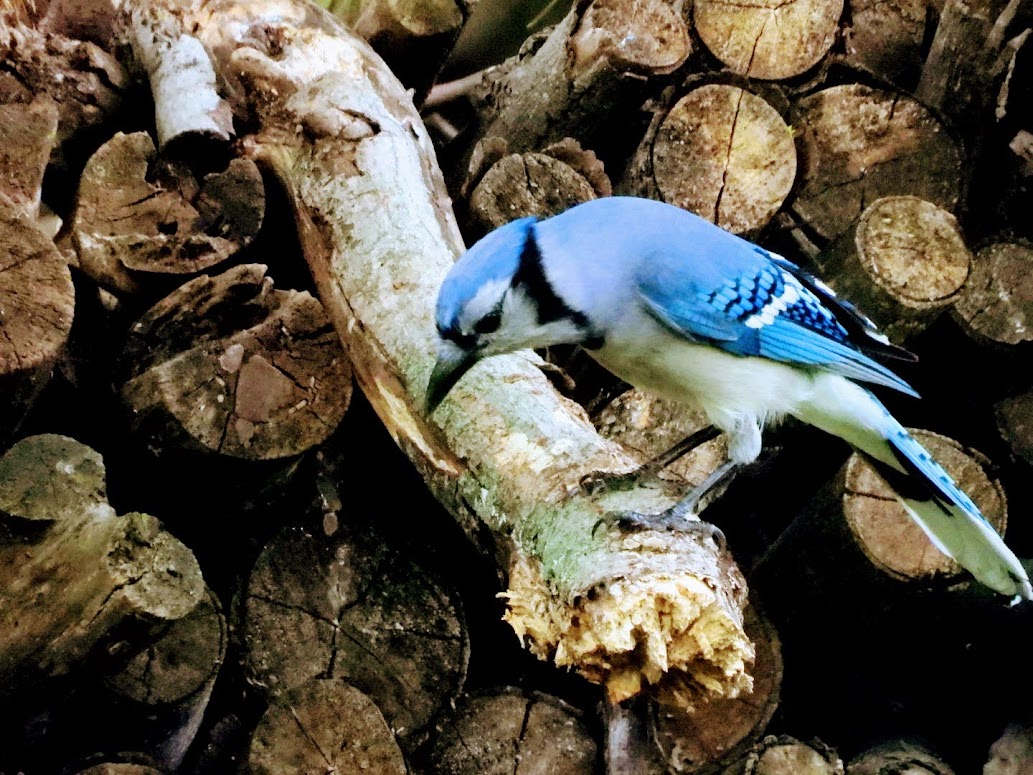
I didn't intentionally organize it this way, but two of the species, the Northern Cardinal and the House Finch, can be identified by sex based on their coloring.
I think these were probably the only birds during the month where I could definitively say whether they were male or female. (IIRC, it's also possible with the Downy Woodpecker from yesterday's post, but I didn't have an angle on those where I could be sure about the sex.)
In all, these four animals accounted for 17 of my 55 iNaturalist observations during the month of June.
| Common Name | First Observation Date | Observation Count | June Observation Count | Observations |
|---|---|---|---|---|
| Northern Cardinal | 2026-03-30 | 16 | 6 | 2026-06-06, 2026-06-09, 2026-06-09, 2026-06-13, 2026-06-19, 2026-06-19 |
| House Finch | 2026-04-26 | 12 | 5 | 2026-06-06, 2026-06-09, 2026-06-10, 2026-06-23, 2026-06-23 |
| Blue Jay | 2026-03-21 | 14 | 4 | 2026-06-06, 2026-06-08, 2026-06-09, 2026-06-28 |
| Eastern Kingbird | 2026-05-15 | 3 | 2 | 2026-06-14, 2026-06-26 |
A note on AI usage
As mentioned yesterday, I have a new Claude Skill in my skills.md file that formats the markdown tables for me in these posts.
Additionally, I make extensive use of free tier AIs for the animal identifications. This includes - mostly - Merlin, Meta.ai, Gemini, and Claude. I mentioned before that Merlin was the best at identifying birds, and that's still true. Beyond that, the second best is now Meta.ai, with Gemini and Claude more or less tied for a distant third. Claude used to be better than Gemini, but its ability seems to have deteriorated severely in recent months. I totally gave up on Grok and ChatGPT for this purpose.
Finally, after drafting the articles and before posting, I generally pass it through Claude, Gemini, ChatGPT, Meta.ai, then back to Claude for proofreading and editorial advice. IMO, ChatGPT is the most thorough proof-reader, but it also has a tendency to "correct" things that don't really need to be corrected.
With that out of the way, let's get on to the photographs.
Northern Cardinal
It would seem that we have at least one pair of Northern Cardinals nesting in our yard or the adjacent properties. I see or hear these birds quite frequently, including both male(s) and female(s). However, I haven't noticed where their nest might be. Eyeballing the range map, it appears that these birds live year-round throughout large parts of the central and eastern United States (including Pennsylvania) as well as Mexico and parts of Central America. I suppose their year-round presence in the Northeastern US is the reason that so many Christmas cards show a snowy scene that prominently features a male Cardinal.
Getting ahead of my July photos, a couple days ago I observed that these birds like to eat the Spotted Lanternfly, which is an invasive species of bugs that arrived from Asia. This was good news to me, because when they first broke onto the scene, the Lanternfly had no natural predators, so its population growth was running unchecked. It would appear that American birds are now learning about a new type of food.
As with many bird species, the male Cardinal is the colorful one and the female Cardinal has somewhat drab coloring (but an interesting appearance). This is clear in the photos below.
| June 6 / Male | June 8 / Female |
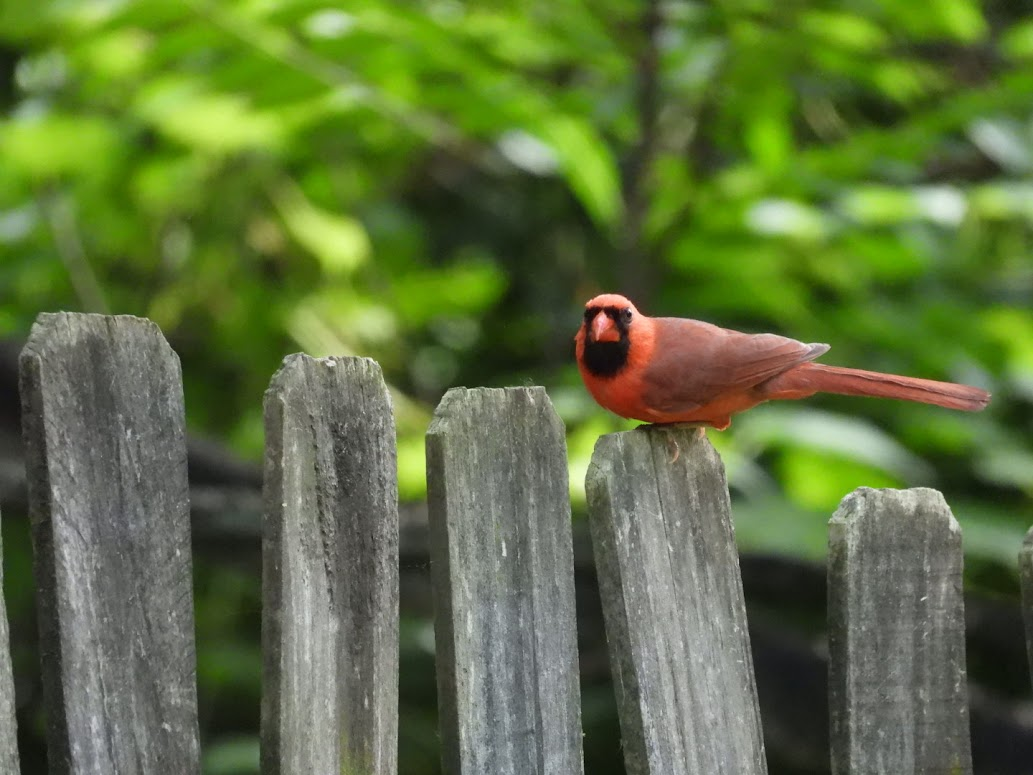 | 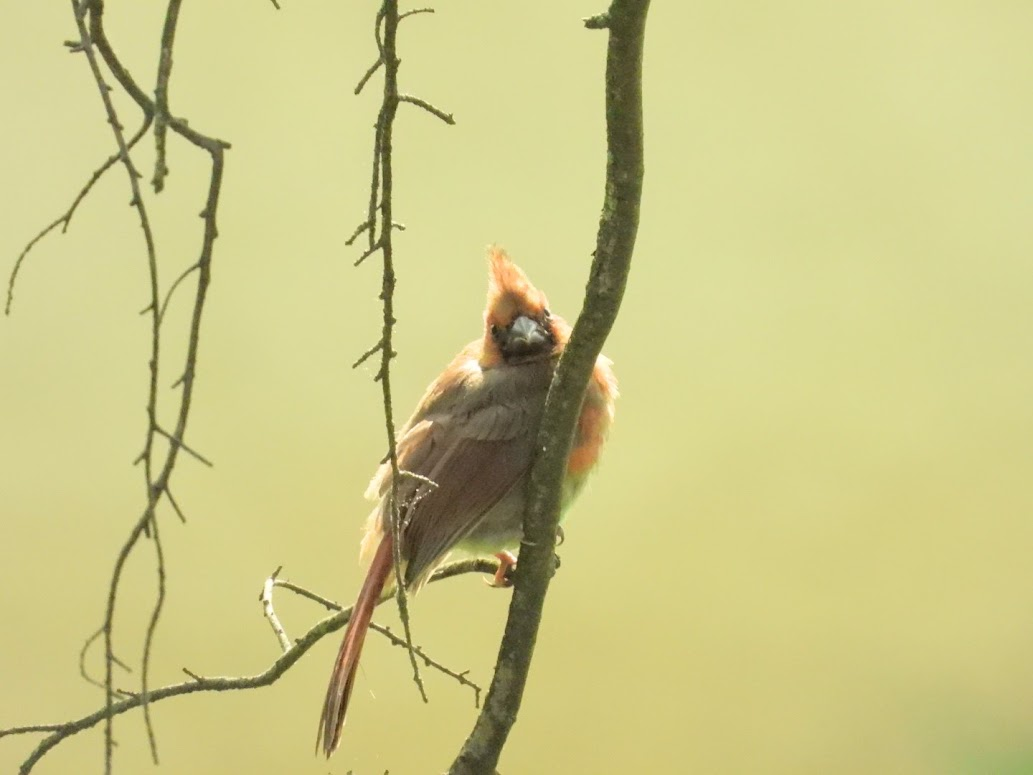 |
| ƒ/6.3, 1/500, ISO1600, 359mm (1998mm equiv, 83.3X) | ƒ/7.1, 1/640, ISO1600, 432mm (2404mm equiv, 100.2X). Lighting adjusted in Google Photos |
| June 9 / Male | June 9 / Female |
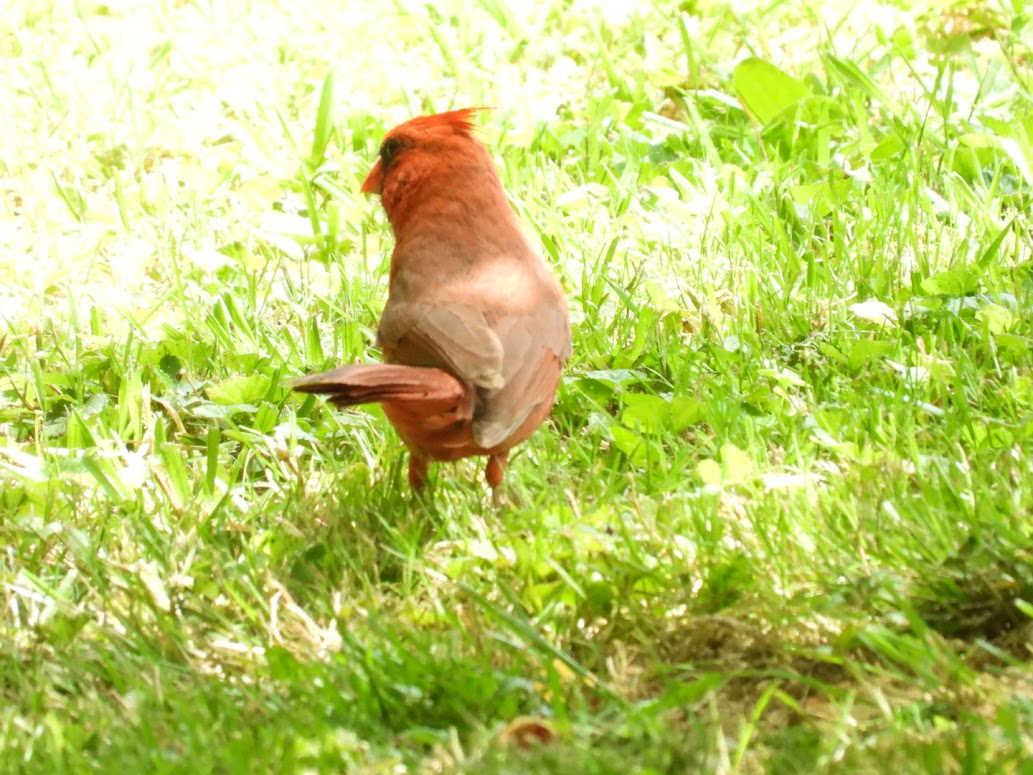 | 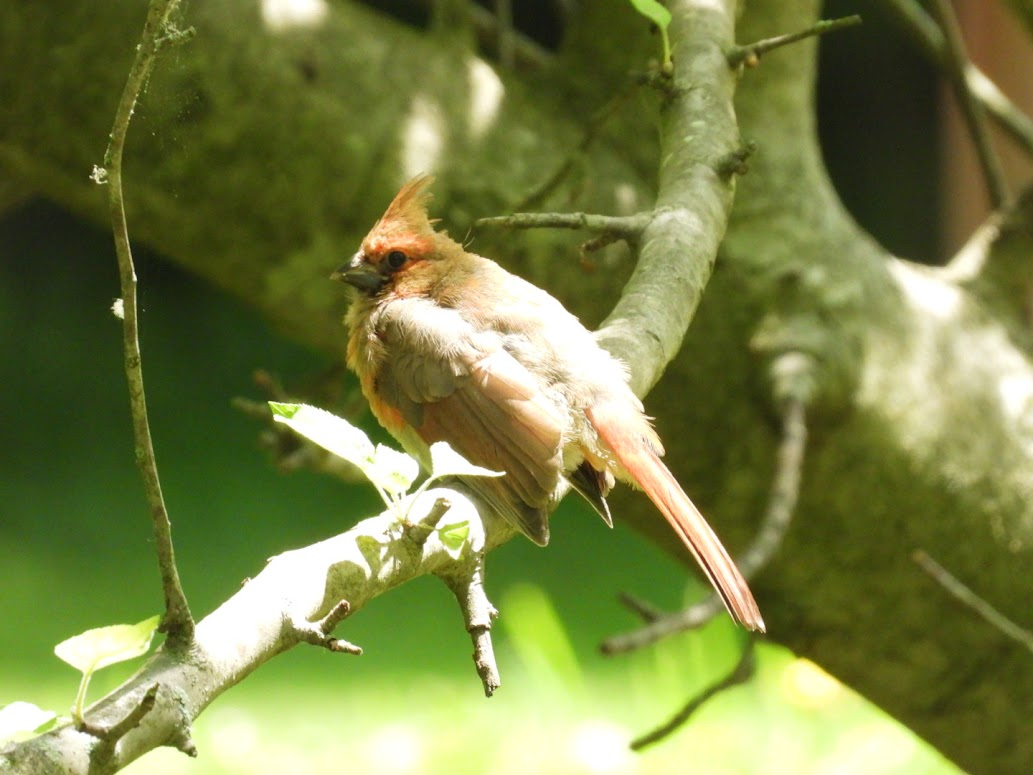 |
| ƒ/8, 1/250, ISO1600, 539mm (3000mm equiv, 125X) | ƒ/7.1, 1/250, ISO1100, 395mm (2199mm equiv, 91.6X) |
| June 13 / Female | June 17 / Male |
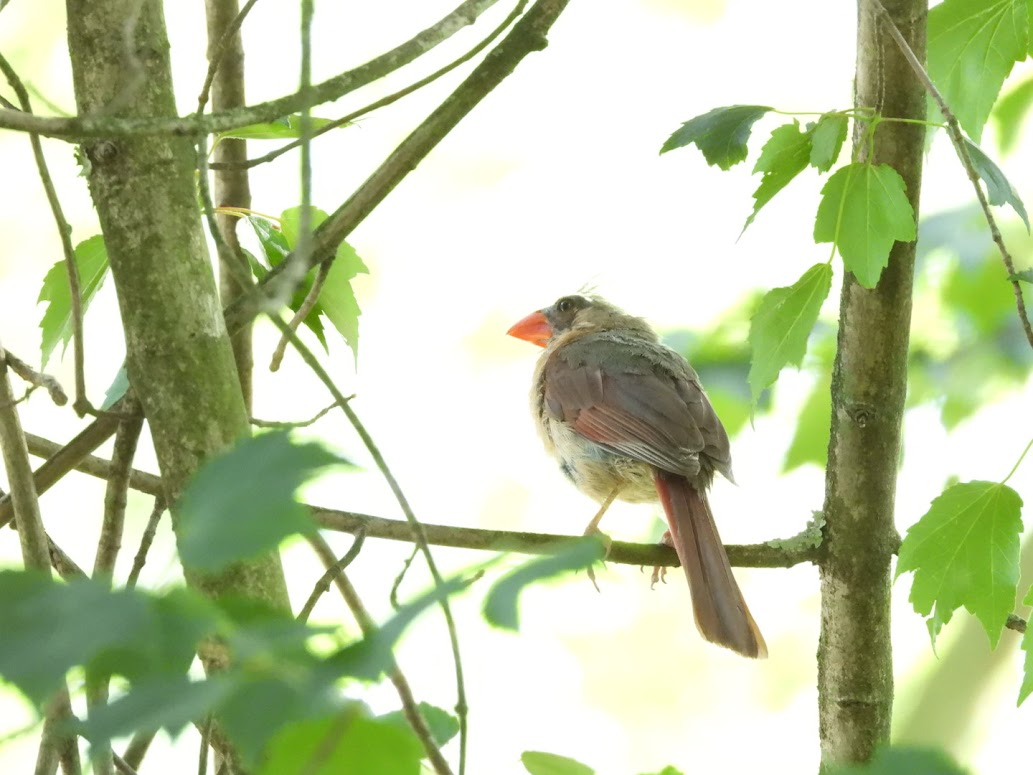 | 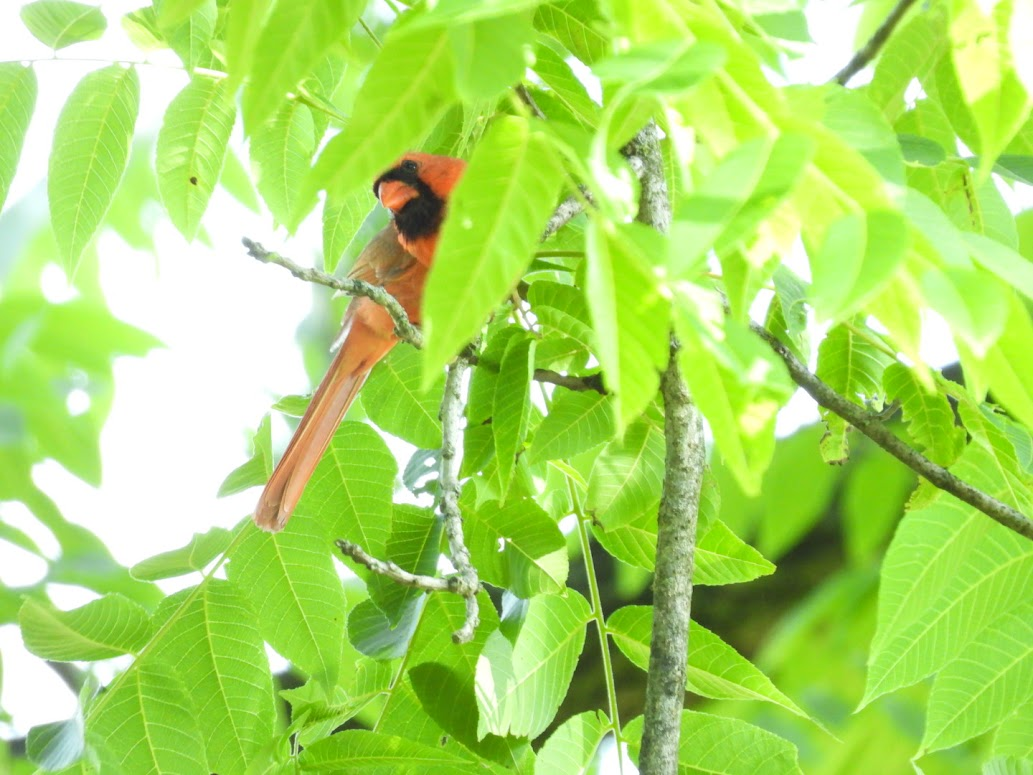 |
| ƒ/5.6, 1/200, ISO1600, 234mm (1302mm equiv, 54.3X) | ƒ/6.3, 1/100, ISO800, 306mm (1703mm equiv, 71.0X) |
| June 17 / Male | June 19 / Male |
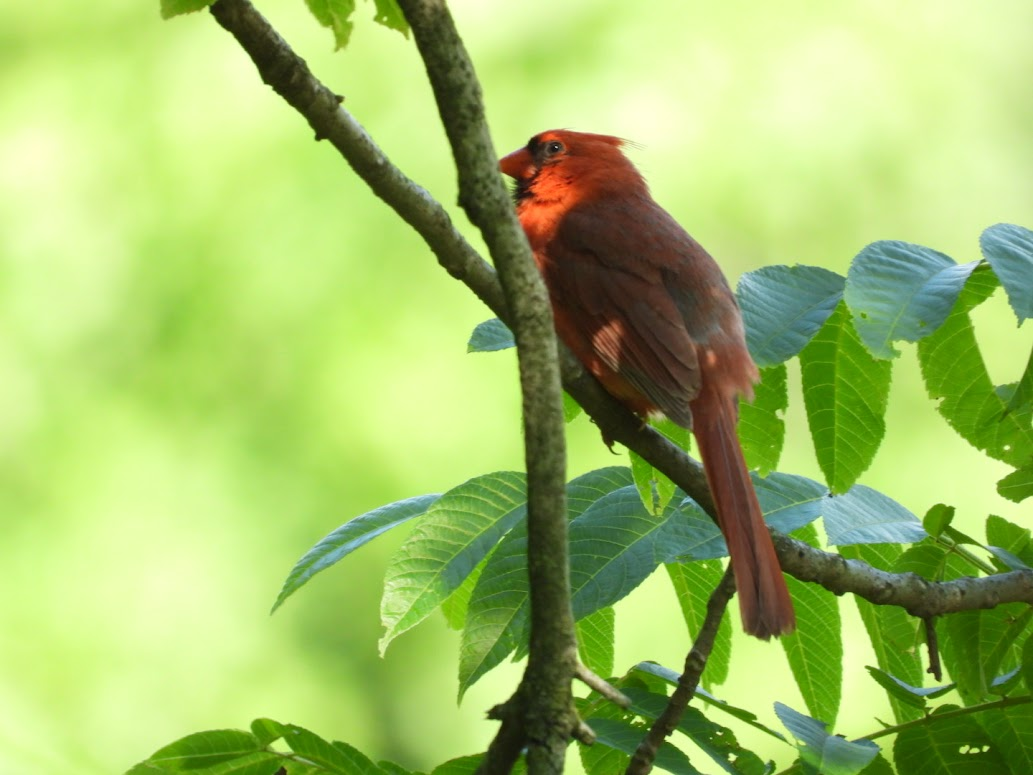 | 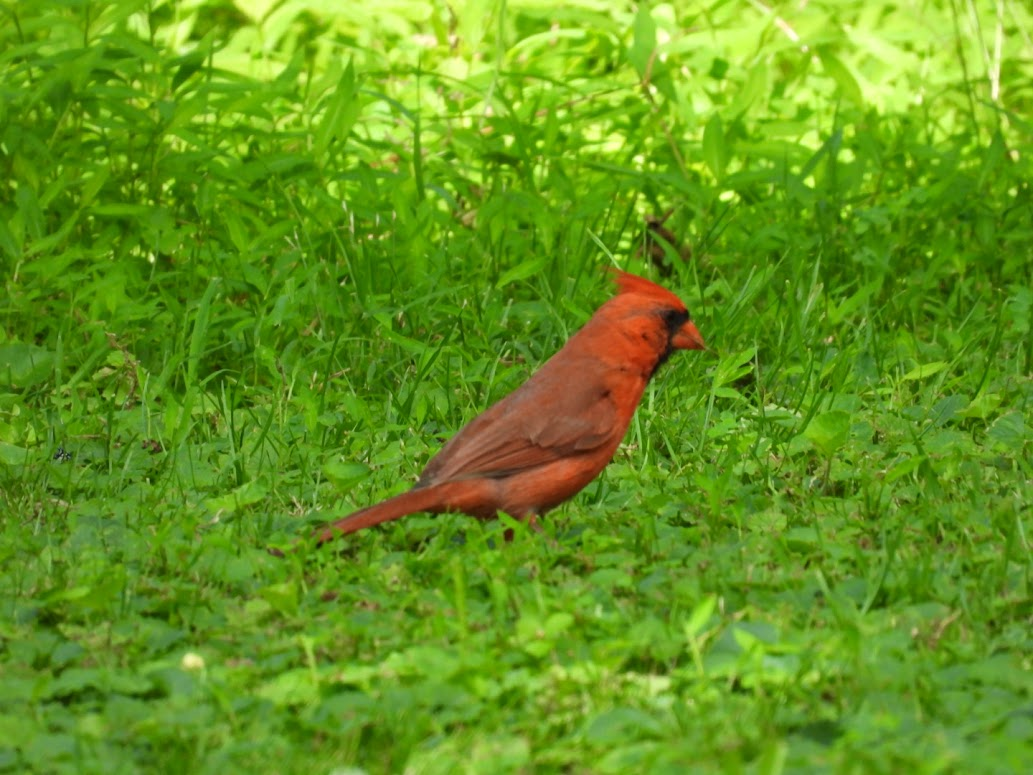 |
| ƒ/7.1, 1/125, ISO400, 432mm (2404mm equiv, 100.2X) | ƒ/7.1, 1/125, ISO400, 432mm (2404mm equiv, 100.2X) |
| June 19 / Female | June 19 / Male & Female |
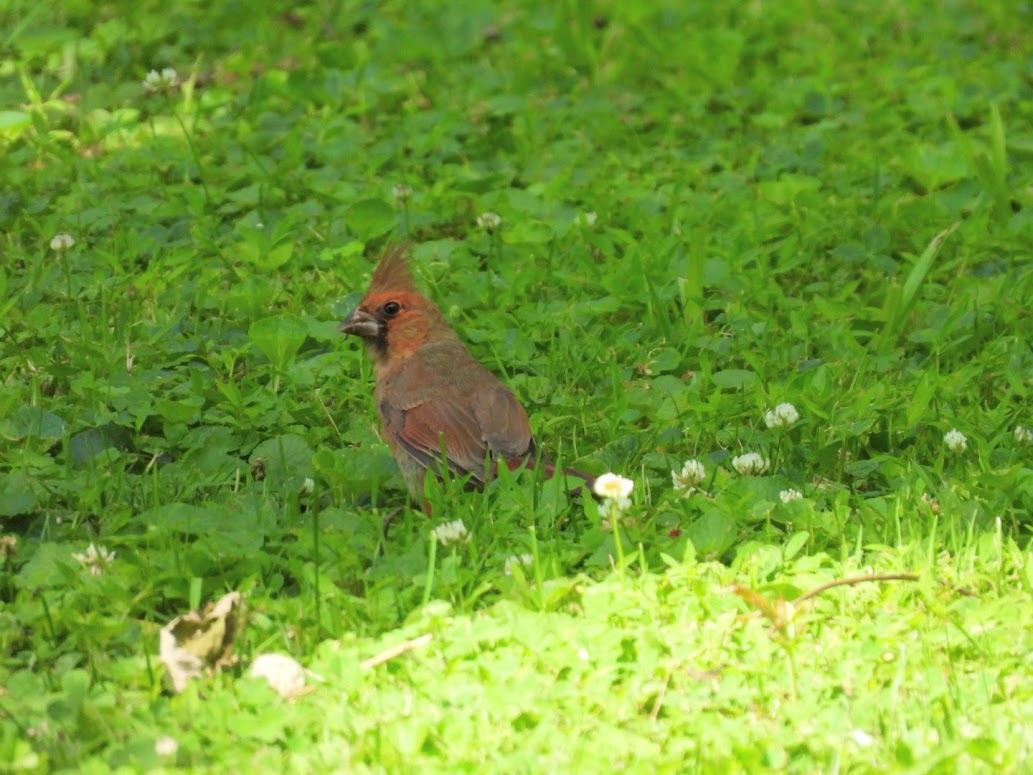 | 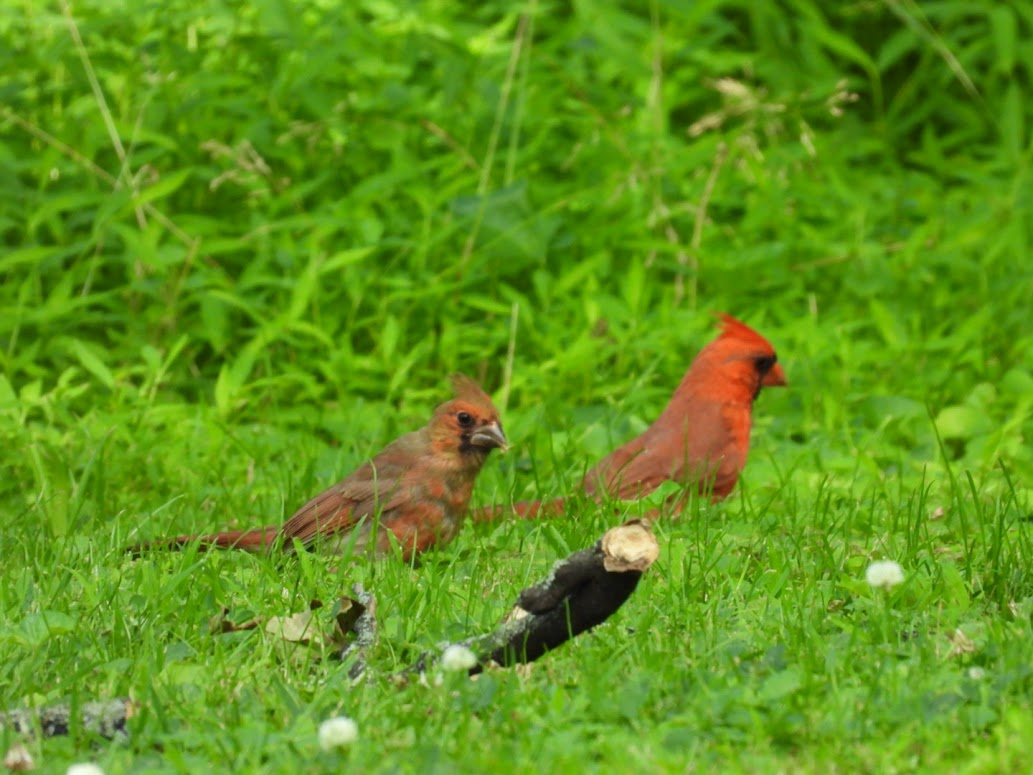 |
| ƒ/6.3, 1/400, ISO400, 359mm (1998mm equiv, 83.3X). Lighting adjusted in Google Photos | ƒ/7.1, 1/125, ISO450, 395mm (2199mm equiv, 91.6X) |
| June 23 / Male | |
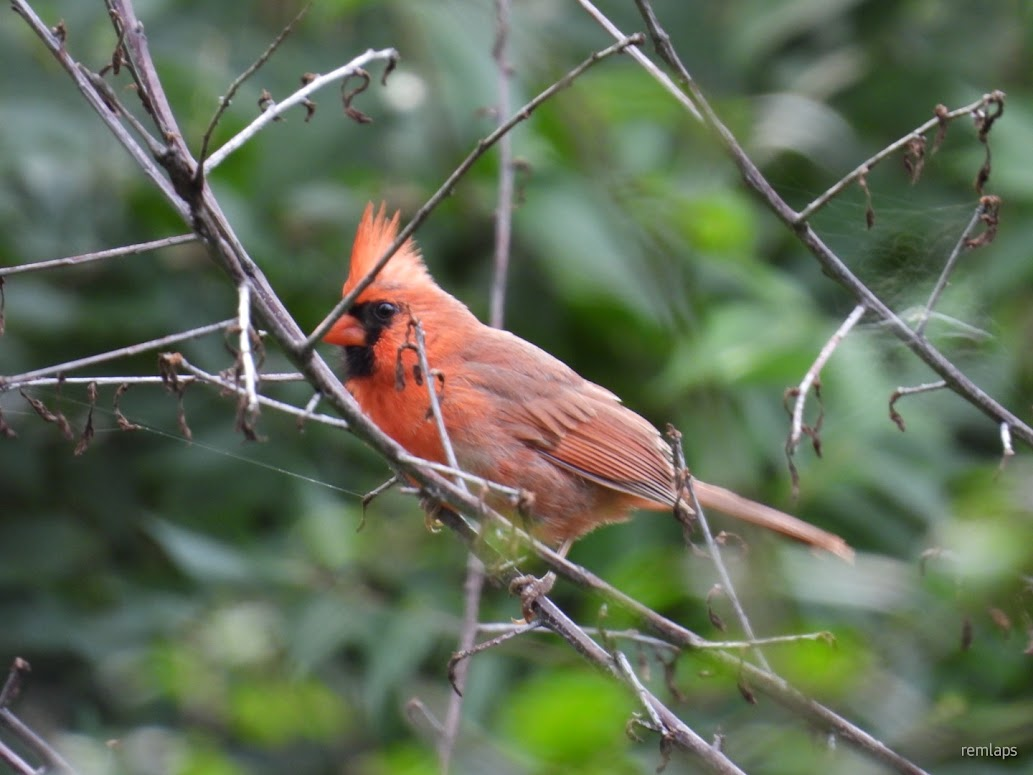 | |
| ƒ/7.1, 1/60, ISO400, 432mm (2404mm equiv, 100.2X) |
House Finch
This is the second species where we can distinguish between male and female by coloring, and like the Cardinal, I got photos of both sexes during the month. As previously mentioned, the House Finch is native to the southwestern United States. It had been blocked from spreading east by the Rocky Mountains, and it only reached the broader US during the 1940s when a bunch of New York City pet shop owners released them into the wild to avoid arrest for selling the birds illegally. The species can now be found from coast to coast throughout the year, reaching south into Mexico, north into southern Canada, and somehow they even found their way to Hawaii.
A drawback from the expanded range of the House Finch is that they have displaced some of the native Purple Finches. Both species are listed with low concern conservation status, though.
| June 6 / Male | June 7 / Male |
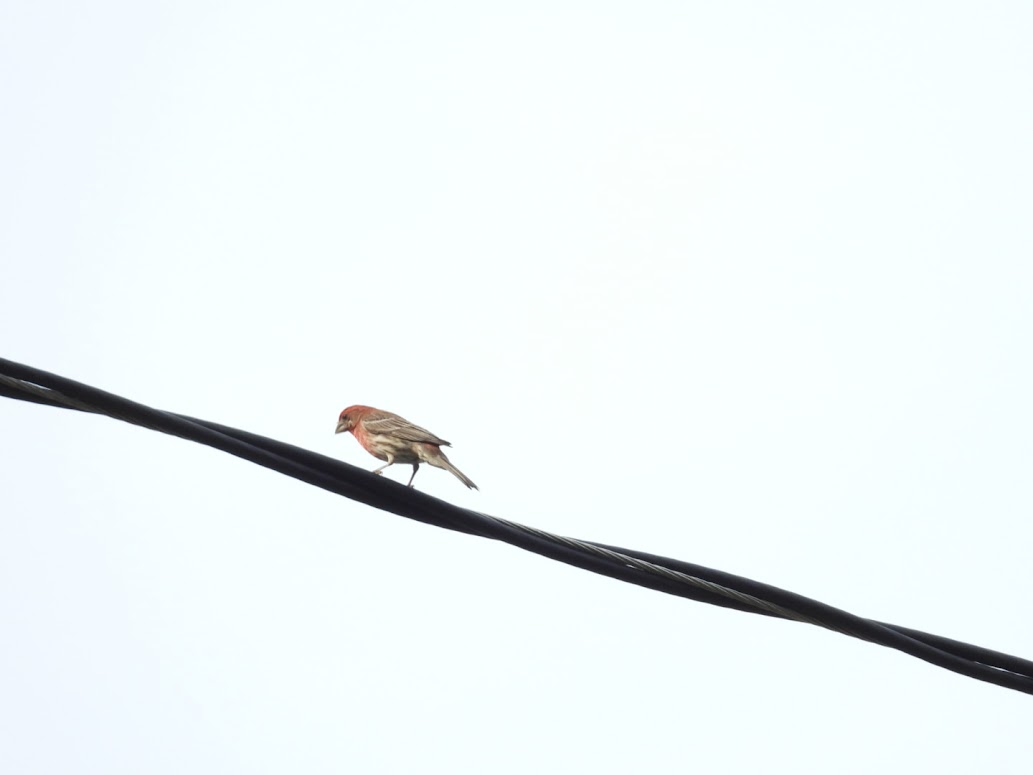 | 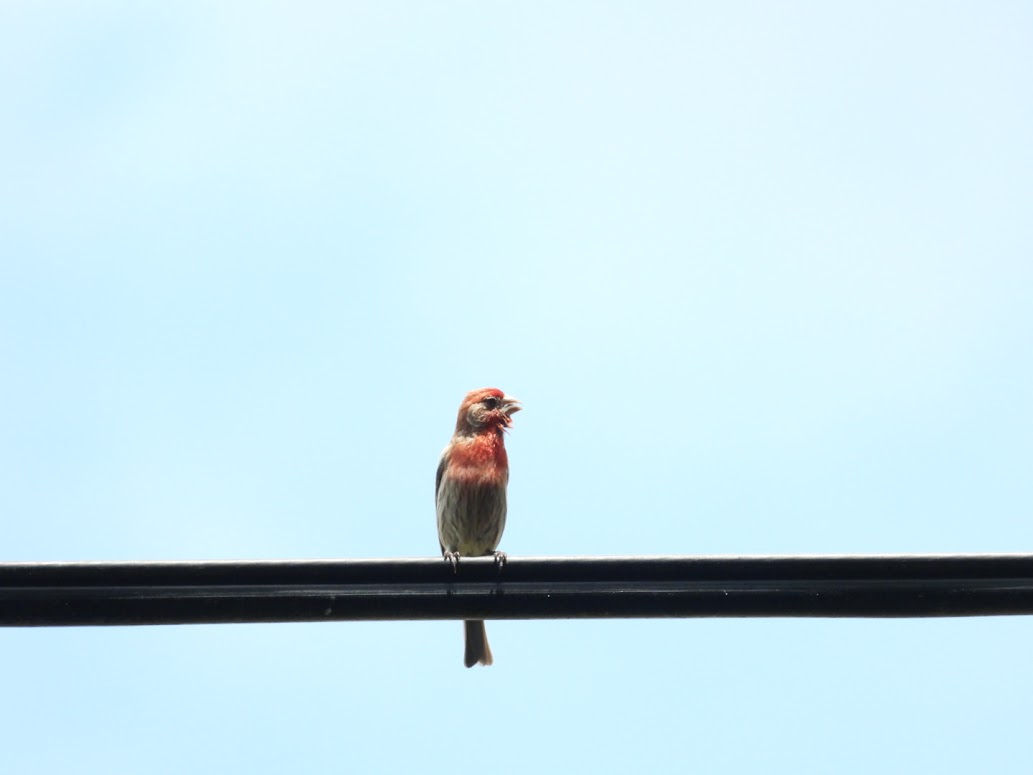 |
| ƒ/5.6, 1/500, ISO220, 234mm (1302mm equiv, 54.3X) | ƒ/5.6, 1/500, ISO450, 252mm (1403mm equiv, 58.5X) |
| June 9 / Male | June 10 / Female |
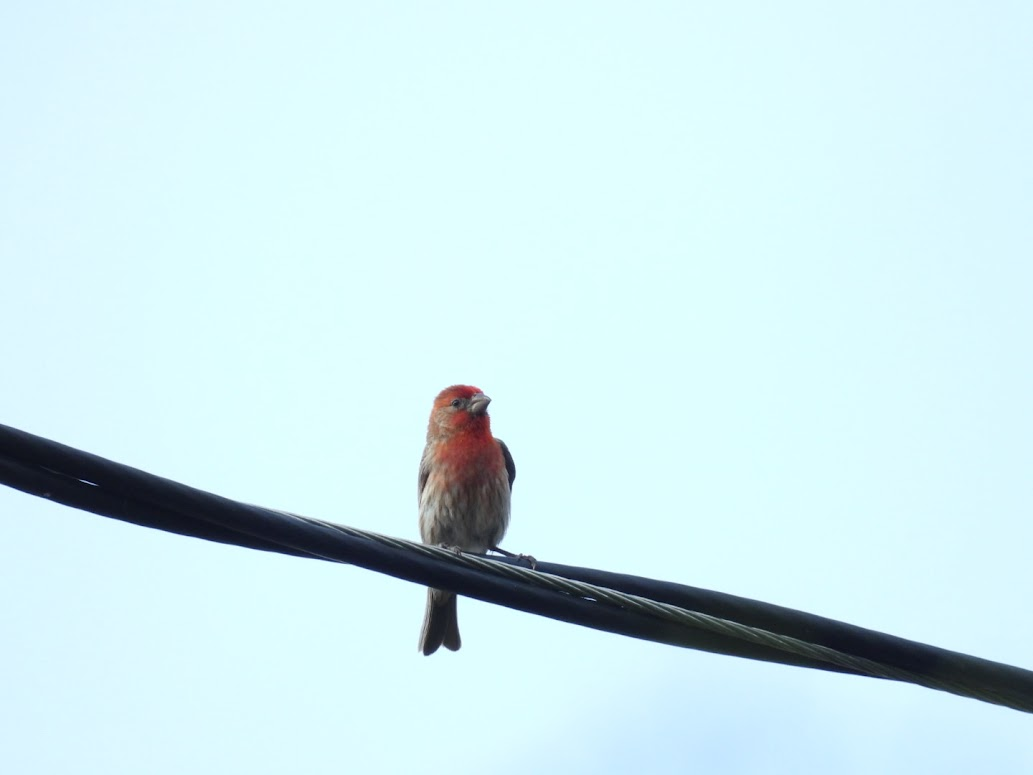 | 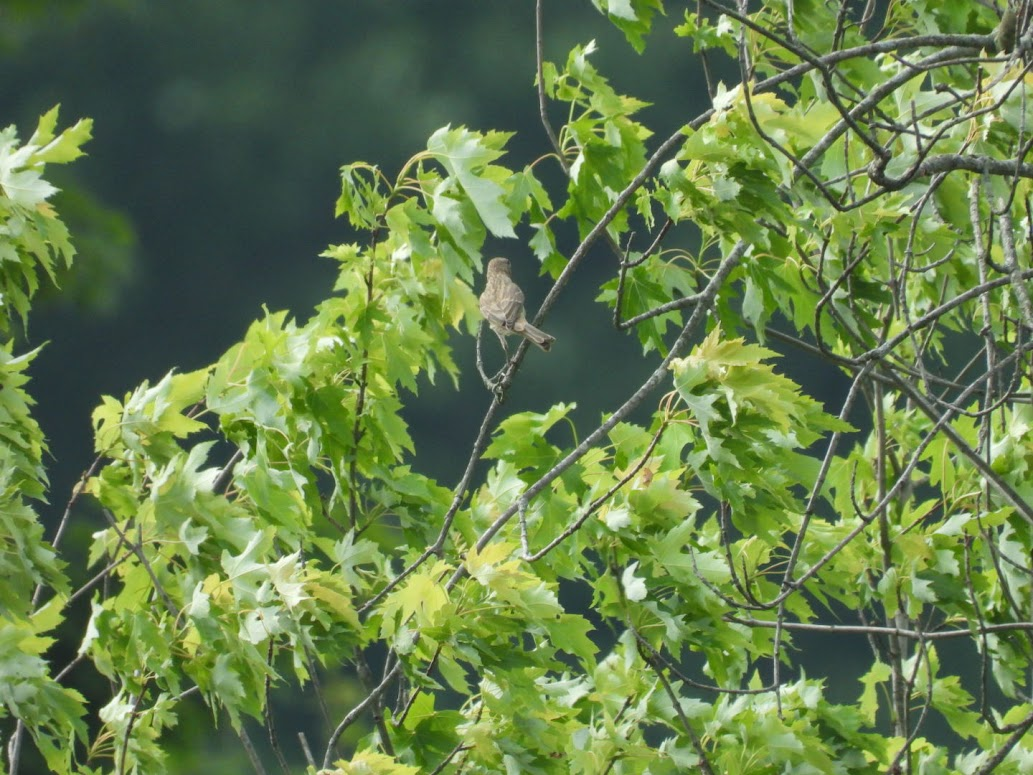 |
| ƒ/6.3, 1/400, ISO400, 359mm (1998mm equiv, 83.3X) | ƒ/8, 1/500, ISO560, 539mm (3000mm equiv, 125X) |
| June 23 / Male | June 23 / Female |
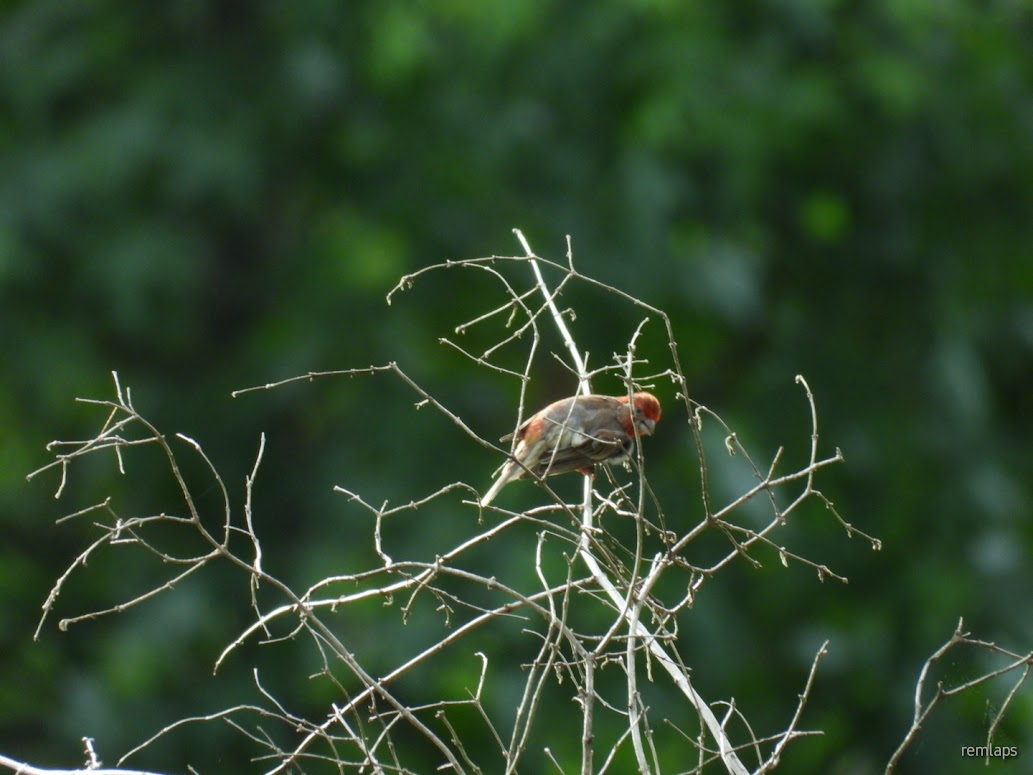 | 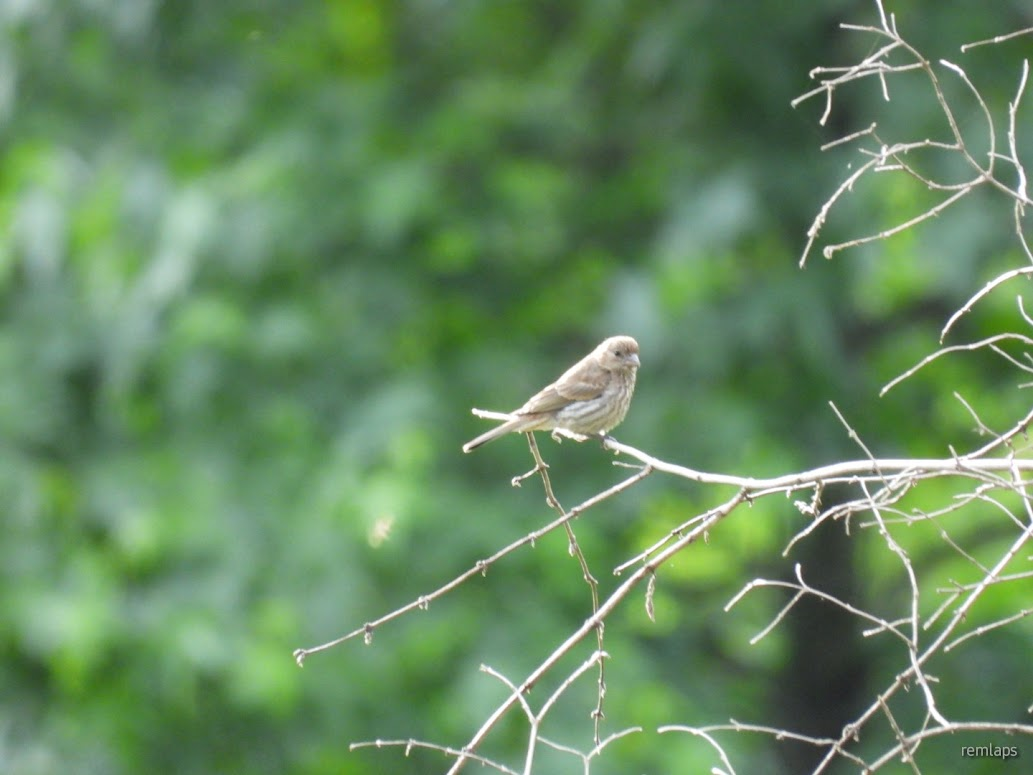 |
| ƒ/8, 1/200, ISO400, 539mm (3000mm equiv, 125X) | ƒ/8, 1/125, ISO800, 539mm (3000mm equiv, 125X) |
Blue Jay
As you may recall, I saw a pair of Blue Jays gathering nesting material in May, so I'm sure that we also have a nesting pair of these birds in our yard or somewhere nearby. As with the Cardinal, however, I haven't noticed the nest or any juveniles.
These birds range, year round, through most of the United States and much of southern Canada, extending even further northward in the west.
Pay special attention to the bird in the tree in the June 26 photo. The same tree reappears just one minute later in the Eastern Kingbird section. One bird left and another one landed.
| June 1 | June 6 |
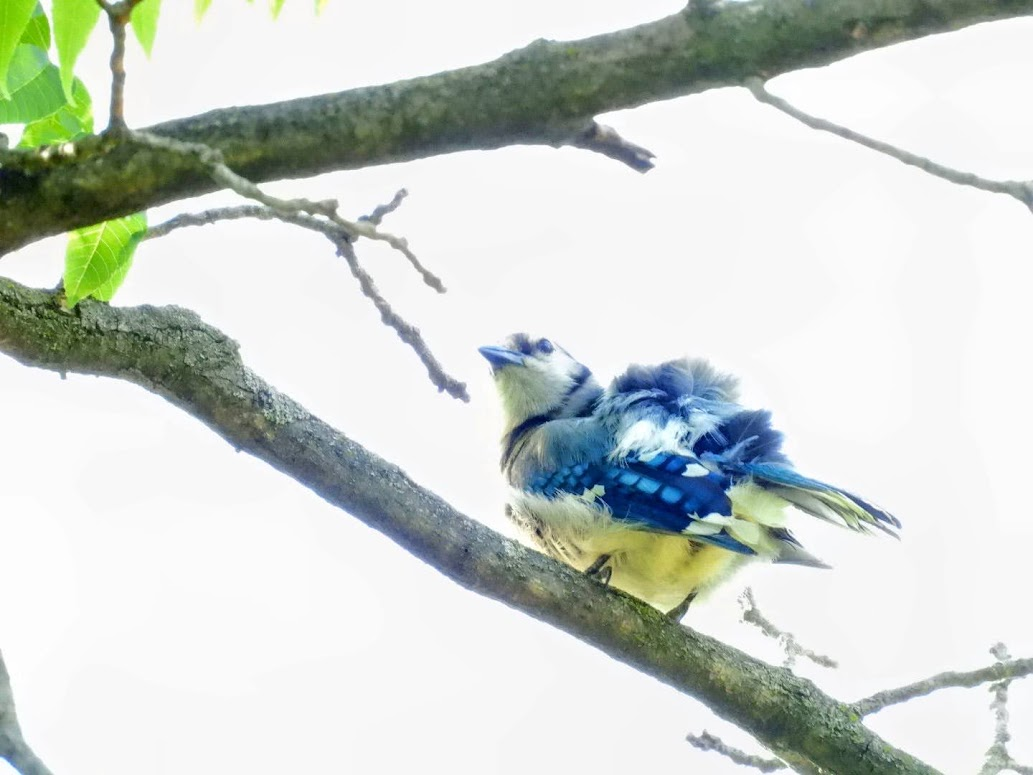 | |
| ƒ/7.1, 1/250, ISO1600, 395mm (2199mm equiv, 91.6X). Lighting adjusted in Google Photos | ƒ/7.1, 1/800, ISO1600, 467mm (2599mm equiv, 108.3X). Lighting adjusted in Google Photos |
| June 8 | June 8 |
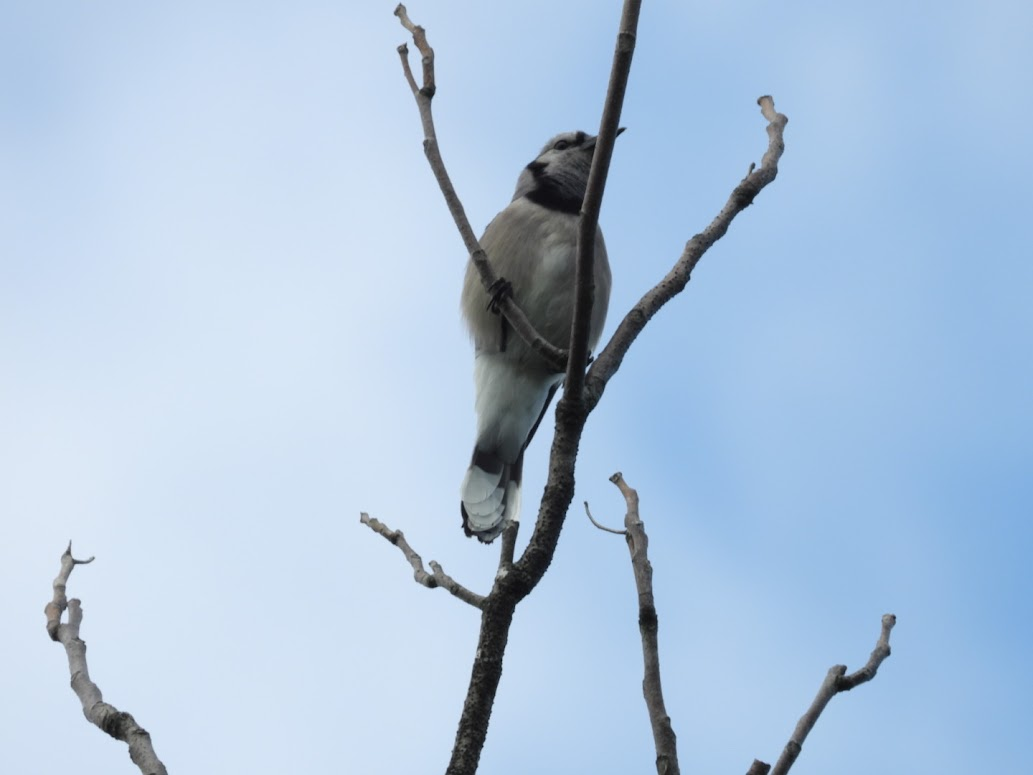 | 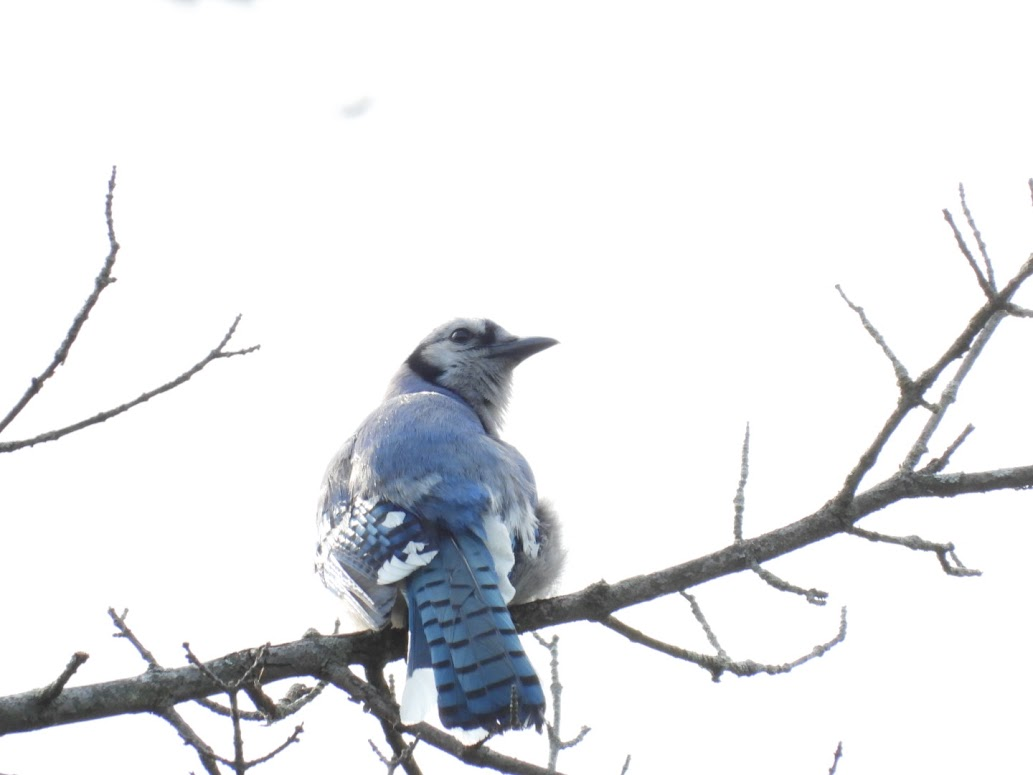 |
| ƒ/8, 1/160, ISO110, 288mm (1603mm equiv, 66.8X) | ƒ/8, 1/250, ISO500, 539mm (3000mm equiv, 125X) |
| June 9 | June 9 |
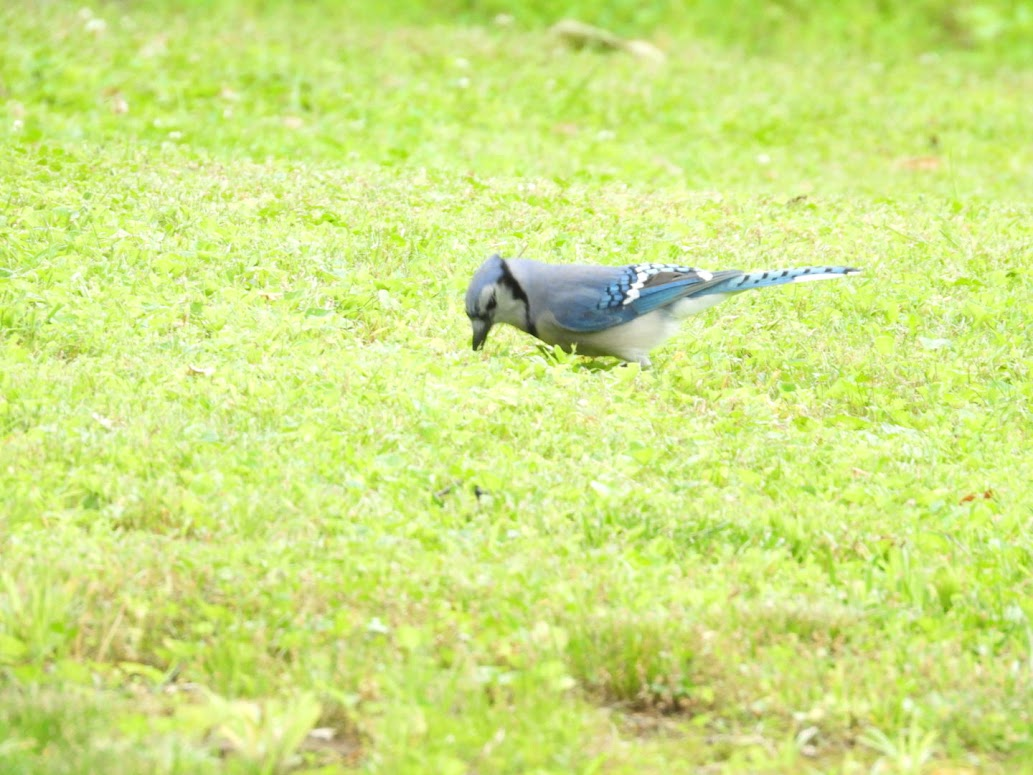 | 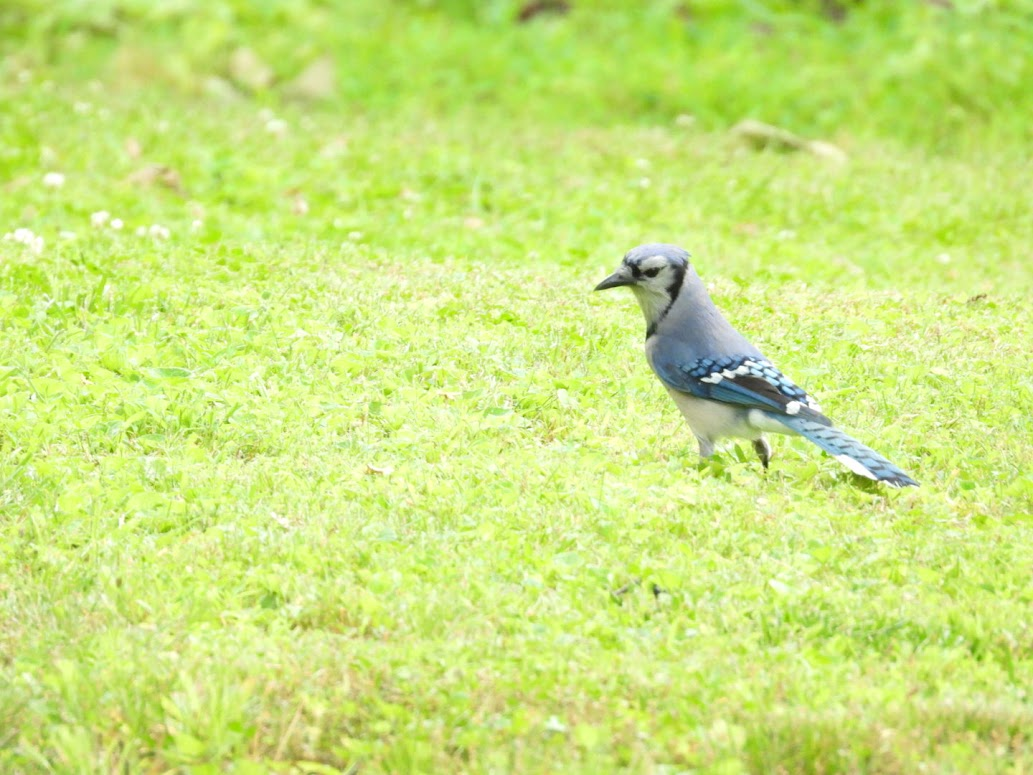 |
| ƒ/5.6, 1/125, ISO900, 216mm (1202mm equiv, 50.1X) | ƒ/5.6, 1/125, ISO900, 216mm (1202mm equiv, 50.1X) |
| June 26 | |
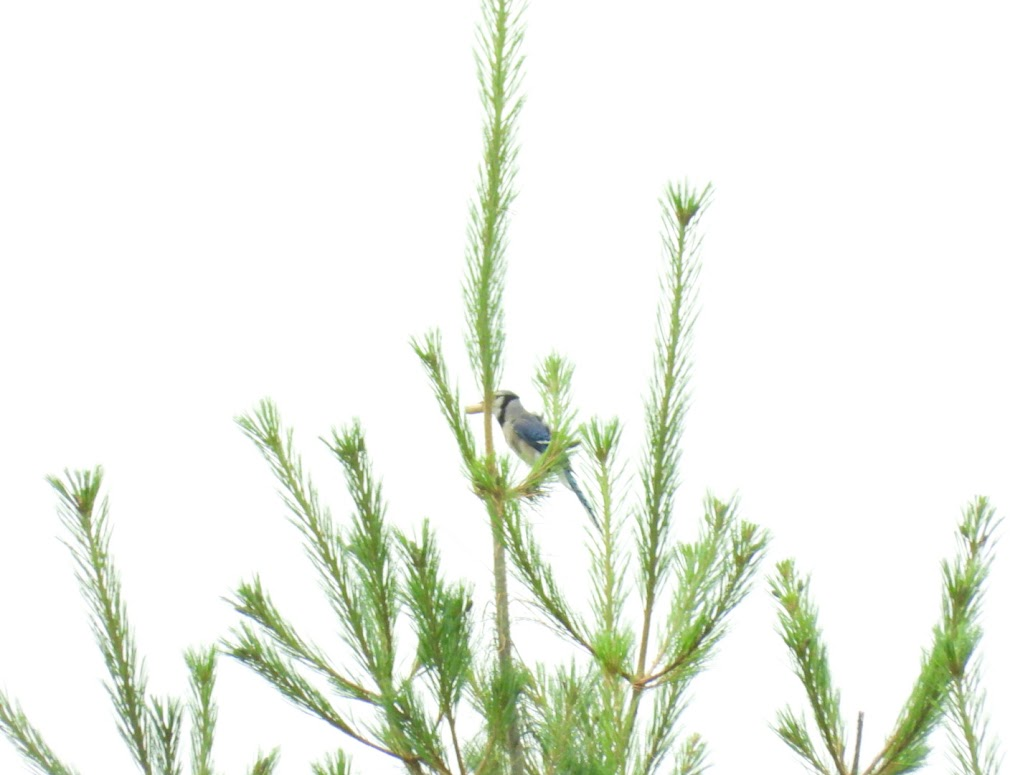 | |
| ƒ/8, 1/250, ISO1400, 539mm (3000mm equiv, 125X) |
Eastern Kingbird
The Eastern Kingbird is another species that - a couple months ago - I didn't even know existed. In May, I learned about the species when I saw one harassing a Red-tailed Hawk. It turns out that these birds are well known for being aggressive during the nesting season.
I suspect that this may be the reason for the bird's choice of location in the June 14 photo. That tree is near the tree where I have frequently observed a local pair of Red-tailed Hawks perching, and the bird is looking towards that tree. My guess is that maybe it was keeping a sort of watch.
As mentioned in the Blue Jay section, the June 26 photo is about 1 minute after a Blue Jay photo in that same tree. The time stamp on the Blue Jay photo was 5:59 pm, and the time stamp on the Eastern Kingbird photo is 6:00 pm.
Unfortunately, the birds are small, and the distances were large, so even the P1000's 125X zoom wasn't able to get much detail for either of these Eastern Kingbird photos.
| June 14 | June 26 |
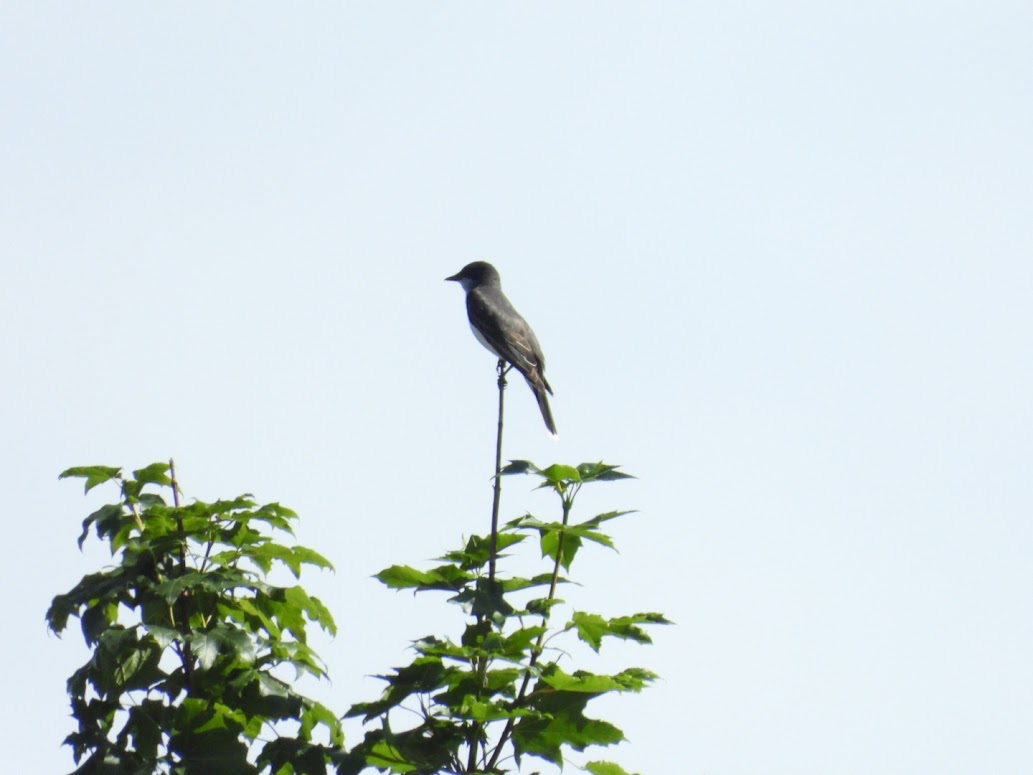 | 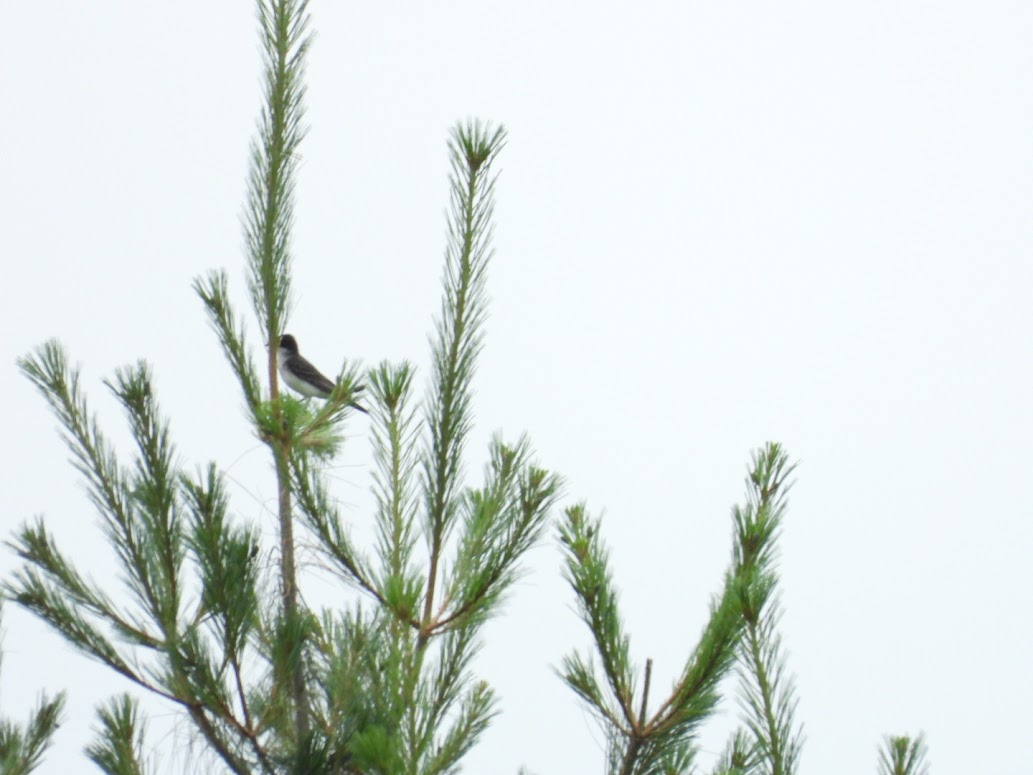 |
| ƒ/8, 1/1000, ISO720, 539mm (3000mm equiv, 125X) | ƒ/8, 1/250, ISO800, 539mm (3000mm equiv, 125X) |
Wrapping up
That's it for small birds in June. I have one post left to do with the Raptors from June. I don't know if I'll be able to get that done during July or if it'll have to wait 'til the month flips on the calendar. Fortunately, July has been a slow month, so even if June photographs stretch into August, I think I'll be able to get back on cadence with the July photos.
Appendix
Here are my previous wildlife photography posts:
June photographs
- Backyard Wildlife Photos in Southeastern Pennsylvania: Still more small birds during June
- Backyard Wildlife Photos in Southeastern Pennsylvania: A few more small birds during June
- Backyard Wildlife Photos in Southeastern Pennsylvania: Mammals and Small Birds during June
- Photography meets citizen science: June's wildlife in south-eastern Pennsylvania
May's photographs
- Hawks and a Bald Eagle: May raptor photography practice in southeastern Pennsylvania - part 2
- Vultures and Kites: May raptor photography practice in southeastern Pennsylvania - part 1
- Wildlife photographs in southeastern Pennsylvania: Small animals with multi-month sightings in May - part 2
- Wildlife photographs in southeastern Pennsylvania: Small animals with multi-month sightings in May - part 1
- Backyard wildlife photography in southeastern Pennsylvania: First encounters during May - post 2
- Backyard wildlife photography in southeastern Pennsylvania: Something Old - Something New
- Photography meets citizen science: May's wildlife in south-eastern Pennsylvania
April's photographs
- [Citizen Science] April's Raptors in South-Eastern Pennsylvania
- Photography meets citizen science: April's wildlife in south-eastern Pennsylvania
- Learning photography with wildlife in south-eastern Pennsylvania: First encounters in the month of April
- Learning photography with wildlife in south-eastern Pennsylvania: First encounters in the month of April - part 2
- April wildlife observations in south-eastern Pennsylvania: repeated encounters with small animals
March's photographs
- Backyard Photography in Chester County, Pennsylvania during March 2026: Warm-up Shots
- [Citizen Science] Observations of Small Birds and Animals in South-eastern Pennsylvania from March of 2026
- [Citizen Science] The Raptors of March in South-Eastern Pennsylvania
Thank you for your attention!
Unless otherwise specified in the text, all photos above were taken by me with a Nikon P1000 camera. I'm sharing them under the CC BY 4.0 license (share & adapt freely with attribution to the original source).
Beautiful collection of backyard bird photos! Each image captures the charm and personality of these little birds so well. Your patience and photography skills really shine through, and it's a great reminder that nature's beauty can be found right outside our windows. Thanks for sharing these wonderful June sightings with us!